







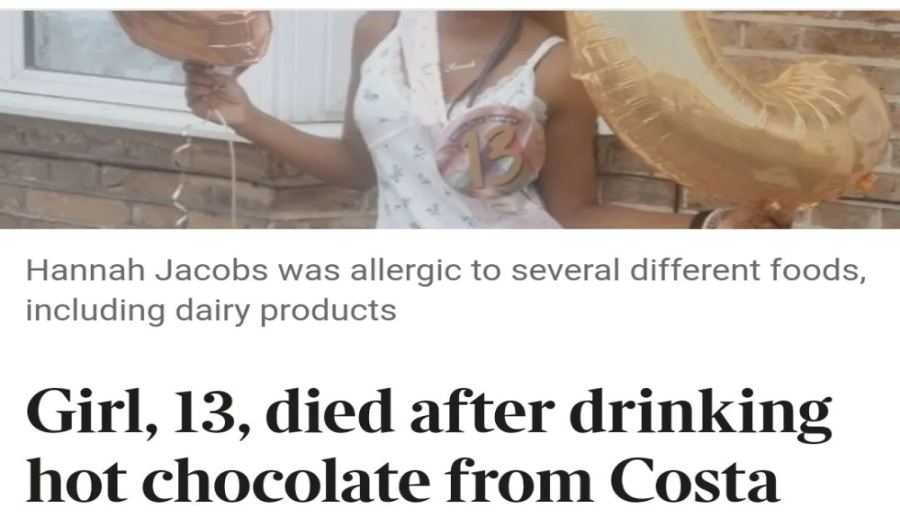
Introduction:A 13-year-old British girl with a severe dairy allergy tragically passed away after consuming a hot chocolate that accidentally contained milk, triggering a fatal allergic reaction. This heartbreaking incident at a Costa coffee shop has exposed serious gaps in allergen management within the foodservice industry. This article details the sequence of events, analyzes the risks of cross-contamination, and outlines key steps and precautions to prevent allergen mix-ups when preparing coffee beverages.
A hot chocolate that was supposed to be made with soy milk instead contained milk due to a barista’s mistake. After just one sip, a 13-year-old girl with a severe dairy allergy suffered an acute allergic reaction and, despite efforts to save her, died. This incident at a UK branch of Costa has once again drawn attention to the critical importance of allergen control in the food and beverage sector.
It is understood that on the day of the incident, the girl and her mother were passing by the coffee shop when the mother specifically informed the staff that her daughter had a severe dairy allergy and insisted that the drink must be made with soy milk instead of cow’s milk. However, while waiting at the dentist’s office, the girl took a sip and immediately noticed that the taste was off, realizing the drink contained milk, which then triggered an allergic reaction.
The mother and daughter quickly sought help at a nearby pharmacy, where the staff administered an EpiPen adrenaline injection and called an ambulance to take the girl to the hospital. Unfortunately, despite resuscitation efforts, the girl passed away at 1 p.m. that afternoon. Statistics from Allergy UK show that around 10 people die each year due to allergic reactions, with 2% to 3% of children being allergic to milk—one of the most common food allergens among children.
Notably, the girl had long been allergic to dairy products, eggs, fish, and wheat, and her family had always been extremely cautious in avoiding these ingredients in her daily diet. This tragic accident was caused by just one sip of a hot drink containing milk, leading to irreversible consequences.
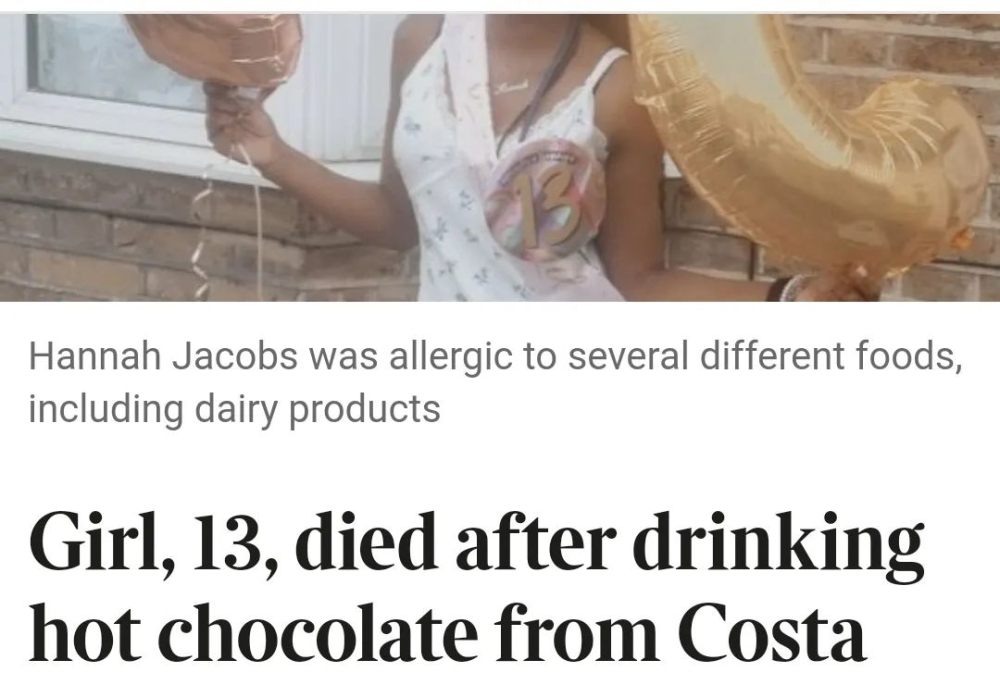
In fact, the UK government mandated back in 2021 that all food-handling businesses provide their employees with training on allergens. This includes identifying risks, preventing cross-contamination, ensuring accurate labeling, and properly responding to customer inquiries about allergens. Violators face penalties. Yet this tragedy highlights the execution gaps in real-world practices.
Experts point out that when coffee shops prepare dairy-free drinks, it is essential to strictly separate utensils and containers used for alternatives such as soy milk or oat milk. They also recommend confirming allergen information before preparation and avoiding using the same equipment for both dairy and dairy-free products. In addition, staff should clearly document customers’ special requests and double-check ingredients during preparation.
Currently, the East London Coroner’s Court is set to begin an investigation next Monday, expected to last a week. Through testimonies from 11 witnesses and experts, the court will clarify responsibilities and identify any procedural failures related to the incident. This case serves as a reminder to both consumers and the industry that allergen management must start with the smallest details to effectively reduce risks.
The above content is compiled by CoffeeHunters, a coffee news website.


