







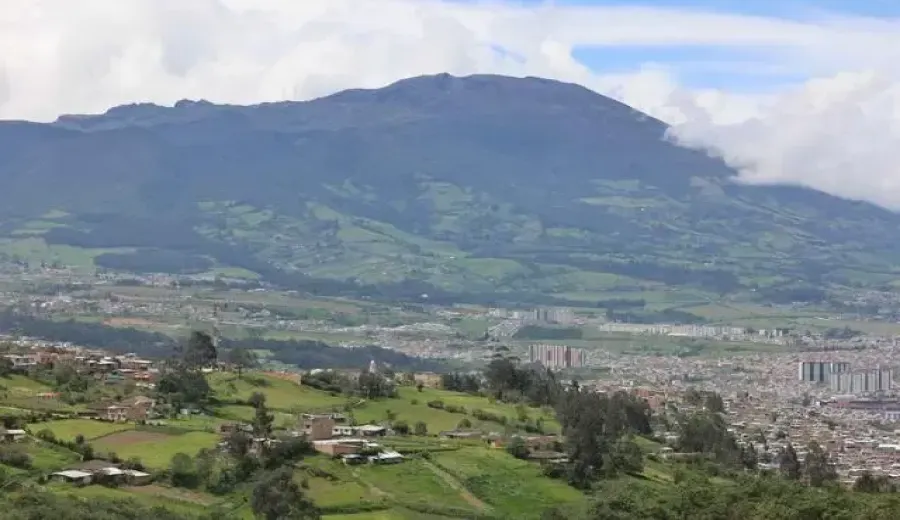
Introduction:Want to understand the rise of Colombia’s specialty coffee and the high-altitude flavor potential? This article takes an in-depth look at the Nariño region, exploring how its unique geographical conditions give birth to floral and richly aromatic top-grade coffee beans. It also focuses on the Gesha cultivation journey of Santa Ana Estate, the 2023 COE Runner-Up, guiding you through the region’s background, historical development, and estate practices to master the key knowledge of bean selection and tasting.
The Andes Mountains of South America stretch from north to south across the entire continent, not only shaping its magnificent landscapes but also providing an ideal environment for coffee cultivation. In this region—rich in volcanic soils and diverse climates—Colombia has leveraged scientific management and geographical advantages to secure its position as the world’s third-largest coffee producer. Beyond the well-known regions of Cauca and Huila, the southwestern province of Nariño has recently stood out with its delicate floral notes and complex layers, achieving repeated success in international competitions—among them, Santa Ana Estate claimed the Gesha category runner-up in the 2023 Colombia COE evaluation.
Located in the southern hemisphere of South America, it ranks as the fourth largest country by land area in the world, with the Andes Mountains extending from north to south and connecting multiple volcanically active zones. This warm and humid continent, dominated by tropical rainforests and highland microclimates, boasts abundant rainfall and fertile soils, making it an ideal place for coffee cultivation. Countries such as Ecuador, Peru, Brazil, and Colombia all rely on the coffee industry as a pillar of their economy, with Colombia being particularly renowned for its consistent quality and distinctive flavors.
Looking back at the development history of Colombian coffee, the industry initially faced stagnation due to internal conflicts and social unrest. In 1723, Jesuit missionaries introduced coffee seeds to the country, which then gradually spread throughout the territory. However, the civil war from 1899 to 1903 led to the abandonment of coffee-growing areas and a significant loss of farmers. After the war, the government rebuilt the industry by dividing land into small plots and selling them to farmers at low prices. By 1912, coffee exports accounted for half of the country’s total exports. But the scattered smallholder model struggled to compete in the international market. In 1920, driven by coffee grower associations, the Colombian Coffee Federation was established, later transforming in 1927 into the official National Federation of Coffee Growers (FNC). Through quality control, technological research, and global marketing, the FNC helped establish Colombia’s international coffee reputation.
Colombia’s terrain and climate are key to the success of its coffee industry. The country’s three Cordillera mountain ranges run north to south, intersecting with the Andes system to form multi-layered highland zones. The fertile soils born from volcanic activity, combined with the microclimates created by undulating mountains, allow coffee farms at different altitudes and slopes to be harvested in phases throughout the year. The staggered maturation periods of varieties ensure stable yields and diverse flavors.
The main national coffee-producing regions include Cauca, Santander, Nariño, Tolima, and Huila. Although Nariño is not as well-known as Huila or Tolima, it boasts high altitudes (often exceeding 1,900 meters) and a location near the equator, producing coffee beans with especially rich flavor layers and notably prominent floral notes—and it has repeatedly ranked on the COE (Cup of Excellence) competition lists.
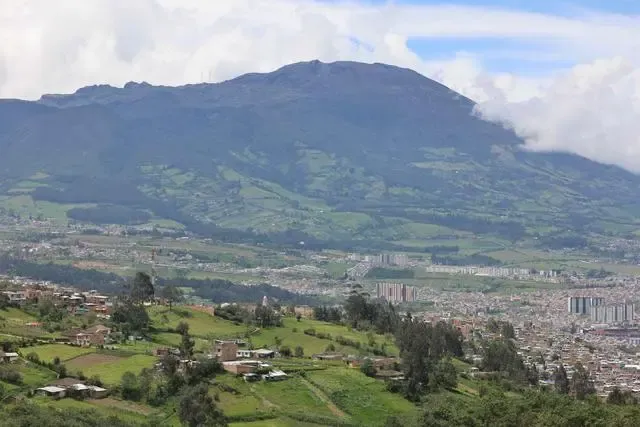
Nariño Province (Nariño) is located on the southwestern coast of Colombia, bordering Ecuador, and is crisscrossed by rivers, featuring active volcanoes such as the Cumbal and Galeras. These natural conditions provide a foundation of water and nutrients for agriculture. Coupled with the high-altitude environment and large diurnal temperature variations, local coffees generally exhibit distinct floral tones, bright acidity, and delicate sweetness. Santa Ana Estate is one of the representative farms in the region, and in 2023, it won second place in the COE with its Gesha variety, drawing international market attention.
Santa Ana Estate is currently co-managed by husband-and-wife team Carlos Alberto Belalcázar and Raquel Lasso Muñoz. Raquel is not only the founder and former president of FUDAM (Association for the Development of Small Coffee Producers), but also manages the higher-altitude La Bohemia Estate; Carlos has over 30 years of experience in coffee cultivation and post-harvest processing. The couple has long been committed to promoting the image of Nariño’s specialty coffee. Their estate originally focused mainly on Caturra, but in recent years has gradually shifted toward Gesha cultivation, leveraging the advantages of high altitude (Santa Ana reaches about 1,990 meters, while La Bohemia climbs to 2,150 meters) to develop a unique flavor profile.
The estate has participated in the COE competition since 2017, and in 2023, its Gesha variety shone brightly—Santa Ana Estate’s Gesha scored 90.39 to take second place, while La Bohemia Estate’s Gesha also secured fifth place with 87.78 points. These achievements not only confirm the potential of the Nariño region, but also highlight the competitive advantages of high-altitude Gesha in terms of delicate floral notes, citrusy profiles, and long-lasting aftertaste. For coffee enthusiasts, understanding these regional characteristics and estate stories can help more accurately capture the essence of flavors when selecting single-origin beans.
The above content is compiled by CoffeeHunters, a coffee news website.


