







Introduction:When a customer requests “no ice, no sugar” but is refused by the staff, it reflects the challenges of formula management in the chain beverage industry. This article delves into how tea and coffee brands establish key parameter standards such as ice quantity and sweetness level, explores the operational difficulties staff face when executing standardized procedures, and offers practical advice to help consumers understand changes in beverage flavor.
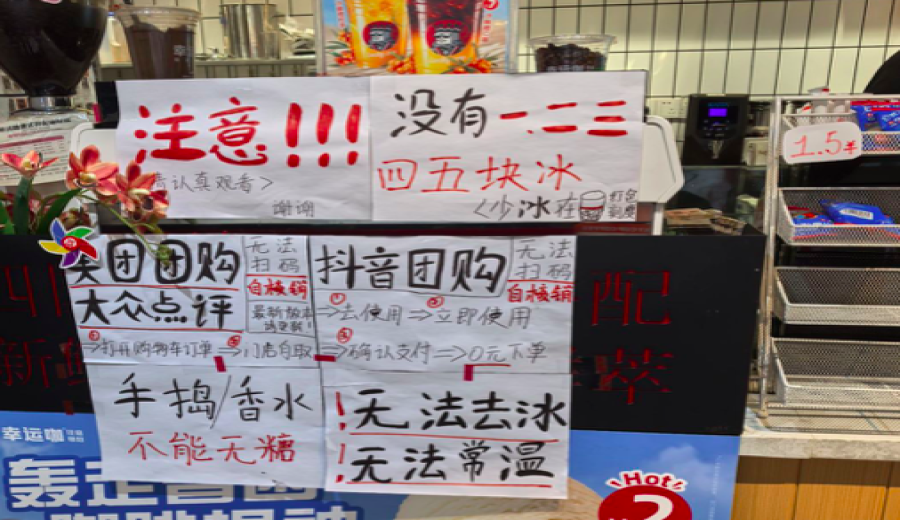
Walking into a chain coffee shop, prominent signs at the counter about “preparation restrictions” often catch customers’ attention. Recently, some Luckin Coffee outlets have clearly stated rules such as “coffee not available at room temperature or no ice,” and “hand-shaken and perfume series cannot be adjusted to no sugar.” Such signage is also not uncommon among other tea beverage brands. Staff admit that while adjusting ice quantity may seem trivial, deviating from the established recipe could lead to penalties, and while accommodating customer requests might avoid conflict, it could also result in negative reviews due to flavor imbalance.
These reminders posted in the ordering area often start by emphasizing that “coffee is not available at room temperature or no ice, and the number of ice cubes cannot be adjusted.” To consumers, reducing a few ice cubes may seem like a reasonable request, but from the staff’s perspective, being flexible may not earn praise and could instead lead to responsibility for deviating from the standard recipe. During peak hours, staff have even less time to check the number of ice cubes one by one, making it common practice to state the limitations upfront to reduce disputes.
Industry insiders reveal that tea beverage recipes exercise very strict control over sweetness levels and ice quantity.The standard ice quantity is usually set according to cup size—for example, medium cups use five standard ice cubes, while large cups increase to seven.. When customers make special requests such as “five ice cubes, I’ll complain if there’s one more,” staff often face a dilemma—following the rules may drive customers away, while compromising could lead to negative reviews due to altered flavor.
Minor adjustments to beverage temperature and ratio can significantly impact flavor.Removing ice increases the concentration of the drink, while serving it at room temperature may accelerate the oxidation of coffee oils, affecting aroma expression.. This is also the main reason why chain brands insist on standardization. Brands that allow limited adjustments to ice quantity typically set a flexible range—for example, allowing an increase or decrease of up to one ice cube based on the standard five for a medium cup.
A common challenge staff face in practice is that even when they inform customers in advance that adjusting the recipe may affect taste, some still leave negative feedback after trying it. Experienced staff will proactively explain characteristics such as “the no ice version has a stronger sweetness” or “the no sugar recipe has a richer flavor” to help customers make suitable choices. This communication skill can effectively reduce misunderstandings, but its implementation still relies on a well-established training mechanism.
From an industry chain perspective, standardized recipes ensure consistency across all outlets nationwide.Sweetness level errors are generally controlled within ±2%, and ice quantity tolerances do not exceed one cube.. This strict control helps maintain the brand’s flavor identity but also sacrifices some flexibility in personalized service. Consumers who wish to adjust their drinks may consider making minor tweaks within allowable ranges—for example, requesting “slightly sweet” instead of “no sugar,” or choosing “less ice” instead of “no ice” as compromise options.
Industry experts point out that as consumer demands become increasingly diverse, some brands have begun testing a “flexible standardization” model, which allows limited personalization options without altering the core recipe. This attempt to strike a balance may become the future direction of the chain beverage industry.
The above content is compiled by CoffeeHunters, a coffee news website.


