







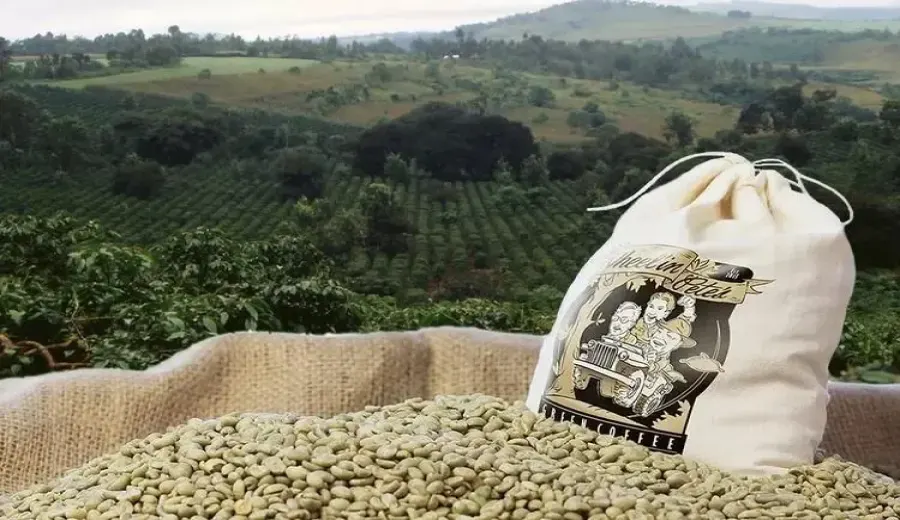
Introduction:Although Tanzania is not as globally renowned for coffee as its neighbor Kenya, its Mbeya region in the southwest is quietly emerging as a promising source of specialty coffee, thanks to its high-altitude volcanic soils and unique cooperative business model. This article will take you on a deep dive into the coffee development journey of this East African country, focusing on how Mbeya has gradually become a key hub in the coffee trade by leveraging its geographical advantages and local organizations.
Tanzania’s coffee may not be as widely known as Kenya’s, but it actually possesses considerable quality potential. From the introduction of coffee trees during the German colonial era to the gradual southward shift of cultivation after independence, this East African nation—blessed with high altitudes, fertile volcanic soils, and reliable water sources—has given rise to multiple distinctive coffee-growing regions. Among them, Mbeya in the southwest has garnered increasing attention in recent years. Not only does it boast geographical conditions ideal for cultivating high-quality coffee, but it is also home to the Iyenga Agricultural Marketing Cooperative, known for its democratic operations, which has become a major driving force behind the local coffee industry.
The African continent is home to several well-known coffee-producing countries, such as Ethiopia, Kenya, Rwanda, and Tanzania. Although Tanzania’s coffee is slightly less famous than Kenya’s, it similarly holds the potential for producing specialty-grade beans. The history of coffee as a cash crop in Tanzania (then known as Tanganyika) dates back to the German colonial period. At that time, Arabica varieties were primarily cultivated in the Bukoba region. However, due to the local Haya people’s preference for food crops and their reluctance to replace them with coffee, the promotion of coffee progressed slowly.
After World War I, Tanganyika came under British administration, which planted over ten million coffee seedlings in Bukoba. Yet, tensions with local farmers persisted, and many seedlings were even uprooted. As a result, the coffee industry in the area never flourished to the extent seen in the Chagga region of northern Tanzania.
Following Tanzania’s independence in 1961, the government began prioritizing the coffee sector and implemented a series of reforms in the 1990s. However, the outbreak of coffee berry disease in the late 1990s severely impacted the northern growing regions, prompting a gradual shift of coffee cultivation to the southern areas and the slopes of Mount Kilimanjaro. Thanks to favorable altitude and climate conditions, coffee has since become one of Tanzania’s important agricultural export crops.
Located in East Africa, south of the equator, Tanzania features diverse terrain, including coastal lowlands, central plateaus, and mountainous regions. The renowned East African Rift Valley branches eastward and westward from northern Lake Malawi, running across the entire country. Africa’s highest peak, Mount Kilimanjaro, standing at 5,895 meters above sea level, is also situated here. The country’s climate varies significantly due to its topography: the coastal areas have a tropical savanna climate, while the western highlands experience a tropical mountain climate, with average annual temperatures ranging between 21°C and 26°C. Although annual rainfall is generally low, the abundance of rivers and lakes ensures relatively ample water resources.
Currently, Tanzania’s coffee-growing regions are divided into nine main areas, including the well-known Kilimanjaro, Arusha, Ruvuma, Mbeya, Tarime, and Kigoma. Around 450,000 smallholder farmers are engaged in coffee cultivation, accounting for 90% of total production, with the remainder coming from larger estates. As a result, the cooperative model has become the industry’s mainstream.
Among these, the Kilimanjaro region is the most famous. “Kilima” means mountain, and “Njaro” signifies shining or radiance, symbolizing its majestic mountain landscapes. The region consists of three dormant volcanoes—Kibo, Mawenzi, and Shira—with the highest peak reaching 5,895 meters. Coffee is grown at elevations ranging approximately from 1,050 to 2,500 meters. The combination of high altitude, volcanic soils, and clean water from melting mountain snow provides an ideal environment for coffee cultivation. For instance, a certain coffee shop once released a washed Typica from this region, which showcased a bright flavor profile with notes of citrus, berries, honey, and nuts, along with a soft mouthfeel and tea-like qualities, delivering an overall well-balanced cup.
Beyond Kilimanjaro, Tanzania has several other regions with significant potential, among which Mbeya in the southwest is steadily making a name for itself. The areas surrounding Mbeya City serve as the primary agricultural and trade hub of the country’s southwest. The terrain is dominated by highlands and basins, dotted with volcanoes including Mount Rungwe. While the lower-altitude regions are hot and dry, the highlands suitable for coffee cultivation sit at around 1,660 meters above sea level. These areas enjoy a cool and humid climate, coupled with fertile volcanic ash soils and abundant water supply from nearby lakes, creating optimal conditions for producing high-quality coffee.
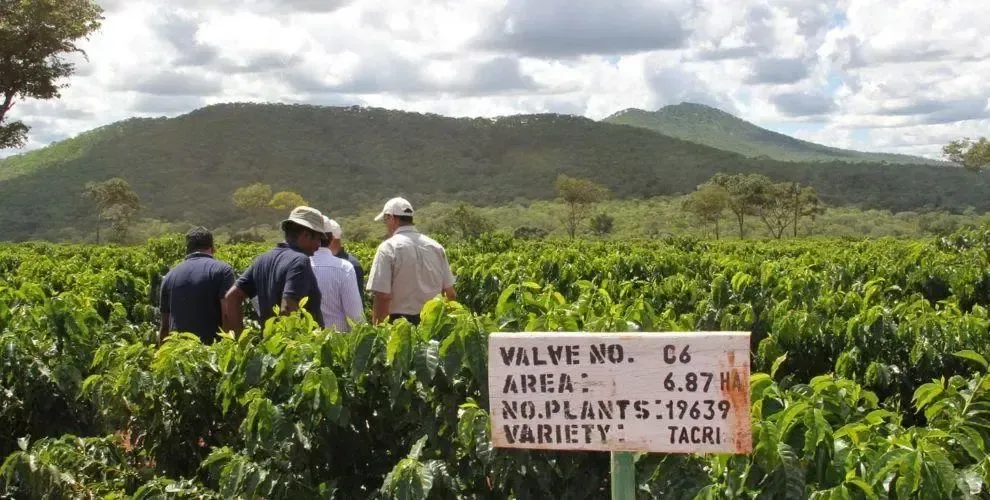
In Mbeya, the Iyenga Agricultural Marketing Cooperative (Iyenga AMCOS) is a key local coffee organization. Established in 2003, it is primarily responsible for coffee procurement in the region and collaborates with over 500 coffee farmers. The cooperative has built a strong reputation locally, largely due to its democratic management model: all leaders are elected through fair and democratic processes, with special emphasis on encouraging youth and women to participate in coffee farming and cooperative affairs. Additionally, the cooperative has dedicated teams for providing planting technical guidance and managing green bean processing, ensuring that every batch of coffee beans maintains consistent and excellent quality.
The above content is compiled by CoffeeHunters, a coffee news website.


