







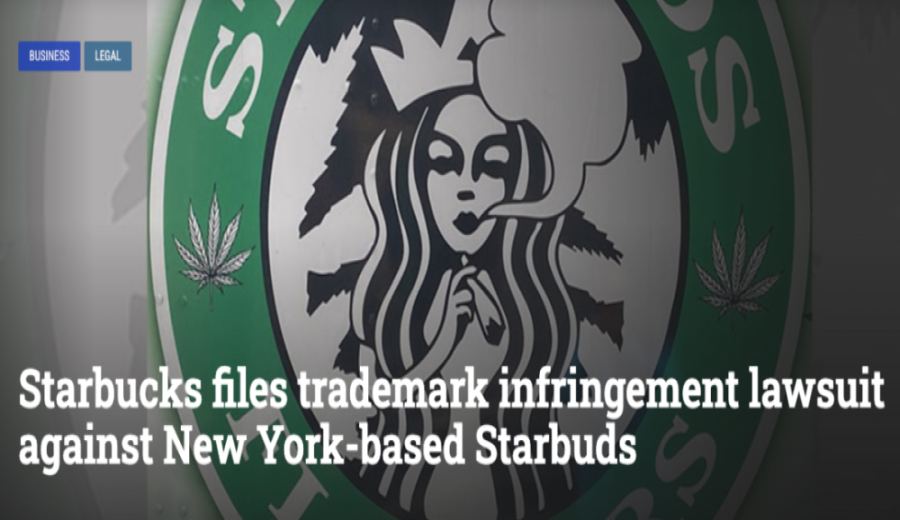
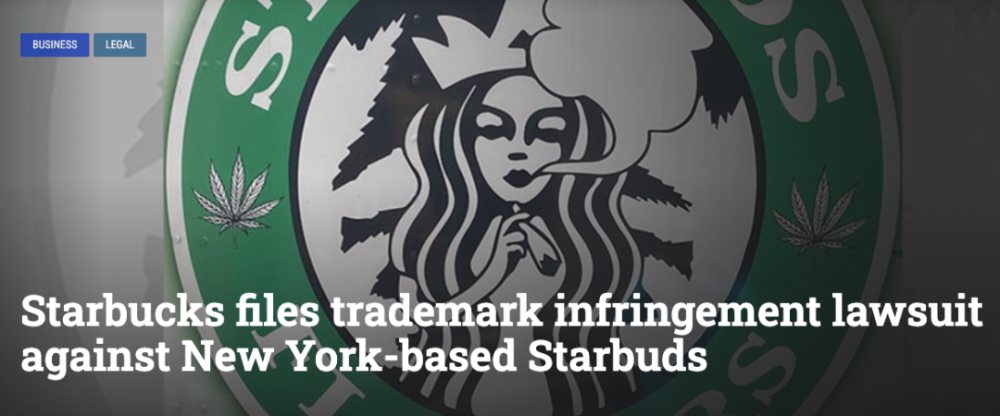
Introduction:The international coffee chain Starbucks recently filed a lawsuit against a New York-based cannabis sales company, Starbuds Flowers, for trademark and copyright infringement. The lawsuit alleges that Starbuds maliciously imitated Starbucks’ iconic mermaid logo and exploited the brand’s reputation to mislead consumers. This article delves into the similarities and differences between the two logos, details of the legal proceedings, and how Starbucks is protecting its intellectual property, helping readers understand common tactics in trademark infringement and how to guard against them.
Starbucks has taken legal action by filing a lawsuit in the U.S. District Court for the Southern District of New York, accusing a cannabis sales company named Starbuds Flowers of maliciously copying its classic mermaid trademark and attempting to confuse consumers to gain undue commercial benefits.
According to the complaint, Starbucks provided a detailed comparison between its old logo and the image used by Starbuds, pointing out multiple highly similar elements, including the circular green border, the female mermaid wearing a crown and sporting long wavy hair, as well as overall composition proportions. Starbucks argues that Starbuds’ logo was almost entirely modified based on its old trademark.
Starbuds Flowers primarily sells pre-rolled cigarettes and cannabis-related products in New York City via a retrofitted mobile truck. The exterior of the truck features a prominent design: a female mermaid with a crown and long hair, holding a cigarette and exhaling smoke rings, set against a cannabis leaf background and enclosed within a green circular ring that displays the company’s name.
Starbucks’ old logo was first introduced in 1987 and gained widespread recognition in the early 1990s. The design features a black-and-white color scheme, with a female mermaid wearing a star-shaped crown and flowing long hair at the center, encircled by a green ring inscribed with white “Starbucks Coffee” text, adorned with symmetrical five-pointed stars on either side. The overall style is simple yet highly distinctive.
In the lawsuit documents, Starbucks placed the two logos side by side and clearly labeled each similar design element, including color schemes, the mermaid’s pose, the crown and hairstyle, the circular ring structure, and text layout, emphasizing that Starbuds’ logo clearly references Starbucks’ old trademark and is highly likely to cause confusion.
In addition to the logo, Starbucks also accuses Starbuds of applying similar imagery to physical products it sells, including pre-rolled cigarettes and cannabis products, further increasing the likelihood of consumer misidentification. Starbucks believes this is a deliberate attempt to capitalize on the global reputation of its brand for commercial gain.
In response to this infringement, Starbucks has requested that the court issue an injunction requiring Starbuds to immediately cease using the logo, destroy all related products, and return any profits gained through the infringement. Additionally, Starbucks is seeking legal measures to permanently block the company’s infringing activities.
In fact, as early as August last year, Starbucks sent its first cease-and-desist letter to Starbuds and its operator, Terence Brandon. Subsequently, in September of the same year, as well as in January and February of this year, multiple copyright takedown notices were issued, but none received a response. As of July 2, this year, Starbuds’ mobile truck and official website remain operational, with the disputed imagery still visible on their products.
This case once again highlights the importance of brand trademark protection and serves as a reminder to both the industry and consumers to stay vigilant when encountering similar imagery and to recognize potential risks of infringement.
The above content is compiled by CoffeeHunters, a coffee news website.


