
Introduction:Did you know? The popular "mocha" coffee we enjoy today actually originated from the port of Mocha in Yemen centuries ago, which was the first stop where Arabica coffee made its way to the world. This article will take you on a deep dive into how Yemeni Mocha evolved from a trading hub along the Red Sea into a part of today’s coffee culture, while also exploring its unique flavor profile, historical significance, and its connection with modern brewing methods.
Throughout the long history of coffee, the term "mocha" is widely known, but it is often misunderstood as either chocolate-flavored coffee or the name of a certain type of kettle. In fact, hundreds of years ago, Mocha referred to a port located along the Red Sea, serving as the key starting point for coffee’s spread from Ethiopia to the rest of the world. This journey began in Yemen, a land bordering Ethiopia.
The origin of Arabica coffee is the Kaffa forest in Ethiopia, an area regarded as the birthplace of coffee, which is connected to Yemen via the Red Sea. Around the 15th century, coffee crossed the Red Sea and arrived in Yemen’s high-altitude mountainous regions. These dry, high-elevation environments proved to be ideal for the thriving of coffee plants. The people of Yemen quickly fell in love with this invigorating beverage, and the Port of Mocha became a crucial hub for coffee export, introducing this emerging drink to the world.
At that time, the Port of Mocha was a hotspot eagerly sought after by European merchants. Coffee was loaded onto ships here, passing through Venice to enter the European market, gradually becoming a favorite among nobility and in coffeehouses. It was also because of this port that the name "mocha" became tightly associated with coffee, a link that continues to this day — for instance, the commonly known "mocha" coffee drink is a blend of chocolate and coffee. However, unlike the sweet, chocolatey flavors of today, traditional Yemeni Mocha beans actually possess a distinct, wine-like fermented acidity, offering a unique and complex flavor.
Centuries later, Italians invented the moka pot, a device that uses steam pressure to quickly extract coffee. The creation of this tool is also seen as a tribute to the name "mocha." When using a moka pot, the focus is on extracting rich crema and a full-bodied taste. For example, a classic blend is specially designed for espresso machines and moka pots; its Mamba recipe can stably extract delicate crema even with home brewers, performing excellently whether making lattes or black coffee. If you prefer a mellow and balanced flavor, coffee beans from a certain estate are also well-suited for moka pot brewing, bringing out pronounced nutty and cocoa aromas, along with a sweet caramel note.

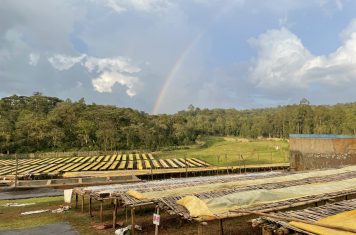
The historical significance of Yemeni Mocha lies in its role in transforming coffee from a regional beverage into a global commodity. However, due to its scarce production and demanding growing conditions, it is not easy to enjoy authentic Yemeni Mocha beans today. Yet, this history remains worthy of our reflection. At the same time, Ethiopia’s coffee story continues — for instance, a certain brand’s Yirgacheffe Guddina preserves the millennia-old flavor characteristics of the region — citrus, berries, and floral notes — as if the legend of coffee’s discovery hundreds of years ago is still vividly alive.
The next time you use a moka pot and catch the aroma of that rich black coffee, take a moment to savor it: what you’re drinking is actually a coffee journey spanning the Red Sea and centuries. The story of Yemeni Mocha is hidden within every cup of coffee, waiting for those who appreciate it to slowly uncover.
The above content is compiled by CoffeeHunters, a coffee news website.