







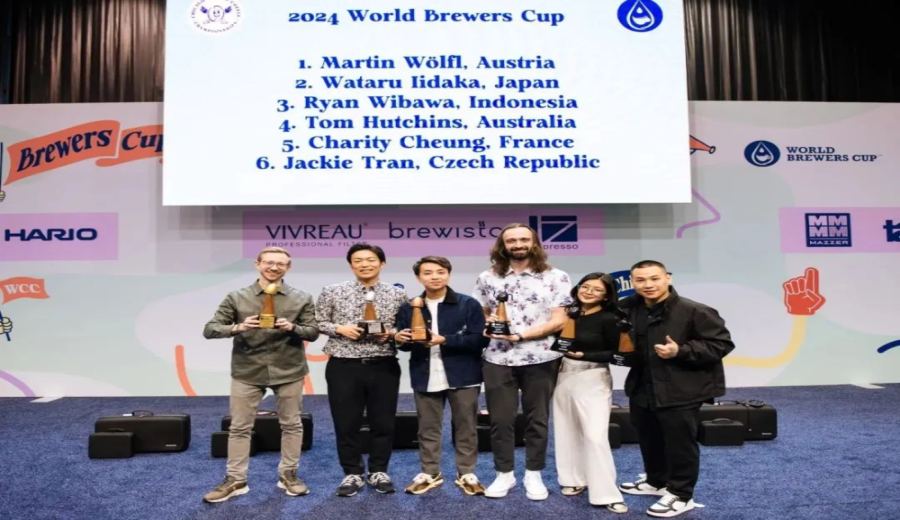
Introduction:The 2024 World Brewers Cup (WBrC) concluded successfully in Chicago, USA, with Austrian competitor Martin Wolf taking home the championship. One of the highlights of this year’s competition was that four out of the six finalists used blended coffee beans in their routines—ranging from two-component to three-component blends, and even combinations of multiple origins and processing methods—showcasing a wealth of creative strategies. This article will take you through the competitors’ blending philosophies, competition details, and why blended beans are becoming the new mainstream in specialty coffee competitions.
The 2024 World Brewers Cup (WBrC) and the World Coffee Tasters Championship (WCTC) were held in Chicago, USA, attracting global attention from the coffee industry and enthusiasts alike. Despite a 13-hour time difference in some regions, numerous coffee fans tuned in on time to follow the equipment, coffee varieties, and brewing parameters used by the competitors, hoping to gain inspiration and learn from their approaches.
At 15:00 Beijing time, the results were announced, with Austria’s Martin Wolf crowned champion, while Japanese competitor Wataru Iidaka and Indonesian competitor Ryan Wibawa secured second and third places respectively. This event not only demonstrated the contestants’ exceptional skills but also revealed emerging trends in the specialty coffee scene.
The WBrC competition is divided into two segments: the prescribed brew and the open service brew. In the prescribed brew, the organizers provide the same coffee beans to all participants, who must analyze and develop their brewing plan within half an hour without prior knowledge of detailed parameters, then brew on-site—a highly challenging task. The open service brew, however, allows participants to freely choose their beans and design personalized brewing processes, making it the most closely watched segment.
Notably, among the six finalists, apart from champion Martin Wolf and sixth-place Czech competitor Jackie Tran, the remaining four—those ranked second to fifth—all opted for blended coffee beans. These blends varied widely, including two- and three-component mixes, as well as combinations across different origins and processing methods, exhibiting unprecedented innovation and complexity.
For example, Japanese competitor Wataru Iidaka selected Geisha beans from three renowned Panamanian farms and meticulously arranged the brewing sequence: first, 6 grams of Nueva Granada Estate sun-dried Geisha to highlight a bright acidity; followed by 5 grams of Jensen Estate sun-dried Geisha, bringing a candy-like sweetness; and finally, 4 grams of Finca Esmeralda honey-processed Geisha to release intense floral aromas. This three-part blend, dubbed the “Panama Geisha Trinity,” was praised for its distinct flavor layers.
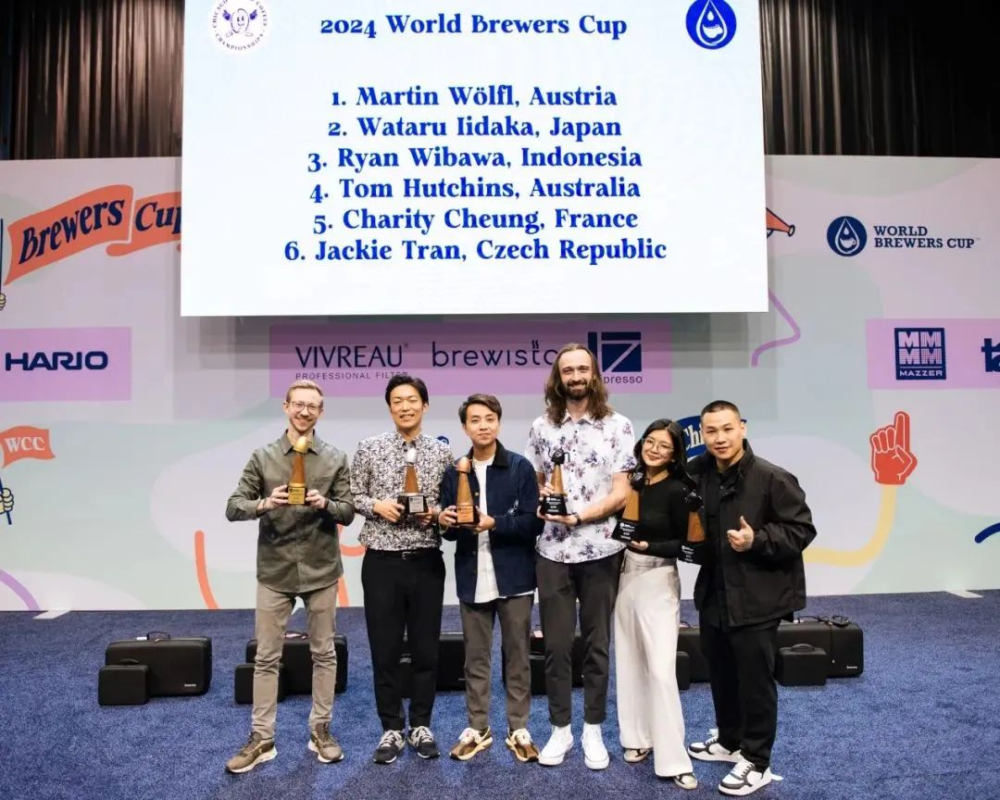
French competitor Charity Cheung drew inspiration from Champagne blending concepts, combining beans from three different origins and processing methods in her extraction: 30% Panama Abuela Estate Geisha, 10% Colombia Sanctum Estate Eugene, and 60% Colombia Mikawa Estate Geisha, resulting in a more rounded and balanced overall flavor profile that earned widespread acclaim from judges.
In fact, over half of the forty-plus competitors in this year’s event employed blending strategies. Compared to single-origin coffees, blended beans often contain a richer array of aromatic compounds, capable of delivering more complex and varied flavor layers. When blended skillfully, they can achieve a 1+1>2 effect and also make extraction more balanced.
Experts point out that the development of specialty coffee is gradually shifting from the pursuit of “rarity” in single origins or varieties to flavor fusion and innovative expression. By artfully combining the strengths of beans from different origins, processing methods, or even varieties, baristas are able to expand the flavor boundaries of specialty coffee, while also making the brewing process more controllable and layered.
The rise of blended beans is not only a shift in competition trends but also offers new inspiration for everyday brewing. Whether at home or in cafes, using blending strategies wisely can help enhance the overall performance and drinking experience of coffee.
The above content is compiled by CoffeeHunters, a coffee news website.


