







Introduction:When a Luckin Coffee store employee poured discarded ice from the ice machine under a street tree, what seemed like an environmentally friendly act of “nourishing with icy water” actually posed hidden risks of tree frost damage and root waterlogging. This article, through expert insights from the landscaping department, analyzes the real impact of improper disposal of waste ice on urban greenery and provides practical advice for commercial venues to properly manage ice machine waste, helping readers balance operational efficiency with environmental responsibility.
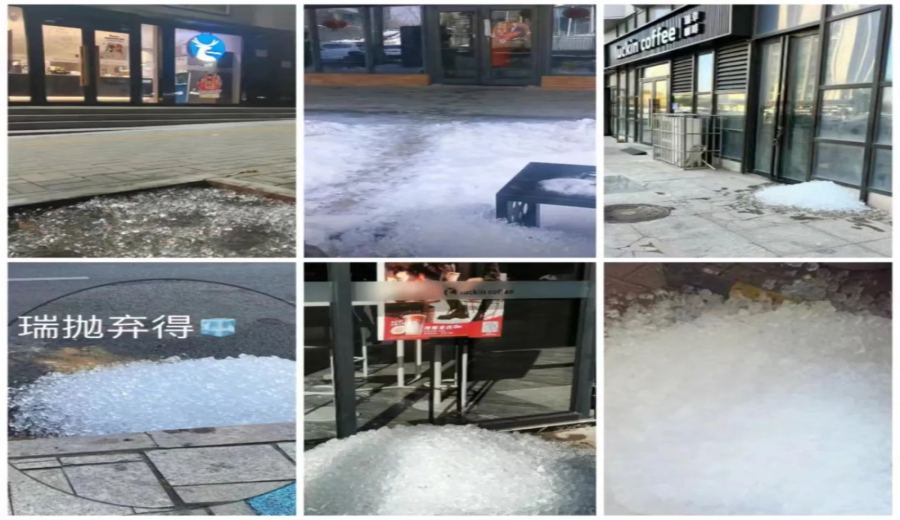
A video taken outside a Luckin Coffee store recently sparked discussion on social media platforms: under the street tree on the sidewalk in front of the store, a large pile of discarded ice cubes cleaned from the ice machine was stacked, resembling a mini iceberg covering the soil around the tree roots and even spilling over the edge of the tree pit. These ice cubes, with diameters exceeding ten centimeters, will continue to release sub-zero temperatures before being exposed to sunlight, posing a potential threat to the health of the trees.
According to eyewitnesses, the thickness of the ice was enough to completely cover the topsoil, blocking the contact between the tree roots and the air, and some of the melted ice water, if it seeped into poorly drained soil, could even cause root hypoxia and rot. It is worth noting that although the ice-making water used by Luckin is filtered drinking water, the physical impact of low temperatures and excessive moisture are the main factors harming the plants.
Tracing the source of the incident, it stems from the strict hygiene management regulations of chain coffee shops: employees are required to thoroughly disassemble and clean the ice machine every week, during which all residual ice inside the machine must be removed to ensure hygiene. However, how to dispose of these waste ice cubes, weighing about 5 to 8 kilograms, has become a pain point in the daily operation of the stores—direct disposal increases garbage volume, while melting it in the sink takes up washing space.
Experts from the landscaping management department pointed out that although most urban street trees are selected for their pollution resistance and strong wind resistance (such as Elaeocarpus sylvestris, camphor trees, etc.), their root systems are still sensitive to environmental changes.Pouring more than 5 kilograms of ice in a single instance and concentrating it within a half-meter radius around the tree trunkwill directly interfere with the temperature regulation function of the roots, especially having a more significant impact on newly transplanted or growing trees.
Regarding the online controversy over the “ice water nourishment theory,” professionals explained three key misconceptions: first, street trees’ tolerance is limited to normal climate fluctuations and is not designed to withstand extreme human-induced temperature changes; second, the large amount of condensation water produced by rapid melting, if not promptly evaporated, can easily breed mold and infect the bark; finally, pouring ice during winter or at low-temperature periods such as early morning or late evening increases the risk of frost damage by more than 30%.
In practice, the recommended process for commercial venues to handle ice machine waste includes: prioritizing placing the ice in a ventilated and shaded area to melt naturally, using an ice crusher to break large chunks to accelerate melting (which can shorten the time by about 40%), or directing it into a dedicated condensate water recycling system. If temporary dumping is necessary, maintain a distance of at least 1.5 meters from the tree trunk and avoid piling it in areas where roots are concentrated (usually within the tree crown projection range).
Environmental groups further remind that the soil in urban green belts often has poor permeability due to paving restrictions, and a large amount of melted ice in a single spot may form a localized frozen soil layer, hindering the roots’ ability to absorb nutrients. It is recommended that chain brands incorporate ice waste management into environmental sustainability assessments, such as collaborating with cold-chain logistics for recycling and reuse, or investing in smart ice-melting devices to reduce ecological impact.
The above content is compiled by CoffeeHunters, a coffee news website.


