







Introduction:Many chain coffee brands offer discounts for customers who bring their own cups, yet the actual usage rate falls short of expectations. Is it due to insufficient discount incentives, or are there other underlying reasons? This article delves into the reasons behind consumers’ preference for disposable cups, analyzing the challenges in promoting reusable cup use—from convenience and time costs to practical hurdles—and provides practical suggestions to help both shops and customers find a balanced solution.
Bringing one’s own cup to a coffee shop has gradually become an eco-friendly choice for some consumers. Well-known chain brands, including Starbucks and Manner, have long implemented policies offering discounts for customers with reusable cups, aiming to reduce the use of single-use paper cups. However, observations on-site show that most customers still opt for the plastic or paper takeaway cups provided by the store, with the proportion of reusable cup usage remaining noticeably low.
A common question in online discussions is: if discounts are available, why are consumers still reluctant to bring their own cups? In-depth analysis reveals that the issue is not simply a lack of environmental awareness. Many customers admit that while they agree with the principle of reducing waste, they face multiple obstacles in practice, which significantly diminishes the appeal of bringing their own cups.
The first major hurdle lies in the limitations of discount policies. Some stores calculate the reusable cup discount separately from other promotional offers, often forcing customers to choose between the two. For example, when there’s a “buy one get one free” deal or a member day discount, many would rather forgo the environmental benefit and choose the more tangible price savings over the 5–10 yuan reusable cup discount.This non-stackable rule on discounts becomes a significant barrier to the widespread adoption of reusable cups.。
Time efficiency is also a key consideration. During peak hours, customers with their own cups often need to spend extra time explaining their needs to staff, which can be more time-consuming than using the store’s ordering system or delivery platforms.During busy periods in line, many office workers prefer to pay a few extra yuan for the convenience of a quicker pickup.Additionally, the coupon bundles often provided by delivery services further reduce the relative appeal of bringing one’s own cup.
Practical inconveniences also affect the decision-making process. Common issues include: the capacity of personal cups not matching the standard sizes used in-store (e.g., a 350ml cup being unable to hold the standard medium size of 473ml), resulting in either leftover space or an inability to fit the drink; lingering odors developing in cups after prolonged use; and, most commonly, simply “forgetting to bring the cup when going out.”These minor but frequent issues often make the few-yuan discount seem impractical.。
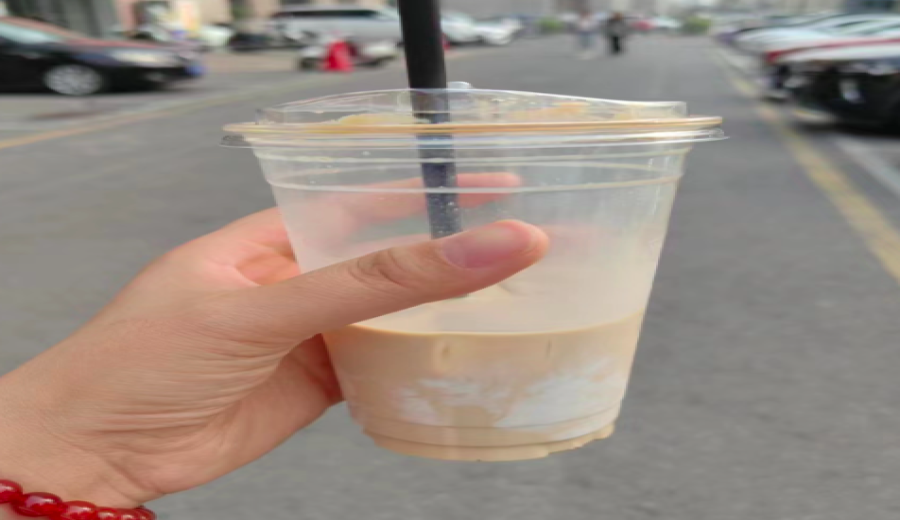
Interestingly, some consumers, in order to avail the discount, attempt to pass off used disposable cups as their own reusable ones, creating identification difficulties for staff. This phenomenon highlights the gap between the incentive of discounts and the practical challenges involved. Professional baristas remind that a proper reusable cup should be a clean, dedicated container—not a recycled disposable cup.
For regular coffee drinkers, the long-term accumulation of reusable cup discounts can indeed lead to considerable savings,for example, saving 5 yuan per day could mean an extra 2–3 cups of coffee per month.But the fast-paced rhythm of modern life makes consistently carrying a cup a challenge. This conflicting mindset explains why the usage rate of reusable cups has yet to see a significant increase.
Overall, the effectiveness of reusable cup policies is constrained by multiple factors. To improve usage rates, beyond monetary discounts, efforts may need to focus on simplifying processes, offering more flexible discount schemes, and improving container designs. For consumers, balancing environmental values with practical convenience and finding a personally suitable equilibrium is key to a sustainable coffee lifestyle.
The above content is compiled by CoffeeHunters, a coffee news website.


