







Introduction:Want to improve your coffee tasting skills but hesitant about investing in pricey aroma kits? This article dives deep into the popular 36-flavor "Le Nez du Café" (aka Coffee Nose) aroma kit, exploring its history, its role in SCA courses, and breaking down the four major aroma categories—enzymatic, caramelization, dry distillation, and taints—with their specific flavor characteristics. It also provides training methods for all levels, including categorized memorization and blind tests, to help you effectively calibrate your sense of smell and sharpen your ability to identify coffee flavors.
Many coffee enthusiasts aim to systematically enhance their sensitivity and ability to discern coffee flavors, and the "aroma kit" has become one of the most discussed tools. However, the often high price tag—sometimes reaching several thousand yuan—can be a deterrent for beginners. This article focuses on the widely used 36-flavor "Coffee Nose" kit, guiding you through its origins, its function in professional courses, and how to use it for effective olfactory training.
Many people assume that simply drinking coffee repeatedly will naturally sharpen their sense of smell and taste. But in reality, identifying aromas requires systematic guidance and memory training. The commercially available aroma kits extract or simulate common coffee aromas, allowing users to focus on and repeatedly experience specific scents, thereby strengthening memory and recognition skills.
The earliest versions of aroma kits were quite simple, consisting of glass bottles filled with natural ingredients or plants that emit specific scents, which learners would smell directly. Though intuitive, this method had clear drawbacks: natural materials are easily affected by environmental factors such as oxidation, moisture, or spoilage, which can produce off-odors and even hinder training effectiveness. Later, methods using synthetic oils to simulate aromas were developed—these are not only more stable but also easier to preserve long-term, becoming the mainstream form of aroma kits today.
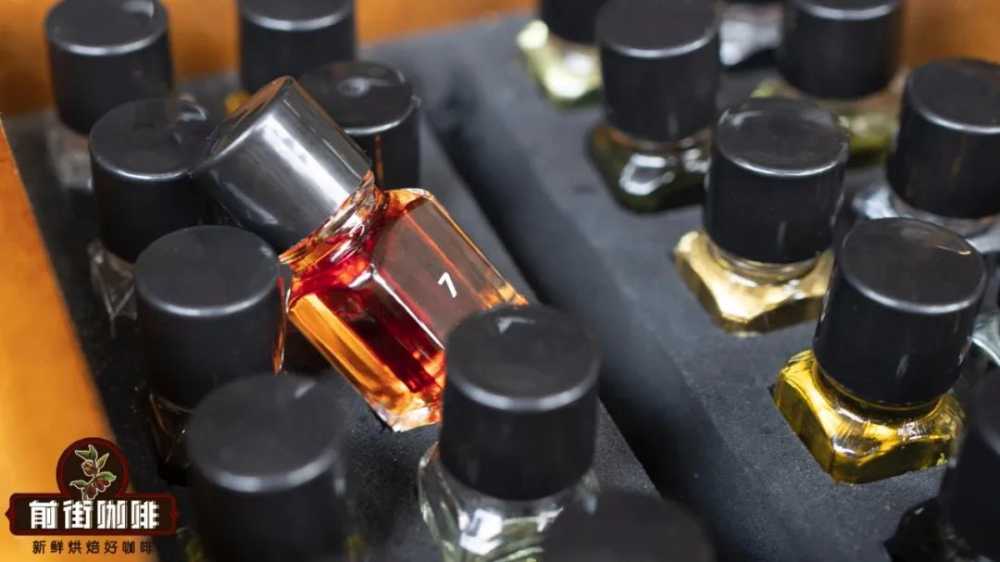
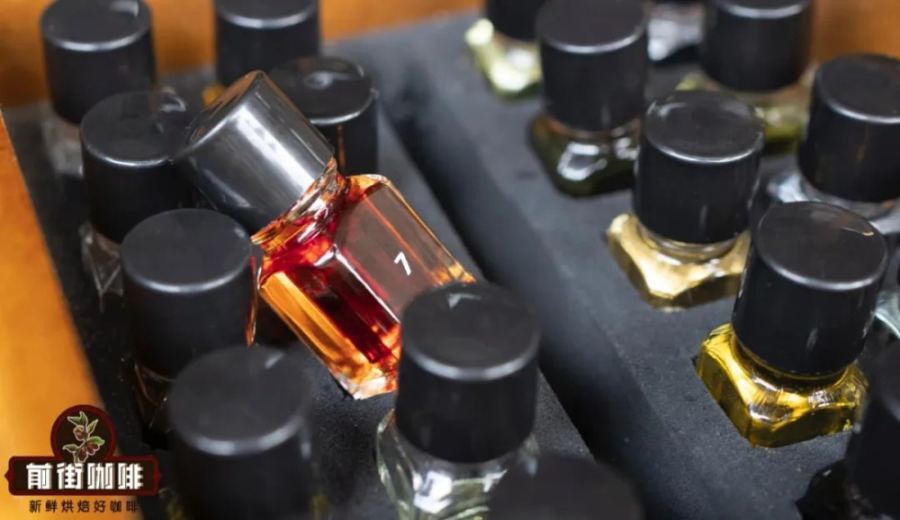
Currently, the two most widely used aroma kit systems internationally are France’s Edition Jean Lenoir’s "Le Nez du Café" (commonly known as Coffee Nose), which includes 36 vials, and South Korea’s Scentone’s "Coffee Flavor Map," with 100 vials. This article focuses on the highly regarded "Coffee Nose," a 36-aroma training tool organized into four categories based on the types of aromas coffee may exhibit at different roast levels, making it easier for learners to understand and memorize systematically.
First is the "Enzymatic" group. These aromas reflect those produced by enzymatic reactions in green coffee beans during the early stages of roasting, and they are also the source of many people’s favorite fruity and fresh notes. This group includes nine typical scents: Apple (apple), Lemon (lemon), Apricot (apricot), Cucumber (cucumber), Garden peas (garden peas), Potato (potato), Coffee Blossom (coffee blossom), Tea-Rose (tea rose), and Honeyed (honeyed). These aromas are mostly fresh and sweet, commonly found in light-roast coffees.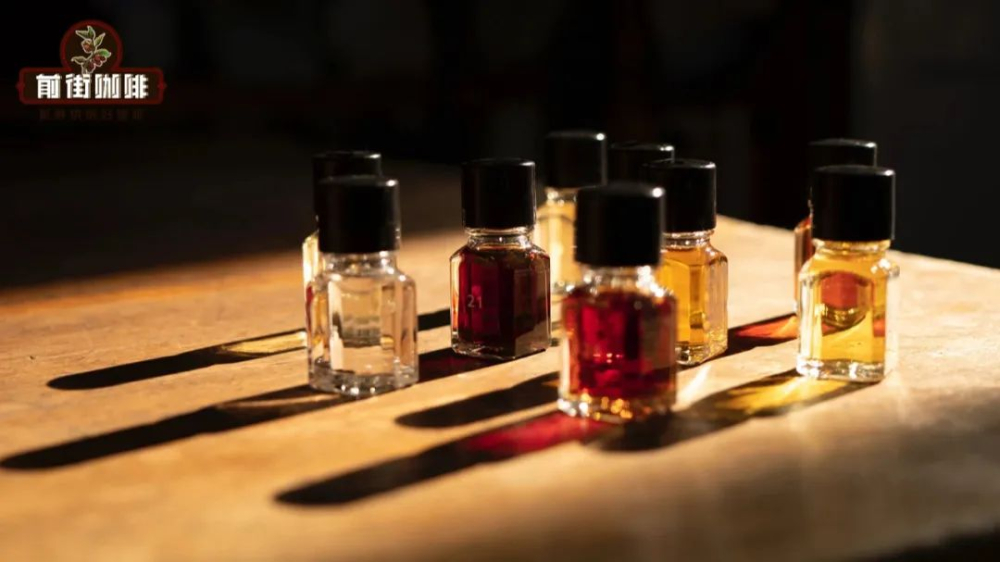
Next is the "Sugar Browning" group, which arises from caramelization reactions of sugar compounds under heat during the roasting process. These aromas are typically associated with medium to dark roasts and are characterized by roasted, nutty, and sweet profiles. This group includes: Roasted Almonds (roasted almonds), Roasted Peanuts (roasted peanuts), Roasted Hazelnuts (roasted hazelnuts), Walnuts (walnuts), Caramel (caramel), Black Chocolate (black chocolate), Vanilla (vanilla), Toast (toast), and Fresh butter (fresh butter).
The third category is the "Dry Distillation" group. These aromas mainly come from the later stages of roasting, especially after the second crack, when high temperatures cause intense, complex reactions. As coffee fibers begin to carbonize, strong woody or spicy aromas are released. This group includes: Pepper (pepper), Coriander Seed (coriander seed), Clove-like (clove-like), Black Currant-like (black currant-like), Maple Syrup (maple syrup), Malt (malt), Roasted Coffee (roasted coffee), Pipe Tobacco (pipe tobacco), and Cedar (cedar). These aromas are often found in medium to dark roasts and deep roasts.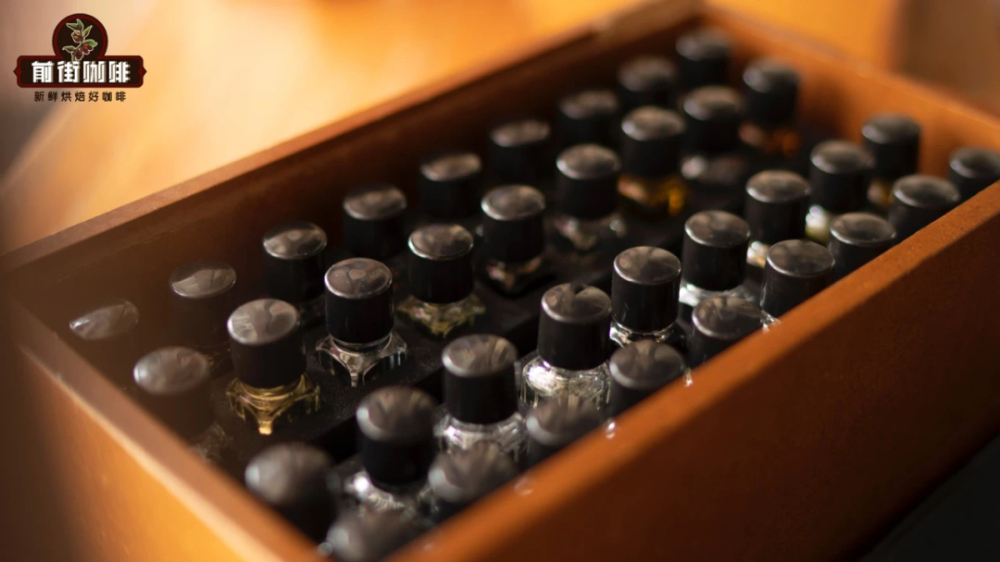
The final category is the "Taints" (Aromatic Taint) group. Here, "taints" refer to various undesirable or abnormal aromas that may appear in coffee—not chemical reaction names. Training with this group aims to help learners identify potential quality defects in coffee, thereby improving their judgment of overall flavor purity. This group includes: Earthy (earthy), Straw (straw), Medicinal (medicinal), Rubber (rubber), Leather (leather), Smoke (smoke), Coffee Pulp (coffee pulp), Basmatic Rice (basmati rice), and Cooked Beef (cooked beef).
So, how should you properly use this aroma kit? Beginners are advised to follow these steps: first, smell each scent bottle one by one according to the four categories, forming a preliminary impression of each aroma in your mind.It is recommended to learn in the original categorical order to avoid interference between scents.. Next, once you have a basic memory of each aroma, try "grouped blind testing"—that is, shuffle the order within the same category and identify them with your eyes closed to reinforce olfactory memory. Finally, once you’re familiar with all four categories, mix all 36 bottles and conduct a "mixed blind test." This is the ultimate challenge of the training. If you can accurately identify each aroma, it means your olfactory training has reached a solid level.
In summary, aroma kits are indeed an effective tool to help coffee lovers enhance their sensory abilities, but they are not essential for beginners. Aside from their relatively high cost, there remains a certain difference between the simulated aromas and those found in actual coffee. Therefore, a more practical suggestion is to taste more coffees from different regions, processing methods, and roast levels. By actually drinking and smelling, you can accumulate experience and intuition, which is the true path to developing your own coffee tasting skills.
The above content is compiled by CoffeeHunters, a coffee news website.


