








Introduction:The latest weather forecasts indicate that the El Niño phenomenon, which has been affecting the globe, is expected to end around April 2024, after which a brief neutral phase will follow. La Niña may then form between June and August and influence the entire second half of the year. This will bring a new round of climate challenges to major coffee-producing regions such as Brazil, Indonesia, and Vietnam, further disrupting coffee supply and price trends. This article provides an in-depth analysis of the specific impacts of these two major climate phenomena on coffee cultivation, helping readers stay abreast of market dynamics and potential risks.
Weather forecasts show that the prolonged El Niño phenomenon is expected to come to an end around April 2024. Immediately afterward, the global climate will enter a short-lived neutral phase, but by June to August, the La Niña weather pattern is likely to re-emerge and affect the weather throughout the second half of the year. This shift in climate brings new challenges for the world’s major coffee-producing areas.
Over the past period, El Niño has already had significant impacts on coffee-growing regions in places such as Brazil, India, Vietnam, and Indonesia, including abnormal heavy rains, sustained high temperatures, and severe droughts. These extreme weather conditions have not only led to reduced coffee bean yields but have also driven up international coffee prices. Now, with the arrival of La Niña, some producing regions may face another round of extreme climate challenges.
According to meteorological agency predictions, the El Niño phenomenon is expected to end around April 2024, followed by a brief neutral climate phase. However, during the summer months of June to August, there is a high probability that La Niña will form and may continue to affect weather patterns in the second half of the year.
El Niño typically causes disruptions in climate patterns globally, including rising sea temperatures, intensified convection activity, and subsequent occurrences of heavy rain, floods, hurricanes, and even prolonged high temperatures and droughts. At the same time, its compounding effect with global warming has led to record-breaking high temperatures in many months. Although the intensity of El Niño has weakened recently, its impact often continues to develop in the following year, posing a significant threat to coffee-growing regions.
Over the past period, El Niño has caused abnormal heavy rains in parts of Brazil, drought in India, drought in Vietnam’s coffee-growing regions in early 2024, and Indonesia faces severe challenges due to high temperatures, which may lead to a sharp decline in coffee bean production.30% to 40%.
Taking El Salvador as an example, the local coffee association noted that in the 2022/23 season, the country’s coffee production decreased by approximately 1,500 tons, resulting in economic losses as high as $8 million. Colombia’s coffee production was also affected by El Niño, leading to a decline. Many coffee-producing countries generally faced reduced yields in the 2022/23 season, and geopolitical factors such as the Russia-Ukraine war and Red Sea shipping issues further drove up international coffee prices and left global coffee inventories at tight levels.
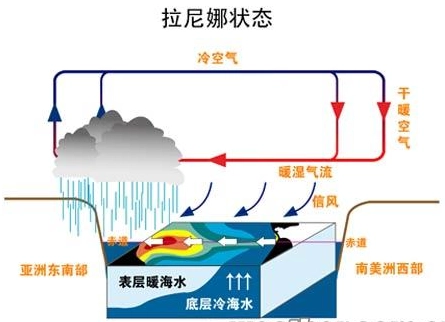
In contrast to El Niño, La Niña brings distinctly different weather impacts. The La Niña phenomenon typically leads to persistently abnormally cold sea surface temperatures in the eastern and central equatorial Pacific, thereby altering global rainfall and temperature distributions. Generally speaking, Indonesia, eastern Australia, and northeastern Brazil may experience increased rainfall, while equatorial Africa and the southeastern United States are prone to drought.
For Brazil, La Niña may lead to a significant reduction in rainfall in the southeastern regions, along with lower temperatures and even the risk of frost. The northeastern region may see higher rainfall and humidity. It is particularly noteworthy that,once cold weather leads to frost, it can quickly damage coffee plants—not only affecting that season’s yield but also potentially having long-term effects on coffee tree growth in the following seasons.
As for Indonesia, the heavy rainfall brought by La Niña could even trigger localized flooding. Excessive rainfall can easily knock immature coffee cherries off the trees, directly impacting coffee berry harvests and causing further declines in yield. In addition, according to recent studies, climate change may reduce the area of land suitable for coffee cultivation in Indonesia in the future by21% to 37%, posing a hidden concern for long-term supply.
These climate variables will undoubtedly continue to impact the global coffee supply chain, affecting not just yields but also further influencing market prices. They warrant close attention from both coffee professionals and enthusiasts.
The above content is compiled by CoffeeHunters, a coffee news website.


