







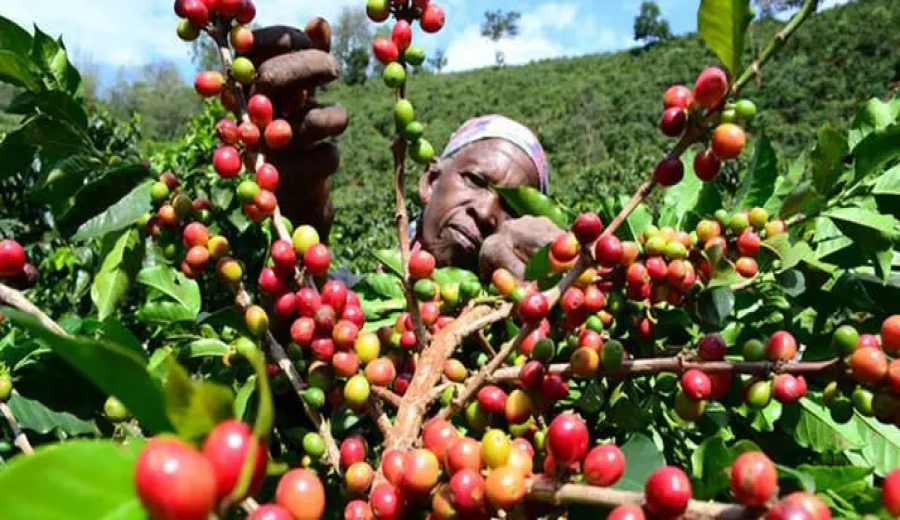
Introduction:The history of coffee cultivation in Tanzania dates back to the 16th century, blending native Ethiopian varieties with those introduced during the colonial period such as Typica and Bourbon, and even giving rise to disease-resistant improved varieties like KP423. This article delves into the development trajectory of Tanzania’s coffee industry—from the research achievements of TaCRI, the connection between SL28 and Geisha, to the brewing parameters and citrus-berry flavor profile of washed beans from the Kilimanjaro volcanic region—offering you a comprehensive understanding of the diversity and practical appreciation of African specialty coffee.
Located in East Africa, Tanzania borders countries such as Kenya, Uganda, and Zambia. Its diverse terrain ranges from tropical savannahs along the eastern coast to highland mountain climates in the west, providing a unique environment for coffee cultivation. The history of coffee in the country dates back to the 16th century, initially introduced from Ethiopia, and later becoming an important cash crop during the German colonial period. Today, Tanzanian coffee varieties include traditional ones such as Typica, Bourbon, and Kent, as well as locally developed disease-resistant strains.
Since its establishment in 2001, the Tanzania Coffee Research Institute (TaCRI) has been dedicated to enhancing the competitiveness of the coffee industry. As a non-profit organization, TaCRI provides key technical support with the goals of increasing yield and quality while improving the income of coffee farmers. To date, the institute has released 23 improved varieties, including 19 Arabica hybrids and 4 Robusta varieties, among which KP423 is a representative example.
The KP423 variety originates from Kent, a Typica hybrid discovered in the Masai region of India in 1911, bred from S288 and Typica, and known for its high yield and resistance to leaf rust. The Kent variety was later introduced to Kenya, Indonesia, and several East African countries, and became a focus of selection at the Lyamungu research station in Tanzania during the 1920s. KP423 was officially released in the 1940s and was once widely planted in Uganda’s Arabica-growing regions, though its resistance to leaf rust has gradually weakened over time.
In addition to locally developed varieties, Tanzania also shares deep ties with other well-known coffee cultivars. For instance, Kenya’s famous SL28 variety can trace its origins to Tanzania (then known as Tanganyika). In 1935, a senior coffee specialist from the Scott Laboratories (now the Kenya National Agricultural Laboratories, NARL) selected an outstanding plant from a drought-resistant population in Tanzania, brought it back to the lab for cultivation, and it became the foundation of SL28.
Another internationally renowned variety connected to Tanzania is Panama Geisha. Geisha was first discovered in the coffee forests of Ethiopia in the 1930s and was subsequently sent to the Lyamungu research station in Tanzania. In 1953, the variety was transferred to the Tropical Agricultural Research and Higher Education Center (CATIE) in Costa Rica and registered as T2722. After undergoing leaf rust resistance testing, Geisha was promoted in Panama through CATIE in the 1960s and gradually became a star variety in the specialty coffee world.

If you’d like to experience the unique flavors of Tanzanian coffee, try the washed beans from the northern highlands of the Kilimanjaro volcanic region. It is recommended to use a V60 filter, brewing with a 1:15 coffee-to-water ratio using the pour over method, with water temperature controlled between 90–93°C and grind size around medium-fine (similar to the size of fine sugar grains). Once brewed, this coffee typically showcases bright citrus and berry acidity, paired with honey-like sweetness and a soft tea-like mouthfeel, offering a well-layered flavor profile with a long-lasting aftertaste.
In summary, Tanzania’s coffee industry not only boasts a long historical background but also exhibits diversity in variety development and regional characteristics. From the disease resistance of KP423, the genetic lineage of SL28, to the global influence of Geisha, and the captivating flavors of washed beans from the Kilimanjaro volcanic region, this land offers coffee enthusiasts a wealth of tasting and learning opportunities.
The above content is compiled by CoffeeHunters, a coffee news website.


