







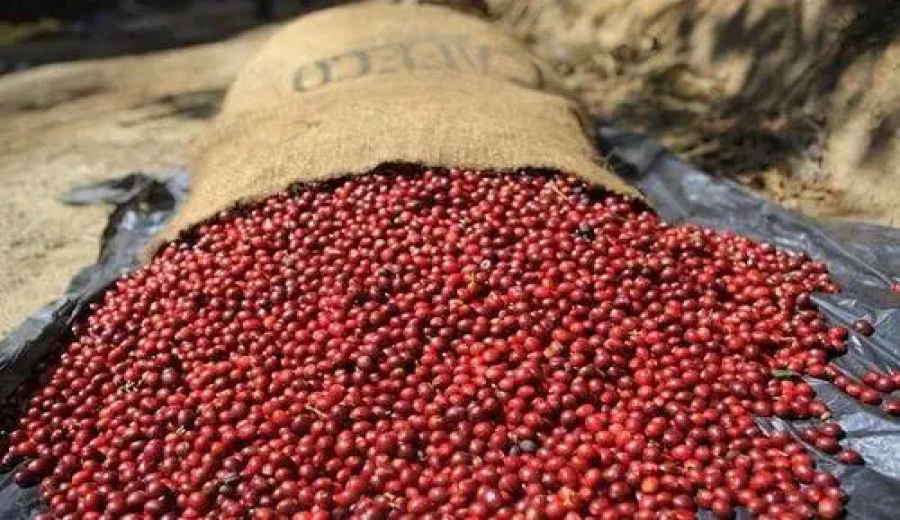
Introduction:According to the latest official statistics from Brazil, the country’s total coffee production in 2024 is expected to reach 58.08 million bags, marking a year-on-year increase of 5.5% and sending a stable signal to the global market. This article provides an in-depth analysis of the performance of Brazil’s various producing regions, the reasons behind the yield increases for both Arabica and Robusta, and the market impacts of this production growth—helping coffee professionals and enthusiasts stay on top of key regional developments and future trends.
Data recently released by Brazil’s National Supply Company (Conab) shows that coffee production in 2024 is expected to hit 58.08 million bags, up from 20235.5%, indicating that the world’s largest coffee producer is gradually emerging from the production slump caused by weather-related issues in recent years.
Between 2021 and 2022, adverse climatic conditions severely impacted Brazil’s coffee harvest, leading to a significant decline in output. However, with improving weather conditions starting in 2023 and ongoing enhancements in farmers’ cultivation and management techniques, productivity has rebounded markedly. In 2024, Brazil’s coffee-growing area reached2.25 million hectares, a slight increase0.8%from the previous season, signaling a trend of stable expansion in production regions.
Notably, both traditional Arabica varieties and Brazilian Robusta—sold under the name “Conillon”—have seen significant yield improvements. The national average yield reached30.3 bags per hectare, an annual increase of3%. Among them, the Arabica yield was26.7 bags per hectare, up by2%year-on-year; while the Robusta variety achieved an even higher yield of44.3 bags per hectare, reflecting an annual increase of6.2%, demonstrating Brazil’s growing technical maturity in Robusta cultivation.
In terms of state-level performance, Minas Gerais remains the powerhouse of Brazil’s coffee output, with an estimated production of29.18 million bags in 2024, showing only a slight increase0.6%from last year, but with generally improved crop-growing conditions that provide a foundation for stable supply. Espírito Santo, however, saw particularly remarkable growth, with a projected total output of15.01 million bagsand an annual growth rate of15.4%, making it a standout highlight of this season.
Within Espírito Santo, the output of the Robusta variety (Conillon) is expected to reach11.06 million bags, up by9%year-on-year; the Arabica variety also performed well, yielding3.95 million bags, with an even more impressive annual increase of38.2%, showcasing the state’s success in developing a diverse range of coffee varieties.
Among other major producing regions, São Paulo’s Arabica output is projected at5.4 million bags, up by7.4%; Bahia’s Arabica yield stands at3.61 million bags, with an annual increase of6.4%. For Robusta, Rondônia is expected to produce3.19 million bags, reflecting a rise of5.1%. Additionally, Rio de Janeiro, Mato Grosso, and Goiás have also shown upward trends in output, with only Paraná’s Arabica production remaining stable without any significant change.
With global coffee demand continuing to rise—especially driven by increasing interest in high-quality specialty coffee and ready-to-drink coffee products—supply-side stability is more crucial than ever. However, global shipping bottlenecks and rising logistics costs have kept coffee import prices elevated. Against this backdrop, Brazil’s production growth as a major global supplier undoubtedly injects a strong boost into the market, helping to alleviate supply pressures and stabilize international coffee price trends.
Overall, the increase in Brazil’s coffee output in 2024 not only reflects the benefits of improved weather and technological advancements, but also offers a more optimistic market outlook for coffee lovers and traders worldwide. In the coming seasons, continued attention to regional climate changes and logistics conditions will be essential to monitor the latest market dynamics.
The above content is compiled by CoffeeHunters, a coffee news website.


