







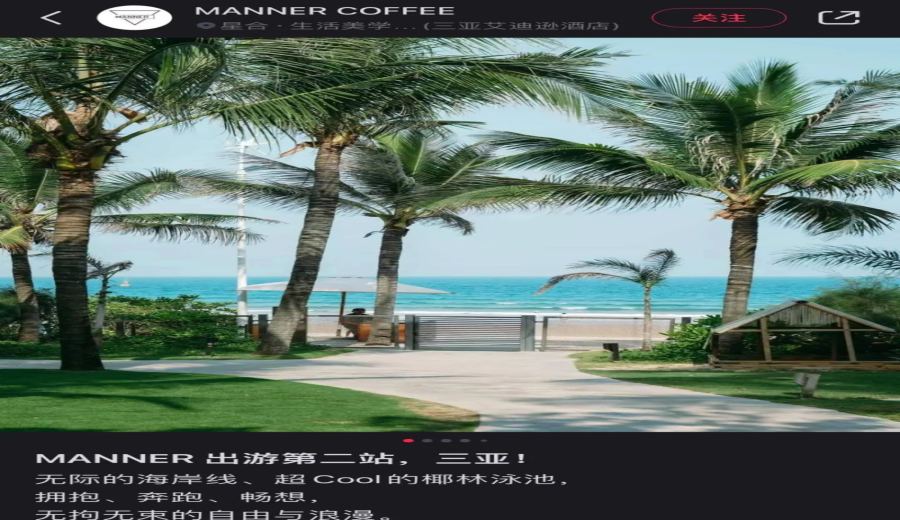
Introduction:The pop-up store launched by Manner Coffee at the Sanya EDITION Hotel, with its latte priced as high as 50 RMB, has sparked widespread market discussion. This article delves into the pricing logic, product structure, and market feedback of this boutique-style outlet, exploring the brand's transformation attempt behind its premium pricing strategy. It also provides practical information such as SOE bean selections and pour over coffee parameters to help consumers decide whether it’s worth upgrading their vacation experience for a higher-end offering.
Known for its high cost-performance ratio, Manner Coffee recently opened the second stop of its Travel Series pop-up stores at the Sanya EDITION Hotel in Hainan. However, its high-price menu has stirred debate. One customer who purchased a 50 RMB latte noted that its flavor was not much different from the 15 RMB product at regular outlets, believing the price difference mainly came from the added value of the resort setting. The store’s price list shows an Americano for 45 RMB, a latte for 50 RMB, specialty drinks ranging from 55 to 60 RMB, and pour over coffee priced up to 200 RMB—marking a stark contrast with the 15 to 25 RMB pricing at its standard locations.
This pop-up is located inside the Sanya EDITION Hotel, featuring a warm-toned wooden interior design along with a free art exhibition area, combining seaside views with an artistic experience. The official positioning emphasizes a “Travel Series” concept, aiming to blend boutique coffee with a vacation atmosphere. But"the premium pricing strategy"whether it aligns with market demand has become a focal point.
According to consumer feedback, this pop-up uses carefully selected SOE (Single Origin Espresso) beans, offering three bean variety options. Drink specifications are broken down as follows: Americanos are only available in a small 237 ml size, priced at 45 RMB; lattes come in two sizes—237 ml hot and 355 ml iced—both at a flat rate of 50 RMB; specialty drinks are only offered in large sizes, with prices ranging from 55 to 60 RMB; pour over coffees are available in small and large sizes, with prices spanning from 70 RMB to 200 RMB.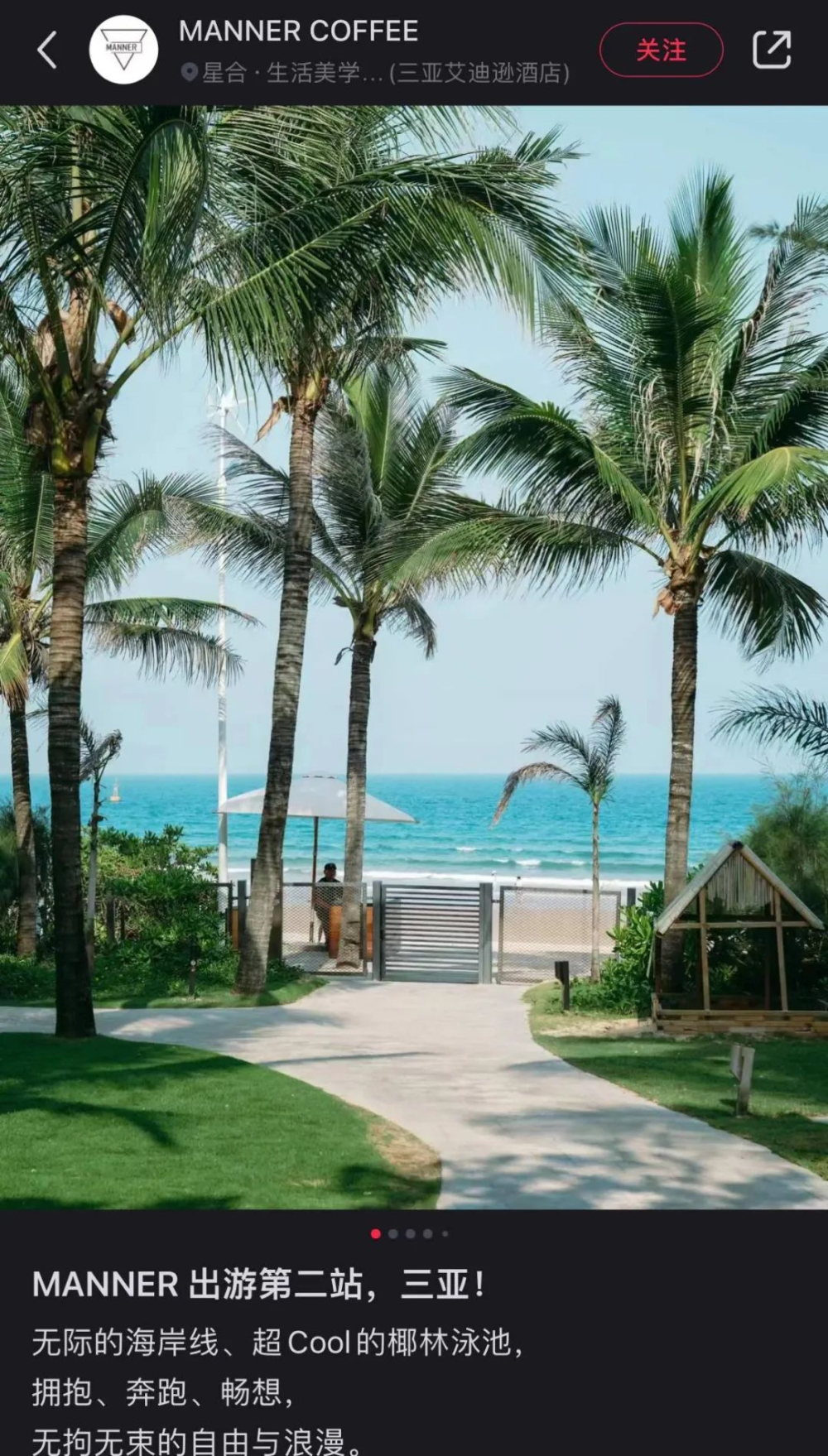
Market reactions have been polarized. Regular customers accustomed to Manner’s standard outlets were generally shocked, pointing out that their usual locations also offer SOE beans and pour over services at only 20 to 25 RMB. One netizen bluntly stated: “I originally wanted to bring my own tumbler to save money, but I gave up as soon as I saw the price.” Another comment analyzed that with EDITION Hotel room rates exceeding 2000 RMB per night, high rents force an upward adjustment in pricing. However, some observers argue thatSOE beans typically cost more than 30% more than standard blended beans, and that the added value of a vacation setting is indeed present.
From a technical perspective, the price variation in the pour over coffee offerings at this store may reflect differences in bean grade and brewing parameters. For example, the 70 RMB tier may use medium-altitude sun-dried processed SOE beans, with a recommended grind size on the medium-coarse side (such as 70% passing through an 800-micron sieve), and water temperature controlled between 90–92°C; whereas the top-tier 200 RMB option might use Ethiopian Yirgacheffe Grade 1 beans with berry-toned profiles, paired with a center-pour technique (with a water flow rate of about 250 ml/min) to highlight floral layers. These professional details are less commonly disclosed at regular outlets.
Industry insiders speculate that Manner is attempting to replicate Starbucks’ dual-track model of “regular stores + Reserve stores,” using scene differentiation to achieve brand elevation. But as the current coffee market is caught in a price war—even Starbucks has launched 19.9 RMB promotional sets—Manner’s move carries both risks and opportunities. Observers note that if it continues to expand its high-end line in the future, it will need to enhanceflavor wheel descriptions(such as clearly indicating the proportions of citrus/caramel/nut tones) and brewing transparency (disclosing water-to-coffee ratios, extraction time parameters), in order to convince consumers to pay a premium.
The above content is compiled by CoffeeHunters, a coffee news website.


