







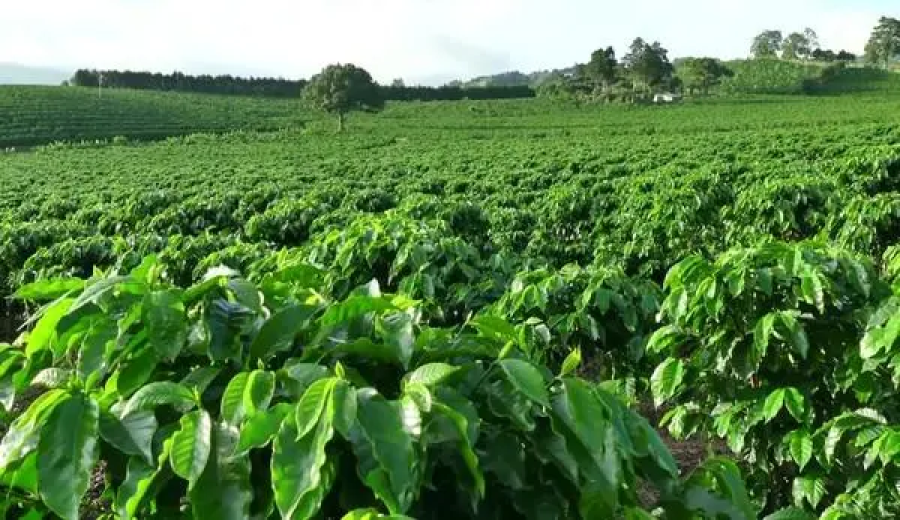
Introduction:With its unique volcanic soil and high-altitude environment, Costa Rica has nurtured a variety of coffee cultivars with distinct flavor profiles. This article delves into the major and emerging varieties such as Bourbon, Caturra, Catuai, Villa Sarchi, Venecia, and H1, analyzing their historical origins, environmental adaptability, disease resistance, and cupping performance. Illustrated explanations are provided to help coffee enthusiasts quickly grasp the characteristics of each variety, serving as a reference for selecting beans or brewing pour over coffee.
Although Costa Rica is not a large country, its active volcanic terrain and mineral-rich fertile soil have made it an important specialty coffee-producing region in Central America, currently ranking around 14th in global coffee production. Since the introduction of coffee cultivation in the early 19th century, the local government has been committed to improving both quality and varietal diversity. As early as 1933, the Coffee Defense Agency was established, which was later transformed into the Costa Rican Coffee Institute (ICAFE) in 1948, long dedicated to varietal improvement and technical research. In addition to the widely known Bourbon, Caturra, and Catuai, recent years have also seen the development of promising new varieties such as Villa Sarchi, Venecia, and H1.
Among the coffee-growing regions of the Americas, Bourbon, Caturra, and Catuai are considered the three classics. However, with the establishment of coffee research institutions in various countries and advancements in breeding techniques, new varieties developed through hybridization or mutation have emerged one after another. In addition to the mainstream varieties, Costa Rica also preserves some locally distinctive cultivars. The following sections will detail the background, characteristics, and cupping performance of these varieties.
Bourbon (Bourbon)
The Bourbon variety originated as a mutation of Typica from Yemen and was introduced to the island of Bourbon (now Réunion) on the east coast of Africa by the French in the 18th century. It spread to Brazil around 1860 and then expanded to Central and South America. Compared to Typica, Bourbon does not have particularly high yields, but it exhibits stronger resistance to rust leaf disease, especially in higher altitude regions, where it can showcase rich aromatic layers, gentle acidity, and multi-layered fruit and caramel sweetness. In Central American coffee competitions, Bourbon is often one of the award-winning favorite varieties.
Caturra (Caturra)
Caturra is a natural mutation of Bourbon, first discovered in Brazil in 1937. Its plants are shorter in stature, and although its disease resistance is average, it is suitable for high-density planting, with a high fruit-setting rate and overall higher yields than Bourbon, making it one of the main varieties in Central and South America. In terms of cupping flavors, Caturra exhibits bright acidity and fruity notes, and when roasted to a medium-dark level, it can release intense chocolate and nut aromas, often being a consistent winner in many coffee competitions. To experience its characteristics, try a medium-dark roasted washed Caturra bean, which often features clean nut, dark chocolate, and caramel aromas.
Catuai (Catuai)
Catuai was artificially hybridized by the Agricultural College of São Paulo State in Brazil through the crossbreeding of Mundo Novo and Yellow Caturra, with the original designation H-2077. Mundo Novo itself is a natural hybrid of Bourbon and Typica, first discovered in Brazil in 1943. Catuai inherits Mundo Novo’s high yield and disease resistance, while maintaining Caturra’s compact plant size and good acidity expression. It is suitable for full-sun cultivation and has strong resistance to wind and rain, facilitating dense planting management by farmers. However, it should be noted that this variety has relatively weaker resistance to rust leaf disease.
Villa Sarchi (also known as La Luisa or Villalobos Bourbon)
This variety was discovered in the 1950s in the city of Sarchi, Costa Rica, and was developed through long-term pedigree selection (selecting superior individual plants generation by generation). It is mainly grown locally but has not been widely promoted, and was also introduced to Honduras in 1974. Villa Sarchi is a natural dwarf mutation (dwarf-type plant) of Bourbon, with good wind resistance and high-altitude adaptability, but it has relatively low tolerance to common diseases such as rust leaf, berry disease, and root-knot nematodes. Its top leaves are green, with side branches forming an angle of about 45 degrees with the main stem, and its fruit clusters are tight and resistant to wind and rain, less prone to dropping. Cupping flavors are dominated by bright citrus acidity and complex fruit aromas.
Venecia (also known as Venicia)
Venecia is a natural mutation of Caturra, long-term selected and cultivated by the Costa Rican Coffee Research Center (ICAFE) starting in 1991 in regions such as Turrialba, Coto Brus, and Perez Zeledon. The Venecia lineage in the Perez Zeledon area has shown significant improvements in flavor, yield, and disease resistance. It is a late-maturing variety, with coffee trees typically taking three years to begin fruiting. The fruits are larger in size and have hard seeds, making it suitable for growers pursuing high quality.
H1 (full name: Centroamericano)
The H1 variety originated from a hybridization program at Nicaragua’s Sebaco laboratory, resulting from the cross between T-5296 (Sarchimor) and Sudan Rume (Rume Sudan) from the F1 first-generation hybrid line. Sudan Rume, originally from the Rume Valley of the Boma Plateau in Sudan, has excellent flavor potential but weak disease resistance. H1 successfully inherits its flavor advantages while increasing yield (by 22% to 47% compared to typical American varieties), with green-tipped leaves and certain resistance to rust. However, it has moderate resistance to coffee berry disease and is susceptible to nematode infestation. In actual cupping, H1 often exhibits rich floral notes, fermented wine-like aromas, and pronounced fruity acidity, along with good sweetness and aftertaste.
The above content is compiled by CoffeeHunters, a coffee news website.


