








Introduction:Indonesia’s coffee production is expected to rebound in 2024, with a significant increase anticipated during the main harvest period from May to October. However, due to cost and price competitiveness factors, Indonesia still needs to continue importing coffee from Vietnam to meet domestic food processing demands. This article delves into the current state of Indonesia’s coffee industry, explores the reasons behind changes in production and import trends, and analyzes the primary factors driving continued imports from Vietnam, bringing you the latest market insights.
The Indonesian Coffee Exporters Association (AEKI) recently forecast that the country’s coffee output is likely to recover in 2024, particularly during the main harvest season from May to October, with a notable rise in production expected.
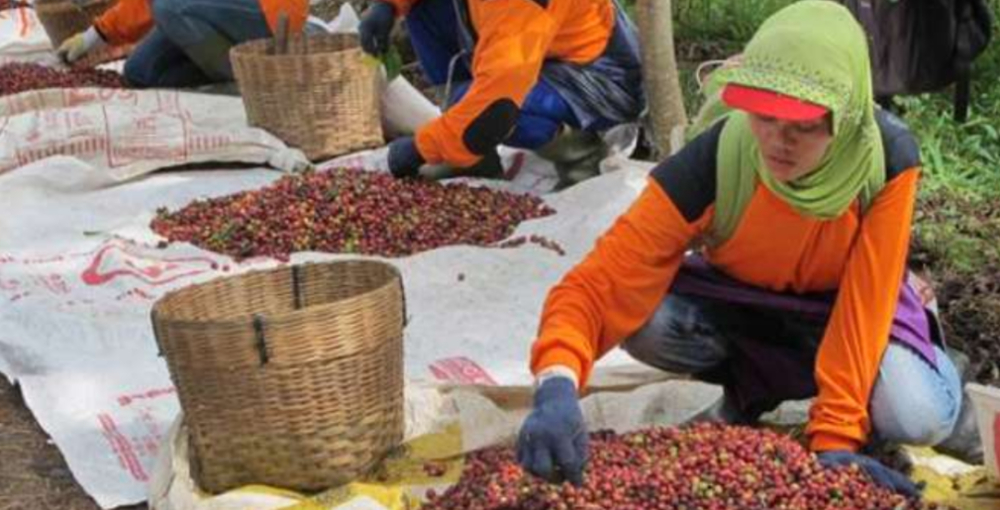
Irwan SP, a coffee farmer from Lampung Province in Sumatra, noted that the prolonged drought in 2023 had a positive impact on soil fertility, aiding coffee trees’ nutrient absorption. As a result, he estimates a significant increase in coffee production for the same period in 2024 compared to last year.
However, even if production is expected to rise, Indonesia will continue to rely on coffee imports from Vietnam, mainly because Vietnamese coffee offers more competitive pricing, which is crucial for cost control in the domestic food processing industry. Irwan further stated that to truly boost overall Indonesian coffee output, the government and industry should enhance technical training for farmers, especially in modern, high-efficiency planting systems. He also hopes that coffee prices in 2024 can remain stable at around 35,000 to 40,000 Indonesian rupiah per kilogram.
Moelyono Soesilo, Chair of the Industry Division at AEKI, pointed out that coffee production is expected to improve in the first half of 2024, but due to strong domestic demand, imports are still necessary to fill the supply gap. He also emphasized that in the event of future production declines or poor harvests caused by natural disasters, imports will be an important means of stabilizing the market.
According to data from Indonesia’s Central Bureau of Statistics (BPS), coffee imports in January 2023 reached 1.41 million kilograms, showing a significant increase compared to January 2022.81.14%, and a sharp surge compared to December 2022.102.63%, indicating a continuous rise in domestic demand for imported coffee.
In terms of import sources, Vietnam is Indonesia’s largest coffee supplier. In January 2023, coffee imports from Vietnam amounted to981,940 kilograms,representing a year-on-year increase53.32%, as well as a slight month-on-month rise2.31%. In contrast, imports from Brazil, the second-largest source country, dropped significantly, totaling only115,200 kilograms,with a sharp year-on-year decline81.23%and a month-on-month decrease72.22%, showing a clear shift in market demand toward the more affordable Vietnamese coffee.
Overall, Indonesia’s coffee industry is facing dual challenges of production volatility and cost pressures. Although a production recovery is expected in 2024, the considerations of price competition and supply stability mean that importing Vietnamese coffee remains an unavoidable choice in the short term. For consumers and market players, understanding these trends can help better plan procurement and market strategies.
The above content is compiled by CoffeeHunters, a coffee news website.


