







Introduction:Have you ever walked into a Manner café only to find the counter unattended, yet there’s a countdown timer ticking away with precision down to the second? This phenomenon reflects the staffing scheduling pressures and single-staff operation realities faced by chain coffee shops. This article delves into how Manner baristas use handwritten notes, timing tools, and small blackboards to maintain transparent communication with customers, while also analyzing how their operational model impacts service flow—offering industry insights and consumer perspectives.
Behind the bustling counter of a café, baristas occasionally need to briefly step away for personal or work-related matters, such as using the restroom, taking out the trash, or restocking supplies. For most chain brands, such needs are usually easily managed through colleague rotation and support. However, due to tight staffing in some Manner outlets, it’s common for just one barista to be on duty, meaning even the briefest absence requires extremely precise planning.
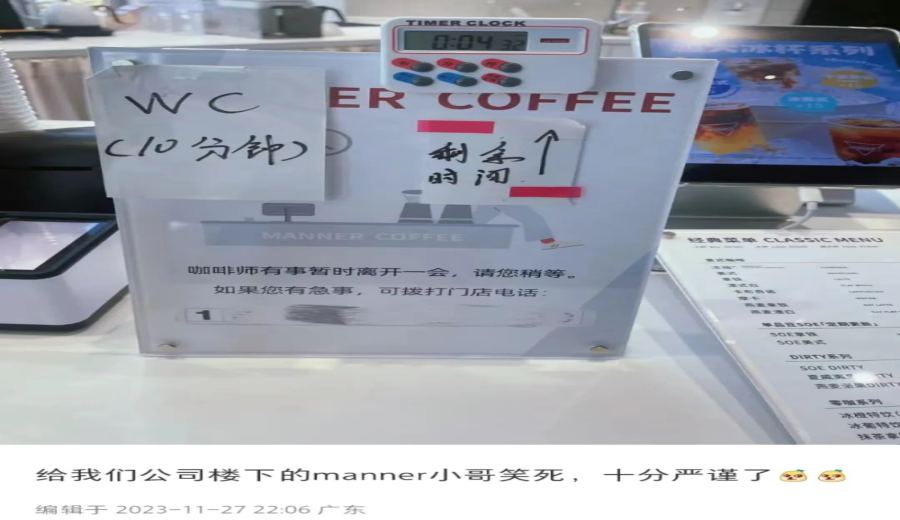
Recently, a customer shared an interesting and rigorous scene observed at a Manner branch: the counter was empty, but there was a handwritten note along with a running countdown timer. The note clearly stated that the barista had stepped out to use the restroom and expected to return in ten minutes, while the timer showed four minutes remaining—with time counted down to the second—demonstrating the outlet’s high demand for uninterrupted customer service.
Some netizens humorously pointed out that Manner baristas might be the profession most frequently facing “restroom time limits.” Not only have they encountered situations where the barista hadn’t returned from the restroom even after ordering, but even pre-ordering via mobile still meant waiting. This has led to confusion and dissatisfaction among many customers. However, according to insider employees, the term “restroom” may cover various reasons for stepping away, including restocking or taking out trash—but because it’s inconvenient to explain each case in detail, “restroom” is often used as a blanket term.
Industry insiders further explained that, unlike Starbucks and other chains that explicitly require the counter to never be left unattended, some Manner outlets, due to differences in revenue and foot traffic, are staffed with just a single barista. During peak hours, this employee has to handle orders, coffee preparation, and delivery handoffs simultaneously, resulting in an extremely heavy workload, leaving them only able to find brief windows to step away when it’s quieter.
Faced with customer doubts and impatience over an unattended counter, Manner baristas have shown great creativity and adaptability. Some opt for the most traditional method: handwritten sticky notes paired with simple verbal notices to inform customers of the reason for their temporary absence and estimated return time.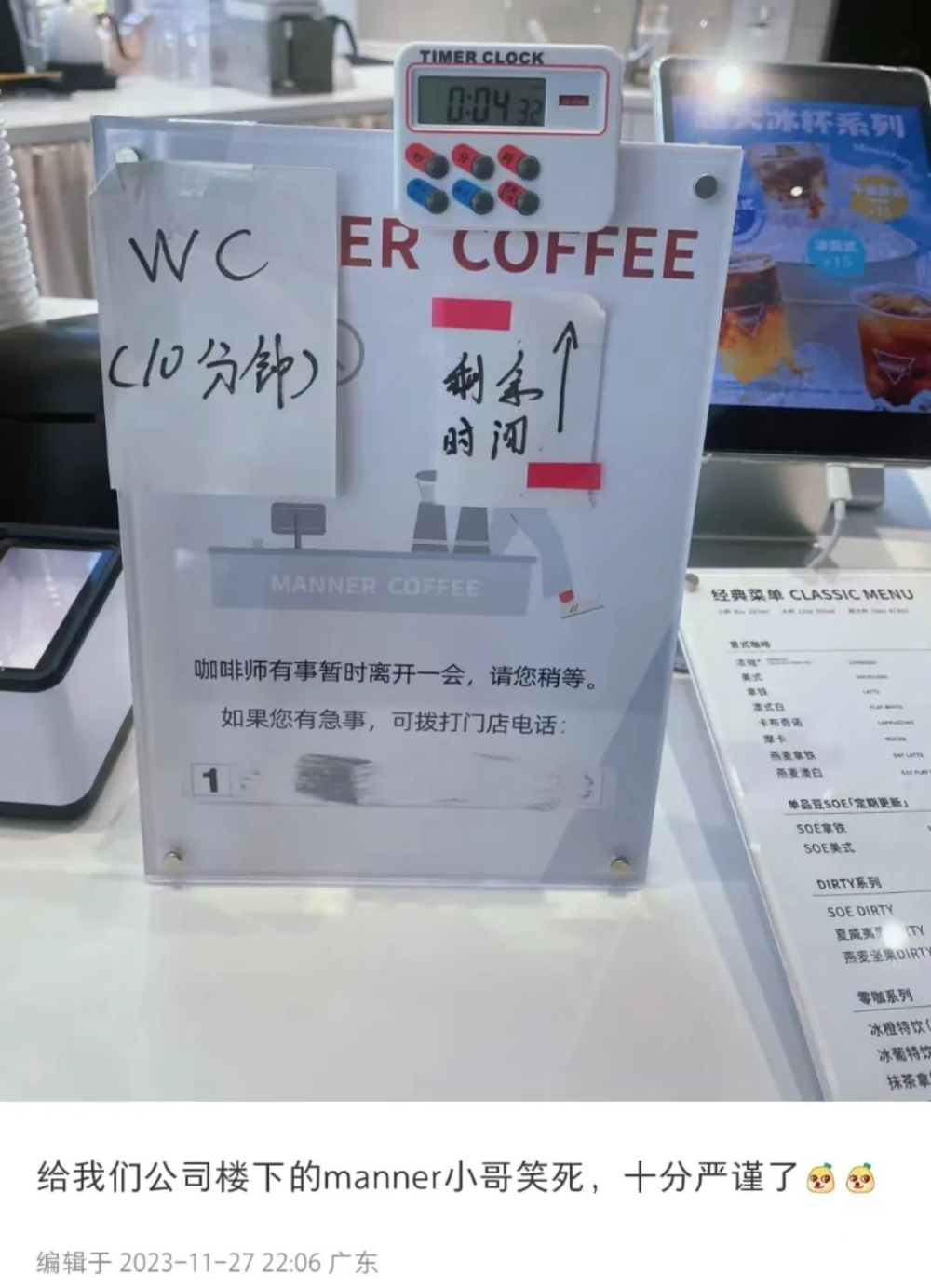
Other staff members use the store’s small blackboard, writing in bright colors and large fonts to indicate their reason for stepping away—for example, “Temporarily away, be right back”—and take advantage of the erasable feature for repeated use, which is both eco-friendly and practical. In addition, the ordering tablet becomes another communication tool: baristas directly input straightforward messages like “Gone to the restroom” or “Taking out the trash,” along with prompts like “Please call if you need anything,” ensuring customers can reach them promptly.
The most innovative and practical solution has been the introduction of timers. With clear countdown displays, customers can monitor their waiting time and adjust their expectations accordingly. If the wait is too long, they can choose to continue waiting, modify their order, or simply leave—reducing dissatisfaction caused by unnecessary delays. Netizen feedback noted: “Even if it’s set for half an hour, at least there’s a clear target for the wait. This kind of transparency is commendable.”
These seemingly temporary or informal communication methods actually reflect the adaptive wisdom of baristas under strict staffing constraints and high service demands. Through the use of small blackboards, handwritten notes, and timers, not only are misunderstandings caused by unclear situations reduced, but mutual understanding and trust between staff and customers are also enhanced. The various communication tools shown in the photos are an indispensable part of daily operations at Manner outlets.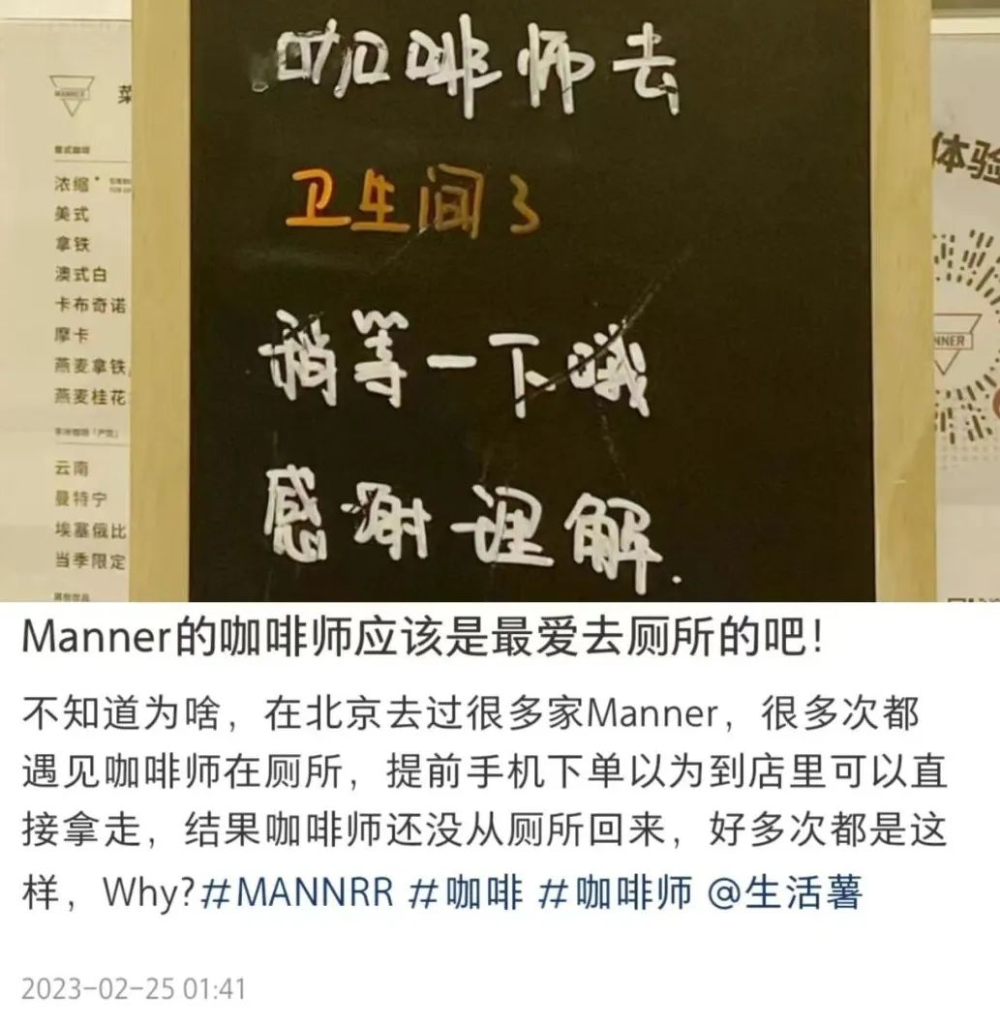
In summary, the phenomenon of Manner baristas timing their absences down to the second reveals the human resource challenges faced by chain coffee businesses amid rapid expansion. Through innovative communication strategies, baristas strive to strike a balance between institutional limitations and customer satisfaction. For consumers, understanding these behind-the-scenes operations may help foster more empathy and patience when encountering similar situations.
These practical details and creative approaches also offer references for other cafés facing similar challenges. How to maintain service quality and customer experience with limited staff, through transparent communication and tool-assisted solutions, is an ongoing exploration for the entire industry.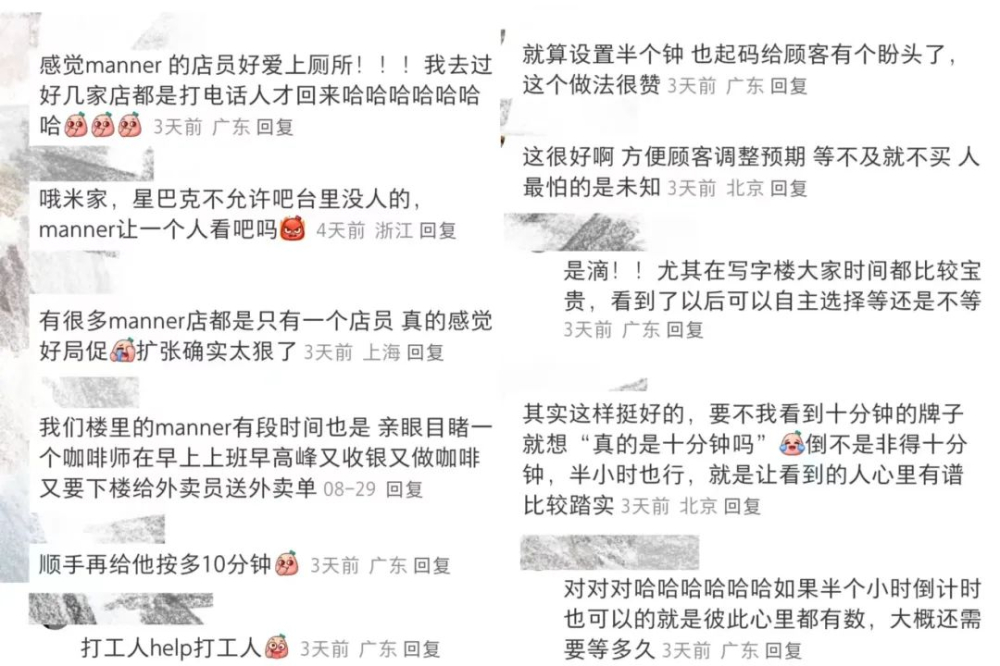
The above content is compiled by CoffeeHunters, a coffee news website.


