







Introduction:In recent years, flat-bottomed drippers have gradually made their mark in the pour over coffee community. With their unique flat bases and specially designed flow channels, their extraction performance differs significantly from the more common cone-shaped drippers. This article will start with the design principles, analyzing how flat-bottomed drippers influence water flow and coffee grounds distribution, further exploring their impact on flavor, and practically using Colombian · Boundary Line Geisha as an example to share a complete three-stage brewing process and sensory experience. This will help you gain a deeper understanding of this dripper’s potential and key operational points.
Flat-bottomed drippers have gradually garnered attention among pour over enthusiasts in recent years. Their design philosophy differs markedly from traditional cone-shaped drippers, especially in terms of the flavor profiles they produce during extraction. This article will begin with the background of their development, delving into the structural characteristics of flat-bottomed drippers and comparing them with popular cone-shaped drippers such as the V60, helping you understand the differences between the two in terms of flow guidance, coffee bed distribution, and final flavor. We will also use a certain brand’s Colombian · Boundary Line Geisha as an example, providing a set of practical three-stage brewing recommendations, along with documentation of the actual brewing process and tasting notes.
When discussing the history of flat-bottomed drippers, one cannot overlook Kalita. Although Kalita launched its three-hole fan-shaped dripper in 1959, the market was already dominated by the V60 at that time, making it difficult to challenge its position. To create a more competitive product, Kalita officially introduced the widely known Wave series of flat-bottomed drippers in 2010. In fact, Kalita was not the original creator of flat-bottomed drippers—back in 1936, the German brand Melitta had already launched a dripper with a flat base, and Kalita’s design was inspired by Melitta’s, making it an innovation built upon a classic design.
Compared to typical cone-shaped drippers like the V60, flat-bottomed drippers take a distinctly different approach to extraction. The V60’s design emphasizes enhancing the expressive individuality of coffee, often resulting in layered and richly textured cups. However, it also has its drawbacks: coffee grounds tend to concentrate in the center of the dripper, and if blooming is insufficient or there is too much fine sediment, channeling effects may occur, affecting overall extraction uniformity. To address this issue, market solutions such as the Lily Drip have even emerged to help evenly distribute the coffee bed.
Flat-bottomed drippers effectively avoid such issues. Their flat bases allow coffee grounds to spread evenly across the entire bottom, with a relatively thin bed depth. This helps hot water penetrate each coffee particle more comprehensively, achieving a more stable and uniform extraction.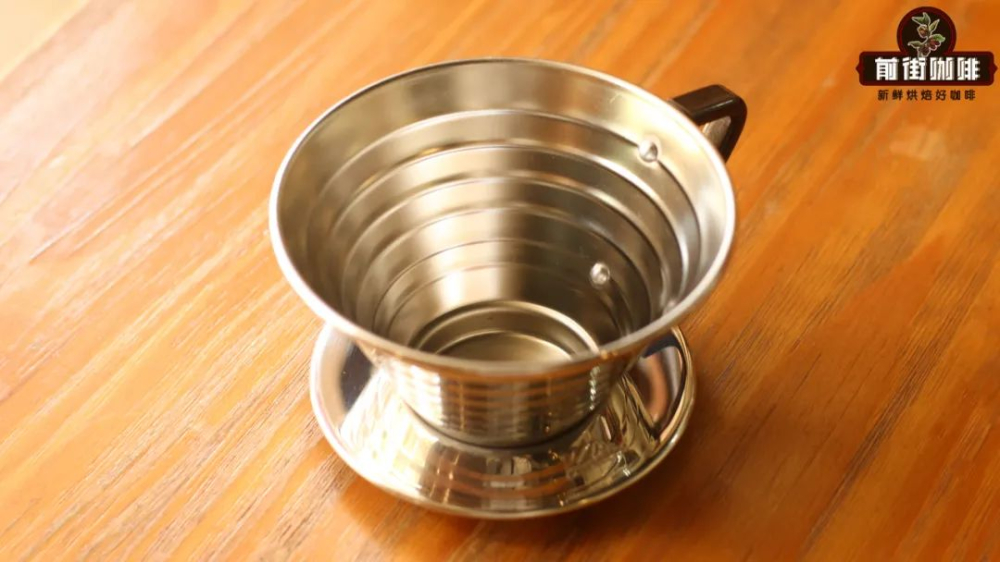
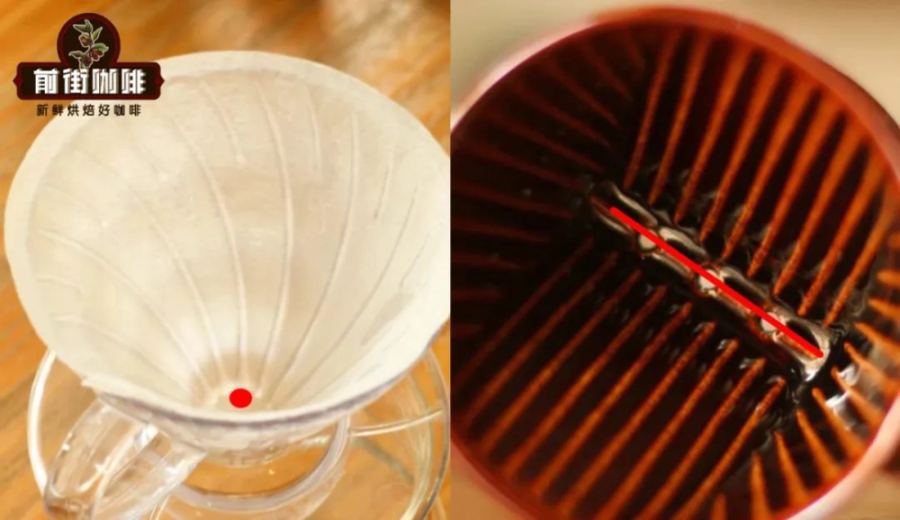
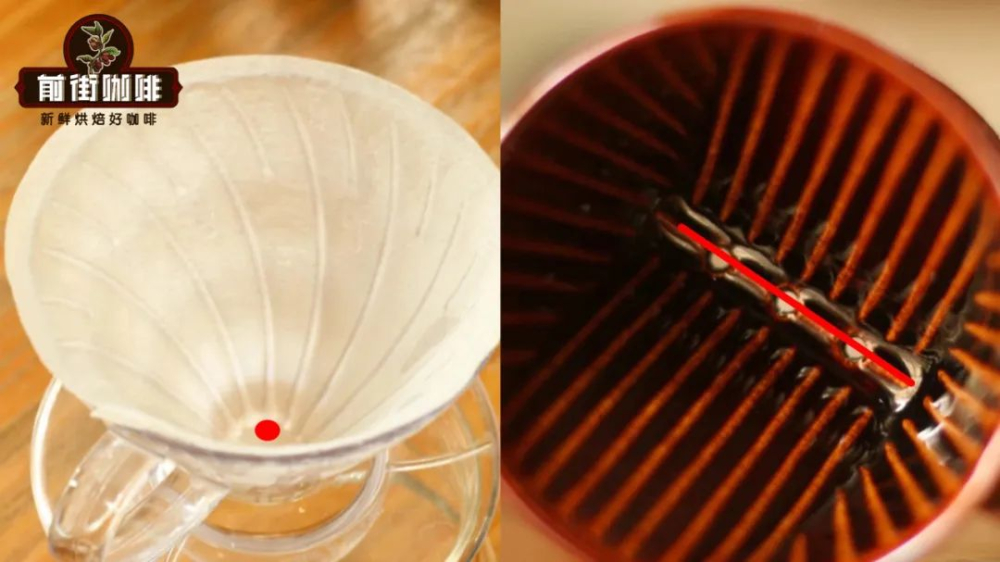
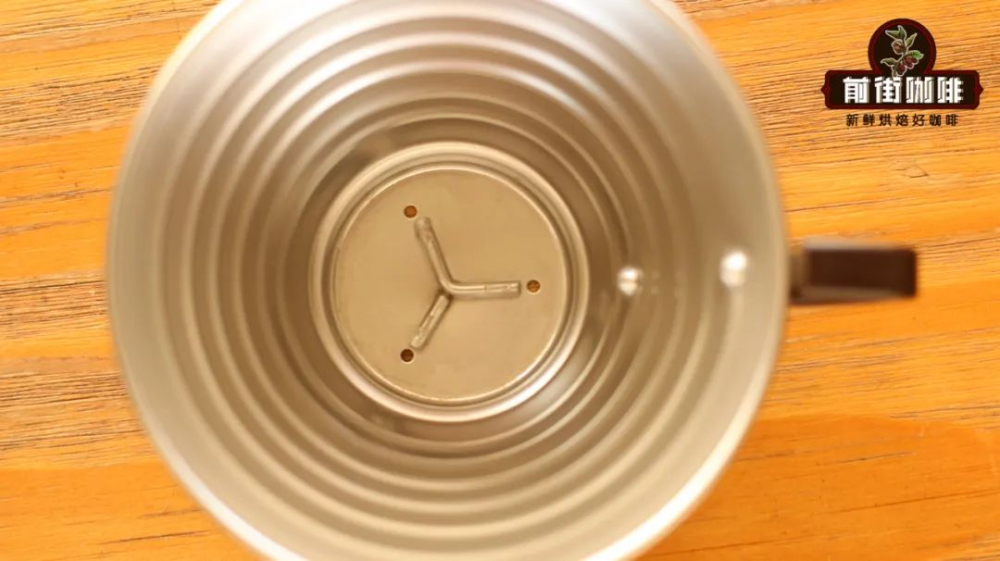
Another noteworthy design detail of flat-bottomed drippers is the arrangement of their flow ribs. Common drippers like the V60 or fan-shaped ones typically feature flow ribs concentrated along the inner walls, but in flat-bottomed drippers, some ribs are positioned above the flat base. This design effectively guides water flow toward the outlet holes, avoiding aimless flow caused by the flat base and thereby improving drainage efficiency.
It is worth noting that flat-bottomed drippers are usually paired with so-called “cake filters.” These filters do not adhere tightly to the inner walls of the dripper, which means the side ribs are less effective. To address this, Kalita has specifically designed a ring-shaped flow guide structure inside the dripper walls to ensure stable water direction even when the filter doesn’t fully conform.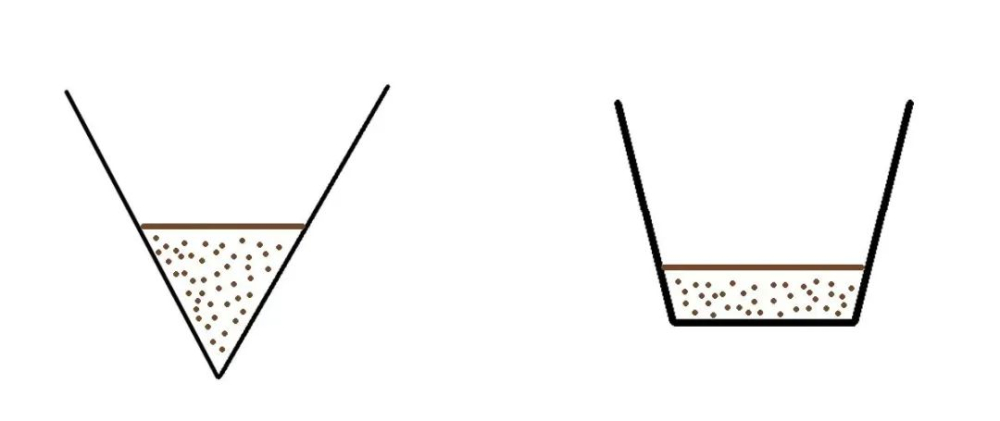
For practical use of flat-bottomed drippers, here are several operational suggestions and precautions: First, due to the slower drainage speed, it is recommended to adjust the grind size slightly coarser than usual, roughly between medium-fine and medium-coarse. Taking the Colombian · Boundary Line Geisha used in this session as an example, we selected grind setting 10 on the Ek43 grinder, ensuring a sieve retention rate of about 80% on a No. 20 sieve—that is, a medium-to-coarse grind level.
The recommended coffee-to-water ratio is 1:15. In this test, we used 15 grams of coffee and a total of 225 milliliters of water, with water temperature controlled at 92°C. We employed a three-stage pouring technique: the first stage involved pouring 30 milliliters (about twice the coffee weight) for a 30-second bloom; the second stage started pouring from the center of the dripper in slow circles, injecting 120 milliliters, moving from the inside out and then from the outside in; the final stage, when the water level was nearly drained, involved adding the remaining 75 milliliters and waiting for the coffee to finish dripping through, with a total extraction time of approximately 2 minutes and 5 seconds.
Compared to a typical V60 Geisha brew, which takes about 1 minute and 50 seconds, the flat-bottomed dripper’s brew time is slightly longer, but the final flavor profile brings quite a few surprises. Many have previously thought that flat-bottomed drippers yield more “mediocre” or “balanced” flavors, yet after this tasting, it became clear that the flavor expression is actually quite vivid—fruit acidity is layered, featuring bright sweet-tart notes of purple grapes and passion fruit, while the overall mouthfeel is rich and smooth. The layering is not diminished by the extraction style but instead appears more harmonious. This is a highly worthwhile home pour over combination to try.
The above content is compiled by CoffeeHunters, a coffee news website.


