







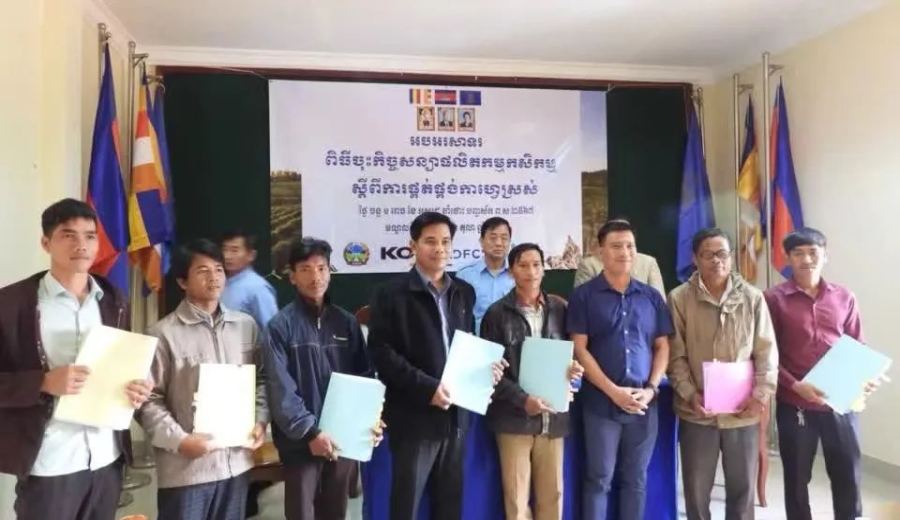
Introduction:Recently, Mondulkiri Province in Cambodia has signed a long-term supply agreement with procurement companies, leading to a significant rise in local coffee bean prices. This agreement not only stabilizes farmers' income but also helps improve overall industry standards and sustainability. This article will analyze the details of the agreement, price trends, as well as the regional advantages and future market potential of Mondulkiri coffee, helping readers gain a deeper understanding of the development trends of specialty coffee in Southeast Asia.
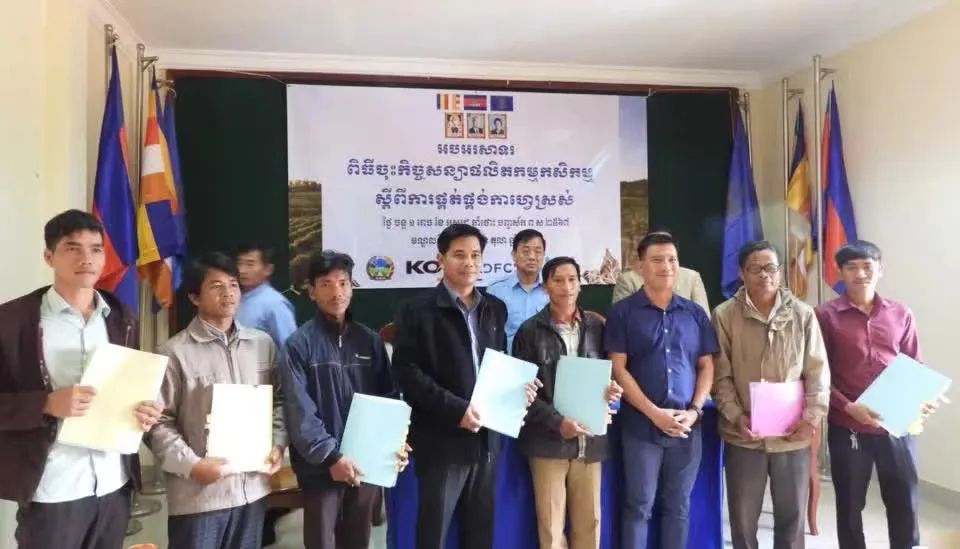
The coffee bean market in Cambodia’s Mondulkiri Province has recently undergone a major transformation. With local producers signing long-term supply contracts with procurement firms, the price of fresh coffee beans has risen noticeably. Su Qiang, director of the Mondulkiri Provincial Department of Agriculture, stated that in the past, farmers mostly sold their coffee beans to individual merchants, leading to volatile prices. Now, with the guarantee of stable contracts, prices over the next two years are expected to be more consistent.
Su Qiang further explained that this collaboration not only directly increases farmers’ income but also helps enhance food safety, elevate the economic status of female and ethnic minority farmers, and promote the standardization and sustainable management of the entire industrial chain. Currently, the coffee cultivation area in Mondulkiri Province covers 351 hectares, of which 342 hectares have reached harvestable stages, with an annual total production of approximately 705 tons.
Benefiting from this agreement, the recent price of fresh blended coffee beans has risen from the previous 1,350 riel per kilogram (about $0.32) to 1,500 riel (about $0.36), marking an increase of 200 to 300 riel. The industry predicts that by 2025, prices may climb further to between 1,400 and 1,600 riel per kilogram, which is undoubtedly great news for local producers.
Looking back at Cambodia’s coffee development history, the country was a French colony from 1867 to 1941. During that time, the French introduced coffee culture, which took root in Phnom Penh, a city often referred to as the “Little Paris of the East.” Over time, coffee cultivation gradually expanded across the nation, particularly thriving in high-altitude mountainous regions.
Cambodian coffee is mainly grown in mountainous areas above 800 meters in altitude. These regions feature a mild climate and significant day-night temperature variations, providing an ideal environment for coffee trees. In addition, the local soil is primarily composed of red soil and brown soil, with the latter—due to its higher pH—further enhancing the flavor development and quality of the coffee beans.
With the global rise in demand for specialty coffee, Cambodia’s coffee industry has gradually drawn international attention. Currently, the country’s coffee beans are mainly exported to Europe, the United States, and various Asian countries. The government is also actively promoting relevant policies to improve quality and international competitiveness. In the future, Mondulkiri coffee has the potential to become an emerging highlight in the Asian market, offering global consumers more diverse and distinctive flavor options.
In summary, this coffee bean purchase agreement is not just a price adjustment, but also an important opportunity for overall industry upgrading. For consumers and professionals interested in the development of Southeast Asian coffee and eager to understand the stories behind specialty coffee, the transformation in Mondulkiri Province is worth ongoing attention.
The above content is compiled by CoffeeHunters, a coffee news website.


