







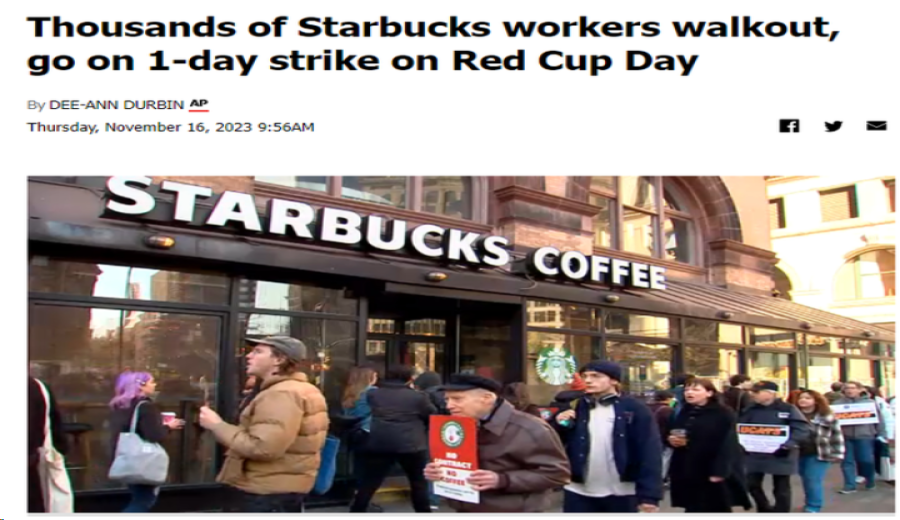
Introduction:On "Red Cup Day" of November 16, 2023, more than 200 Starbucks stores across the United States experienced large-scale strikes, with thousands of employees collectively protesting issues such as understaffing, excessive workloads, and the company’s refusal to negotiate. This action, initiated by the Starbucks Workers United (SWU), is considered the largest labor protest since the union’s establishment and has once again drawn public attention to the working conditions and rights of coffee industry workers.
On November 16, 2023, coinciding with Starbucks’ annual highlight event "Red Cup Day," thousands of employees from over 200 stores chose to strike on this day of exceptionally high order volume. The action was organized by the Starbucks Workers United (SWU), which is affiliated with the Service Employees International Union (SEIU) and is the first group to successfully unionize Starbucks stores.
The union described this strike as the largest operation since its founding, with nearly 380 employees from 14 stores in nine cities across western Washington state participating. The union estimated that the total number of participants nationwide could exceed 5,000. Through marches, gatherings, and even protests at non-unionized stores, some locations had already gone on strike the day before Red Cup Day (November 15).
The choice to protest on "Red Cup Day" was no coincidence. This day is a key marketing focus for Starbucks; in North America, customers who purchase any drink receive a free reusable cup, and with Thanksgiving approaching, stores typically see a surge in foot traffic, often reaching peak annual order volumes. By striking on this highly visible and pressure-filled day, employees aimed to maximize operational impact while drawing media and public attention to their struggles.
Employees dubbed this action the "Red Cup Rebellion," expressing dissatisfaction with the company’s long-term disregard for frontline voices. According to interviews with workers on-site, the job pressure is immense: "Two baristas have to prepare over 221 drinks in just half an hour, often resulting in customer wait times exceeding one hour." Additionally, the company frequently launches unannounced promotional campaigns, leading to surging orders without a corresponding increase in staffing. This not only adds to the workload but also subjects frontline workers to intense pressure from customers.
Moreover, employees criticized Starbucks for "clearly stating that they will not listen to workers' opinions," prompting them to strike in pursuit of a voice. Outside the Astor Place store on the New York University campus, dozens of employees chanted slogans such as "No Contract No Coffee," while the store remained crowded with queuing students and faculty — a stark contrast.
This strike is not an isolated incident. Since the first Starbucks store in Buffalo, New York, unionized in late 2021, this marks the fifth major wave of protests initiated by employees. In 2022, 110 stores went on strike on Red Cup Day, and another wave of strikes occurred in June of this year after reports that Starbucks removed "Pride Month" displays from its stores.
As of now, Starbucks operates over 9,000 stores and employs 235,000 people across the United States, but only 363 stores have officially formed unions, with around 200 of those participating in the current strike. Many striking stores did not shut down completely; Starbucks maintained basic operations by deploying management and other willing employees, so the overall impact on revenue has been limited.
However, although the strike has had minimal impact on Starbucks’ sales figures, it has caused significant waves in public opinion. Employees hope to use the action to gain public understanding and support, further pressuring the company to address labor rights, improve working conditions, and return to the negotiating table.
In response to the strike, Starbucks issued an official statement on the same day, claiming that the union "has refused to schedule negotiation meetings for over five months" and emphasizing that "Starbucks remains committed to enhancing the partner (i.e., employee) experience and building bridges to a better future for every partner in a green apron." However, this statement failed to appease the dissatisfaction of frontline employees or resolve the stalemate over union recognition and collective bargaining rights.
The above content is compiled by CoffeeHunters, a coffee news website.


