







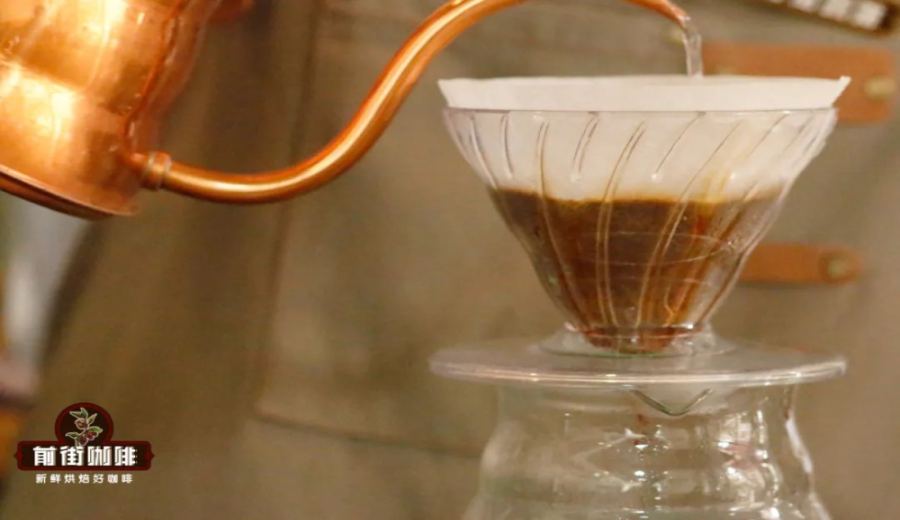
Introduction:Many coffee enthusiasts often confuse the coffee-to-water ratio with the coffee-to-extract ratio when brewing pour over coffee, leading to incorrect brewing parameters that affect the final flavor profile. This article delves into the definitions and practical differences between these two key concepts, explains why the coffee-to-water ratio is more suitable for everyday use, and in which special scenarios the coffee-to-extract ratio has advantages. It also provides precise conversion logic and practical advice to help you master a more scientific approach to measuring your brew.
In the world of pour over coffee, the coffee-to-water ratio and the coffee-to-extract ratio are two fundamental concepts frequently mentioned but also easily confused by beginners. Simply put, the coffee-to-water ratio refers to the proportion between the weight of coffee grounds used and the actual volume of hot water poured in, whereas the coffee-to-extract ratio is the ratio of the weight of coffee grounds to the final weight of extractable, drinkable coffee liquid. Though these two may seem similar, they are actually distinctly different—especially considering how coffee grounds absorb water, there is a certain conversion relationship between them. Understanding these differences and principles not only helps you make more accurate parameter adjustments under various brewing conditions, but also allows you to better control the extraction outcome, enhancing the flavor performance of every cup.
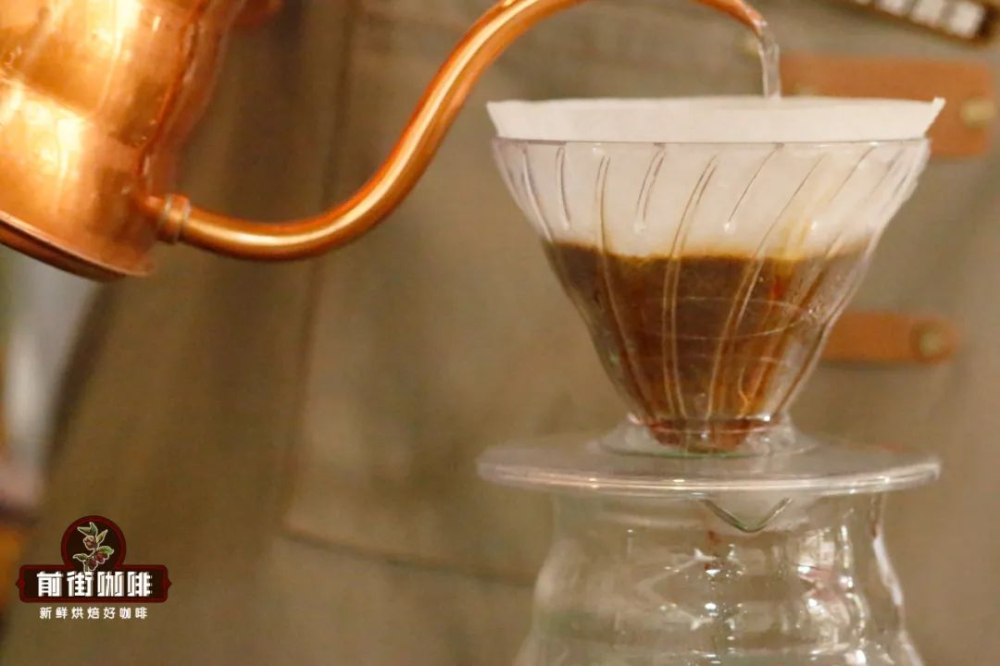
However, in some special brewing situations, we also use the "coffee-to-extract ratio" as the basis for measurement. That’s exactly why many newcomers who have just started exploring pour over often mix up these two terms. What exactly are the differences? Which ratio is more suitable for everyday use? And in which cases should you switch to using the coffee-to-extract ratio? The following will provide a detailed explanation to help you establish a clearer concept of brewing measurements.
First, let’s start with the literal definitions.Coffee-to-Water Ratiorefers to the ratio between the weight of coffee grounds and the volume of hot water poured in, such as the commonly seen 1:15 or 1:16. This means that for every 1 gram of coffee grounds, 15 or 16 milliliters of water is used. AndCoffee-to-Extract Ratiorefers to the ratio of the weight of coffee grounds to the final weight (usually in grams) of the extracted coffee liquid. It more directly reflects how much liquid you can actually pour out and drink. The difference in focus leads to differences in their practical applications.
The coffee-to-water ratio mainly tells you how many milliliters of water you should pour into the filter cone. It is the value most pour over enthusiasts refer to when using an electronic scale in daily brewing. On the other hand, the coffee-to-extract ratio helps you estimate how many grams of coffee liquid you will end up with, which is particularly useful in situations where you cannot precisely measure the amount of water poured. At this point, you might think: “I poured in however much hot water, so I should get the same amount of coffee liquid, right?” But in fact, it’s not that simple—and that’s the most crucial difference between the two.
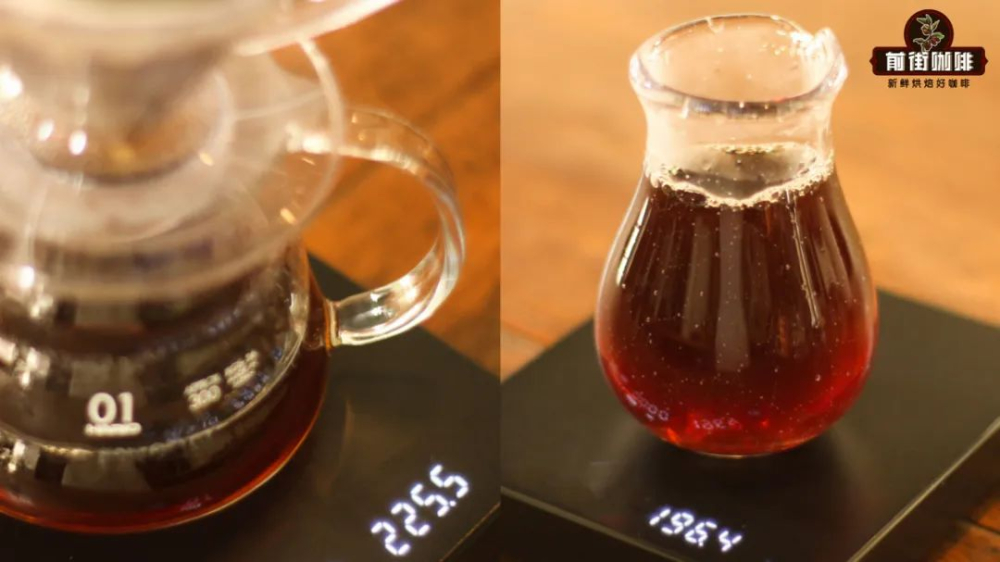
During the contact between coffee grounds and hot water, the coffee absorbs a certain amount of moisture. According to industry observations and practical tests,dry coffee grounds typically absorb about twice their own weight in water. For example, if you use 15 grams of coffee grounds and pour in 225 milliliters of hot water at a 1:15 ratio, those coffee grounds will first absorb around 30 milliliters of water. As a result, the actual amount of coffee liquid that flows out of the filter cone is reduced—approximately down to around 196 milliliters. This is why, even with the same coffee-to-water ratio setting, the final weight (or volume) of coffee liquid obtained is slightly less than the total volume of hot water poured in.
From a proportional conversion perspective, if you use a 1:16 coffee-to-water ratio, after deducting the roughly double absorption of water by the coffee grounds, the actual amount of coffee liquid you can obtain is about 14 times the weight of the coffee grounds—that is to say, the coffee-to-extract ratio at this point is about 1:14. This indicates that the coffee-to-water ratio and the coffee-to-extract ratio can be converted based on the water absorption characteristics of the coffee grounds. Once you understand this principle, you can flexibly adjust your brewing parameters according to different needs.
So, in which situations is the coffee-to-extract ratio usually used? First, in the era before electronic scales became widespread, many coffee lovers could not directly know how many milliliters of water they had poured in, so they would use the capacity of cups or containers to estimate the amount of coffee grounds needed. For instance, in early Japan or Taiwan, common coffee cup sizes were about 120 milliliters, and people back then estimated the required amount of coffee grounds based on this, often using spoonfuls as a unit—for example, one flat spoon being equivalent to about 10 grams of coffee grounds.
Additionally, in some brewing methods where the volume of water poured cannot be directly measured, the coffee-to-extract ratio also becomes an important reference. For example, some pour over stands elevate the filter cone, making it difficult to accurately observe the amount of water poured; or when brewing with a cloth filter like a flannel, the operator holds the cloth to pour and filter, making real-time measurement of water volume challenging; even the espresso extraction process is not inherently suited to being measured by coffee-to-water ratio. In these situations, since the coffee liquid can be easily weighed, using the coffee-to-extract ratio is more practical and can also be used to reverse-calculate the corresponding coffee-to-water ratio.
There’s also a common application scenario in Japanese pour over techniques, where a larger amount of water is poured, but not all of it flows into the filter cone for extraction. Instead, based on experience, the brewer stops the extraction and removes the filter cone once the desired volume of coffee liquid is reached. In such operations, the coffee-to-extract ratio is more intuitive and practical than the coffee-to-water ratio, helping the brewer more accurately control the final output of coffee liquid.
In contrast, the coffee-to-water ratio is the preferred reference metric for most people during daily pour over brewing, as well as when using siphon pots, moka pots, and other single-origin coffee brewing methods. The reason is that the coffee-to-water ratio helps brewers more stably control the overall extraction flavor. Even a difference of just 20 milliliters in water volume can noticeably affect the coffee’s strength, layering, and overall balance. Too little water can lead to overly concentrated flavors and a muddy mouthfeel, while too much water may result in over-extraction, bringing out obvious bitterness and astringency. Therefore, in today’s era of widespread electronic scale use, the coffee-to-water ratio naturally becomes the most popular and practical measurement method.
However, there is an important note when using the coffee-to-water ratio: after finishing the pouring and waiting for the extraction to complete, be sure to wait until the very last drop of coffee liquid has completely dripped out of the filter cone before removing it. Removing the filter cone too early will cause the ratio between the actual volume of water poured and the final amount of coffee liquid extracted to deviate from the originally set coffee-to-water ratio, thereby affecting the overall flavor presentation.
The above content is compiled by CoffeeHunters, a coffee news website.


