








Introduction:The "single-pour" brewing method proposed by Tetsu Kasuya simplifies the process with a one-time water pour, eliminating the bloom step and emphasizing a high-concentration, low-extraction philosophy. This article delves into its parameter settings, operational differences, and compares its flavor profile with the "single-pour continuous" method using Panamanian Geisha as an example, guiding you through the key details and practical techniques of this minimalist pour-over technique.
World Barista Champion Tetsu Kasuya introduced the "single-pour" brewing approach in 2019, which involves pouring the entire target water volume in one go and skipping the bloom step, making the pour-over process exceptionally straightforward. However, many often confuse it with the single-pour continuous method, though the two differ significantly. This article will comprehensively analyze the characteristics of the single-pour method—from principles and parameter configurations to operational steps and real-world flavor comparisons. Using Panamanian Boquete Geisha as a sample, we’ll compare how the single-pour and single-pour continuous methods differ in flavor presentation. Additionally, we’ll outline five critical details in single-pour brewing that shouldn’t be overlooked, helping coffee enthusiasts avoid common pitfalls.
"What you’re referring to isn’t the single-pour continuous—it’s a two-stage brew, whereas the method you mentioned, where all the water is poured at once, is actually another innovation by Tetsu Kasuya, the inventor of the 4:6 brewing method: the 'single-pour.'"
As the name suggests, the single-pour involves pouring all the target water volume into the filter cone at once. Due to its name being similar to the single-pour continuous, many people easily confuse the two, but in reality, they differ considerably in operation and extraction philosophy.
Kasuya has long been committed to simplifying the brewing process and introduced this single-pour method in 2019. He emphasizes that this approach eliminates the need for a bloom; instead, you simply pour the water in one go according to the ratio and wait for the drip to complete—making the operation extremely simple.

This brewing method is a typical application of the high-concentration, low-extraction philosophy we discussed earlier. Next, let’s see how the inventor himself explains this method.
(If you find it hard to understand, don’t worry—the following section will provide the translated content directly.)
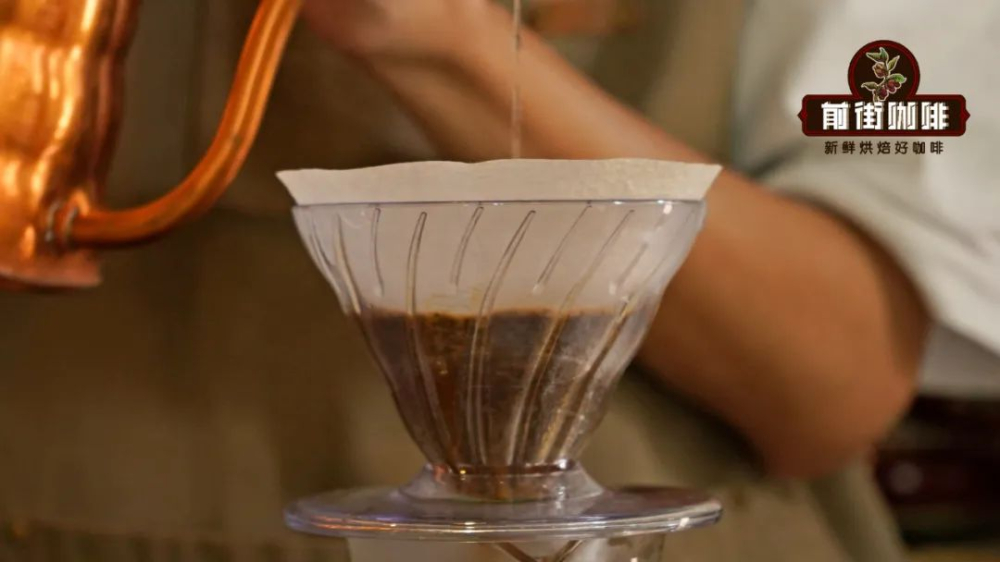
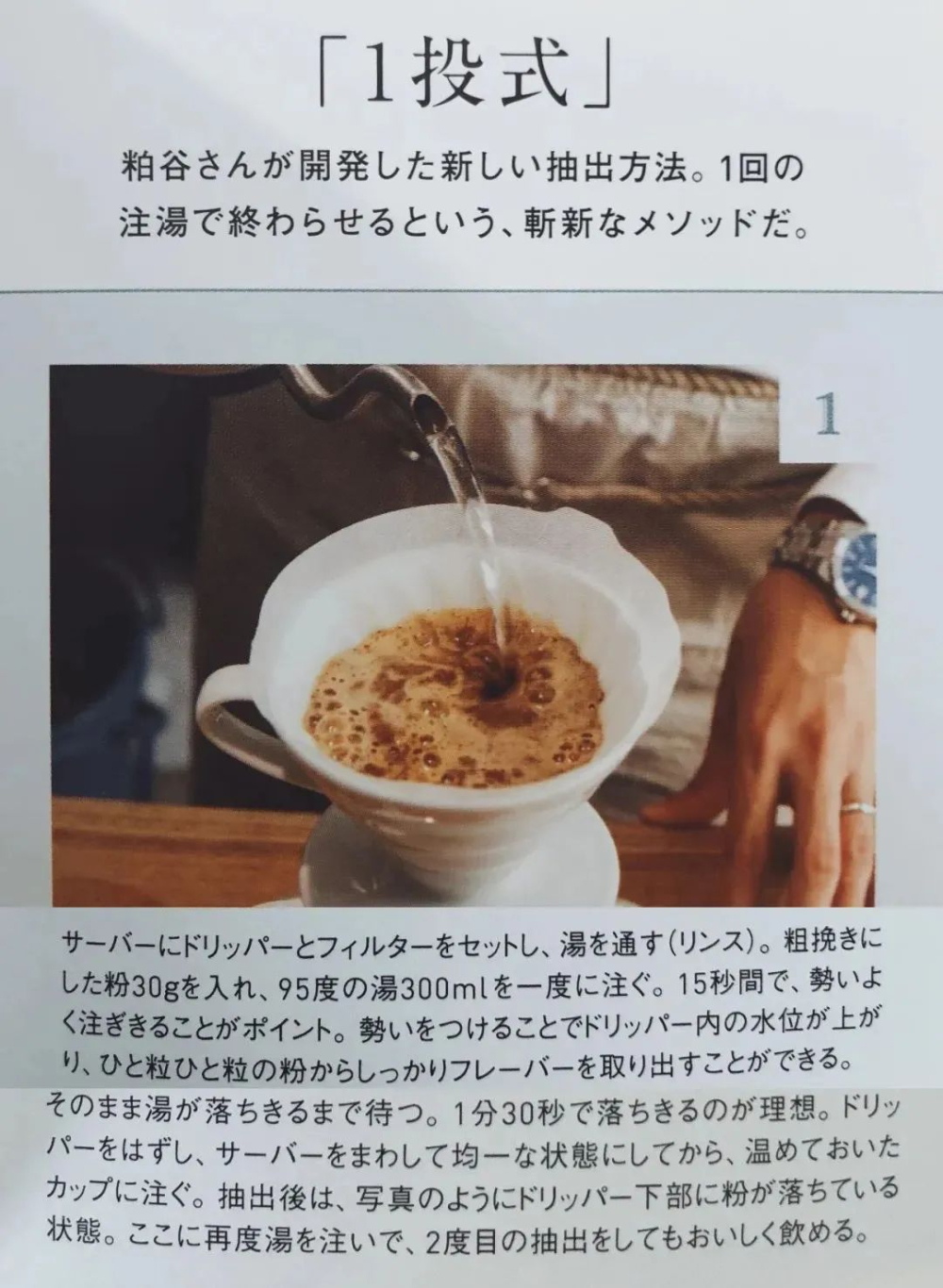
Using a V60 filter cone, take 30 grams of coffee grounds, ground slightly finer than usual for pour-over, with a water temperature set at 95°C. Pour 300 milliliters of water within 15 seconds using a relatively fast flow rate, with just a simple circular motion during pouring. Ideally, the coffee should finish dripping through within 1 minute and 30 seconds. After brewing, the coffee grounds will evenly adhere to the walls of the filter cone.
This method uses a noticeably finer grind than conventional pour-over, with a high water temperature of 95°C, plus a larger coffee dose—all aligning perfectly with the high-concentration, low-extraction philosophy. It’s precisely because of the large coffee dose, fine grind, and high water temperature that this method doesn’t require a bloom; you simply pour hot water all at once, and subsequent extraction relies on hot water immersion.
This method doesn’t require complex water control skills or strict time constraints—just ensure the right amount of water is poured. With its high extraction efficiency, it extracts more coffee grounds in a shorter time, making it not only simple to operate but also delivering sufficient coffee concentration to support rich flavors. As mentioned in articles about high-concentration, low-extraction brewing, coffee made this way often exhibits bright acidity and sweetness. If there’s a downside, it might be that the aftertaste isn’t as long-lasting as with other methods.
Next, we’ll use both the single-pour and single-pour continuous methods to brew the same coffee, observing how these two often-misunderstood "sibling" methods differ in actual flavor.
The coffee beans used for this comparison are Panamanian Boquete Geisha, which feature intense white floral notes, along with citrus and berry-like fruit acidity—making them an ideal "representative bean" for this comparison.
[Parameters Used]
Single-Pour: V60 filter cone size 02 (large), 30 grams of coffee, 1:10 coffee-to-water ratio (total 300 ml), 95°C water temperature, EK43 grinder setting at 2.5.
Single-Pour Continuous: V60 filter cone size 01 (small), 20 grams of coffee, 1:15 coffee-to-water ratio (total 300 ml), 92°C water temperature, EK43 grinder setting at 10.
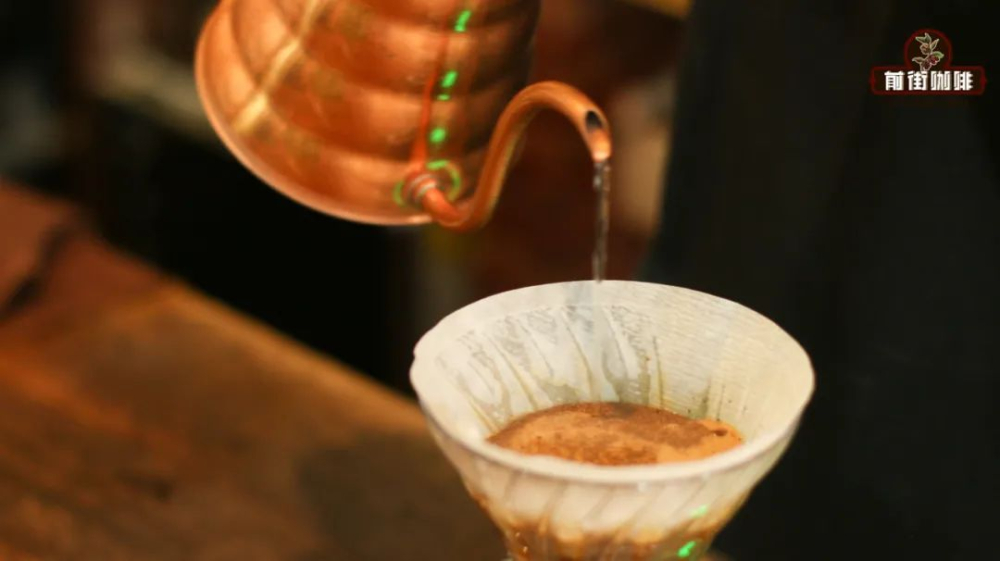
Single-Pour Brewing Process: Once the water reaches the target temperature, pour the coffee grounds into the filter cone and begin brewing. According to Kasuya’s instructions in his book, pour water in a circular motion continuously until the target water volume (300 ml) is fully poured, then wait for the drip to complete.
Single-Pour Continuous Brewing Process: Uses a "two-stage" approach—first, perform a bloom with twice the coffee dose’s worth of water (40 ml) for 30 seconds, then pour the remaining target water volume (260 ml) all at once, followed by waiting for the drip to finish.
The total brewing time for the single-pour is 1 minute and 20 seconds, with tasting notes of rounded citrus acidity, accompanied by subtle jasmine floral aromas, and a more pronounced sweetness.
The total brewing time for the single-pour continuous is 2 minutes, with more intense jasmine floral notes on the palate, offering a relatively more balanced experience compared to the single-pour, along with higher body.
The differences in brewing results between the two are quite distinct, so it’s essential to note: do not confuse the single-pour with the single-pour continuous. Additionally, while the single-pour is simple to operate, there are still some critical details that shouldn’t be overlooked.
[Key Points to Note for Single-Pour Brewing]
1. Filter Cone Selection: It’s recommended to use a size 02 large filter cone. Since the method involves pouring all the target water at once, a small filter cone may get clogged due to the coffee bed buildup, preventing a smooth one-time pour—turning the single-pour into what’s essentially a "single-pour continuous."
2. Coffee Bean Selection: As this is a high-concentration, low-extraction method, it’s best to choose medium to light-roasted beans, which can release abundant acidic and sweet compounds in the mid-to-front stages.
3. Water Flow Control: During pouring, it’s recommended to use a circular motion to reduce turbulence, improving brewing stability and fault tolerance.
4. Grind Adjustment: Due to the fine grind, no overly specific parameter recommendations can be given—just ensure the total brewing time is kept within 1 minute and 30 seconds, indicating an appropriate grind size.
(Left image: EK43 grinder at 2.5 setting; Right image: 10 setting)
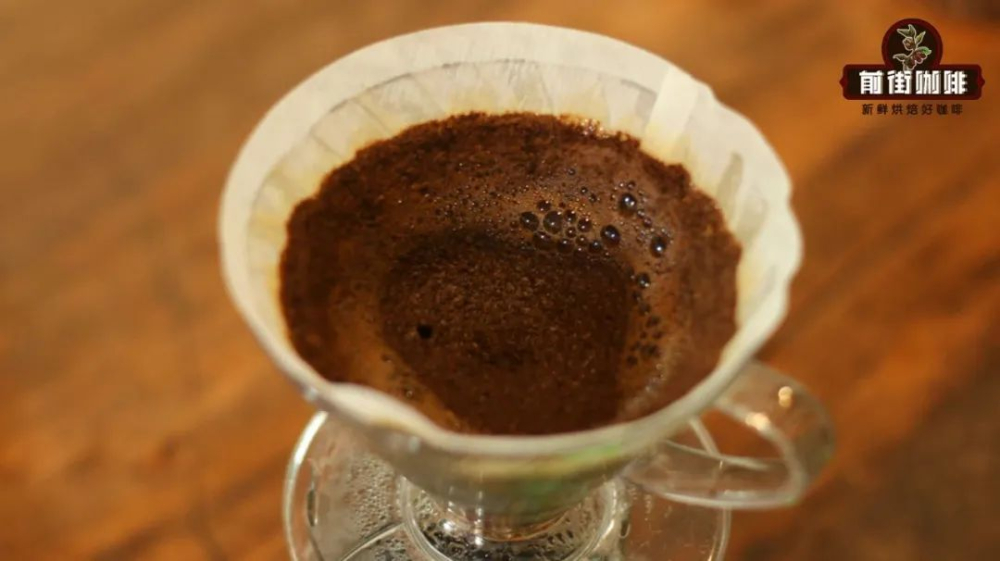
5. Coffee Bed Appearance: Under correct brewing conditions, the coffee bed will ultimately show a noticeable indentation, the so-called "big crater" many enjoy showcasing. If the coffee bed appears flat after brewing, it may mean the coffee layer wasn’t sufficiently agitated—adjust your brewing technique accordingly.
The above content is compiled by CoffeeHunters, a coffee news website.


