







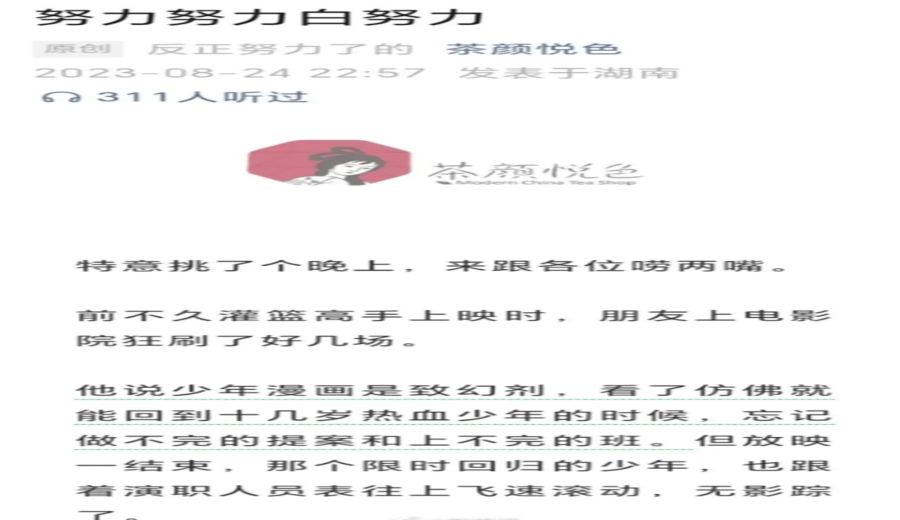
Introduction:In August 2023, a WeChat official account post by the well-known tea brand Cha Yan Yue Se titled "Trying Hard, Just to Try Hard in Vain" stirred widespread debate. The negative sentiment conveyed by the title was questioned by netizens. The article used the classic anime Slam Dunk to explore themes of growth and promote a new product, “Young Zhuang Zhou,” which was eventually taken down due to the controversy. This article analyzes the entire incident, examines the risk points in brand copywriting, and offers practical suggestions to help you avoid similar public relations crises.
On August 24, the popular tea beverage brand Cha Yan Yue Se published the post "Trying Hard, Just to Try Hard in Vain" on its official WeChat account. Using the classic anime Slam Dunk as a starting point, it contrasted the mindsets of teenagers and adults, while simultaneously promoting its new product “Young Zhuang Zhou,” which was set to launch at midnight on August 25. However, the title quickly sparked controversy — the negative expression “trying hard in vain” was seen by many netizens as exacerbating youth anxiety, and related discussions soon trended on Weibo.
The original intent of the post was to combine the brand’s three-year market ups and downs with its “Young Series” and convey the value that “the process is more important than the result.” The article included an interactive topic inviting readers to share moments when they felt young at heart, and some fans’ comments resonated, such as those mentioning the gradual loss of enthusiasm at work. However, more netizens focused on the negative implications of the title itself, pointing out a clear contradiction with the positive intent of promoting a new product.
The crux of the controversy lay in the disconnect between the title and the content.Some consumers felt that while “Trying Hard, Just to Try Hard in Vain” seemed to echo a popular phrase, it could easily trigger a sense of frustration among working professionals. One comment stated bluntly: “Such negative expressions may exist in private settings, but commercial promotions should be handled with caution.” As the discussion heated up, the brand explained its original creative intent in the comments section, admitting that the title was poorly chosen and offering an apology.
The official response emphasized that the post aimed to illustrate through the brand’s own experience that even if the outcome of promoting a new product might not be entirely satisfactory, the effort invested in the R&D process still holds value. Regarding future improvements, Cha Yan Yue Se promised to strengthen copywriting reviews and pay more attention to the accuracy of emotional messaging in the title formulation process. The controversial post was voluntarily deleted on the day of the dispute.
This was not the first time Cha Yan Yue Se had been embroiled in controversy over its marketing copy.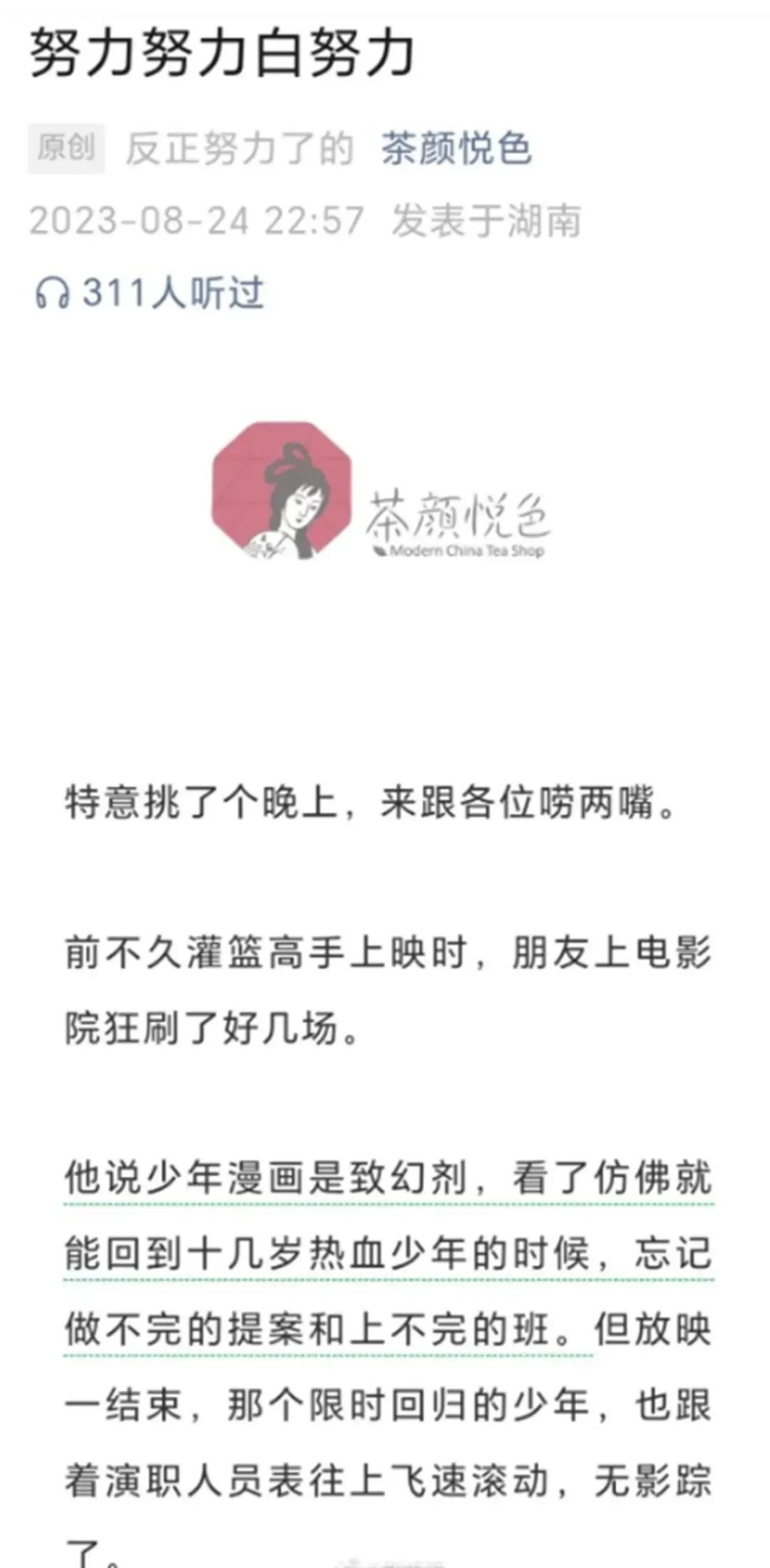 In 2021, the brand faced criticism after its product description was accused of containing gender-discriminatory content; in 2022, its Nanjing store’s English signboard used the translation “SexyTea,” which also drew public scrutiny. Both incidents ended with public apologies, highlighting that the brand still needs to improve in cross-cultural communication and understanding audience psychology.
From an industry perspective, such controversies reflect common challenges faced by emerging consumer brands:how to balance creative expression with risk management in the social media era.Marketing experts suggest that copywriting should undergo multidimensional testing in advance, especially when dealing with sensitive themes like motivation and growth, and should avoid using word combinations that may trigger negative associations.
The above content is compiled by CoffeeHunters, a coffee news website.


