







Introduction:Yunnan small-grain coffee has gradually gained international recognition in recent years, but many people still have only a vague understanding of its varietal evolution. This article will take you through the historical development to explore how Yunnan coffee transitioned from early Typica and Bourbon varieties to the currently dominant Catimor, while also clarifying whether Catimor belongs to the Arabica species. Practical pour over recommendations and classic product references are provided to help you better understand the evolution of this uniquely Chinese coffee flavor profile.
In recent years, Yunnan-grown coffee beans have gradually attracted attention from the specialty coffee communities both domestically and internationally, with “Yunnan small-grain” starting to appear on the menus of many cafés. But what exactly is “small-grain coffee”? How is it related to the varieties planted locally in Yunnan? Starting from basic definitions, this article details the varietal changes of Yunnan small-grain coffee—from the early introductions of Typica and Bourbon, to the later widespread cultivation of Catimor for disease resistance and high yield—and analyzes the differences in flavor profiles among these varieties. The article concludes with recommendations for two representative Yunnan coffees, allowing you to easily experience the characteristics of different phases of the region’s production.
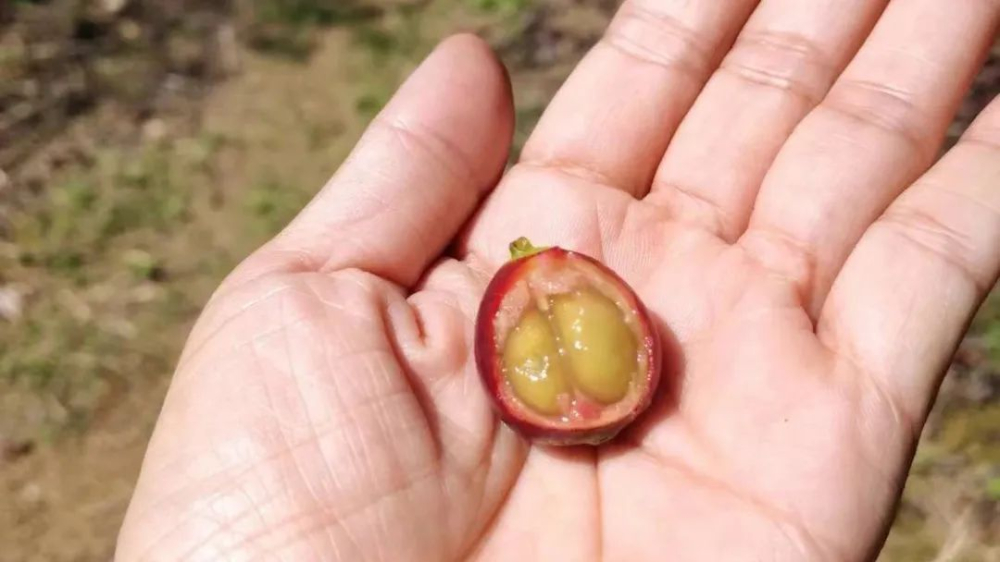
The so-called “small-grain coffee” is actually a colloquial term used in the industry for the Arabica species (Arabica). Compared to Robusta and Liberica, Arabica coffee cherries are relatively smaller in size, hence the name “small-grain.” However, the “small” here refers to the coffee fruit, not the coffee beans we see when brewing. Therefore, when we talk about “Yunnan small-grain coffee,” we are actually referring to the Arabica varieties grown in the Yunnan region.
However, the early Yunnan small-grain coffee and the Yunnan small-grain coffee we are familiar with today actually have significant varietal differences. Tracing back to the early 20th century, coffee was introduced to Yunnan via two routes: one was brought by French missionaries from Vietnam and planted in Zhukula Village, Binchuan County, where villagers were taught how to grind and brew it; the other was introduced by the Jingpo ethnic residents from the Myanmar border into Longxianzhai, Ruili County, where coffee was initially planted merely as an ornamental plant in courtyards, and no industry had yet formed. It wasn’t until 1952, when Chinese experts discovered these red fruits in Luxi Basin, Baoshan City, and confirmed them to be small-grain coffee from South America, that the first official coffee planting base was established here.

Thanks to Yunnan’s unique geographical environment—high altitude and large day-night temperature variations—the early-introduced Typica and Bourbon varieties gradually adapted and developed flavor characteristics described as “rich yet not harsh, with prominent aroma and a hint of fruity notes,” making them very suitable as premium raw materials for export to the Soviet Union and Eastern European markets at the time. During the planned economy era, the coffee planting area in Baoshan once exceeded 50,000 mu, and the term “Yunnan small-grain” became widely known, referring at that time to these traditional Arabica varieties.
However, as Sino-Soviet relations deteriorated in the 1960s and 1970s, Yunnan lost its export markets, and the coffee industry declined accordingly, although the name “Yunnan small-grain coffee” remained. Entering the 1980s, a global coffee rust epidemic severely affected many traditional varieties such as Typica and Bourbon due to their weak disease resistance and significant yield reductions. In search of new growing regions, in 1988, Nestlé collaborated with Portugal’s Coffee Rust Research Centre (CIFC) to introduce the Catimor 7963 variety, conducting trial plantings and promotions in Yunnan.
Catimor is actually a cross between Caturra (a pure Arabica variety) and Timor (a natural hybrid of Arabica and Robusta), meaning its genetic makeup consists of approximately 75% Arabica and 25% Robusta. This gives Catimor not only higher disease resistance but also a yield far exceeding that of traditional varieties—under the same management conditions, Catimor can produce about three times the yield per unit compared to Typica. However, this hybrid background also results in flavor profiles that tend toward low acidity, nutty tones, cocoa aromas, and in some batches, even earthy notes, which are often mentioned in The Coffee Taster’s Flavor Wheel as one of the sources of the so-called “devil’s tail” in Asian-origin coffees.
Between 2010 and 2011, as global coffee bean prices, particularly Brazilian ones, soared, Yunnan coffee experienced a planting boom. Due to its stable output and disease-resistant characteristics, Catimor quickly replaced most traditional varieties and now accounts for over 90% of Yunnan’s total coffee production. Therefore, the “Yunnan small-grain coffee” referred to in the market today mostly indicates the Catimor variety. Those farms still committed to planting Typica or Bourbon are mostly due to historical legacy or special circumstances.
For coffee enthusiasts, if you want to experience the most representative modern Yunnan flavor profile, it is recommended to choose products based on Catimor—for example, Yunnan small-grain coffee processed with the washed method and medium roast, which clearly showcases a balance of nuts, chocolate, and subtle fruitiness. If you prefer the flavor profile of classic small-grain coffee, you can try high-altitude-grown Typica, such as those processed with the natural sun-dried method and medium roast, usually presenting gentle notes of dried apricot, black tea, and nuts, more closely resembling the classic impression of Yunnan small-grain coffee from earlier years.
The above content is compiled by CoffeeHunters, a coffee news website.


