








Introduction:Whether the flavor of your pour over coffee is balanced hinges on the stability of your pouring technique. Even if you’ve nailed the perfect grind size and coffee-to-water ratio, poor water flow control can still ruin the extraction. This article dives deep into the core techniques of pour over water control, including choosing the right gooseneck kettle, practicing a vertical water stream, understanding water flow rates, recommended pouring heights, and how to circle correctly to avoid uneven coffee bed distribution—guiding you step by step toward mastering a professional-level pour.
The final flavor profile of a pour over coffee is closely tied to the stability of your pouring. Even if you’ve carefully planned out your coffee dose, water temperature, and grind size, inconsistent water flow—whether it’s fluctuating intensity or wavering direction—can lead to uneven extraction, resulting in unpredictable cup quality. This article will start from the basics and gradually break down methods for training stable water flow, including how to choose the right pour over kettle, adjust your grip, master the vertical stream technique, regulate appropriate water speed and pouring height, as well as the essentials and common mistakes of proper circular pouring, helping you develop a keen sense of control and bringing each cup closer to its ideal flavor.

Many people, even after carefully planning their full brewing parameters, find that once they start pouring, the water stream varies in thickness and direction, throwing off the entire extraction process and leaving the final flavor to chance. In truth, rather than lamenting afterward, it’s better to solidly train the fundamentals—especially water control, a crucial skill that directly impacts extraction uniformity and the final taste.
Why is stable water flow so important for pour over coffee? Because only when the water stream is even and the flow rate consistent can hot water uniformly penetrate the coffee bed, avoiding over-extraction or under-extraction in localized areas—thus allowing your chosen parameters to truly take effect and deliver a balanced, expected flavor profile. For beginners, repeatedly practicing pouring and stopping the flow can quickly improve your feel, so that when facing different bean styles or more advanced brewing methods, you’ll be able to adapt with greater ease.
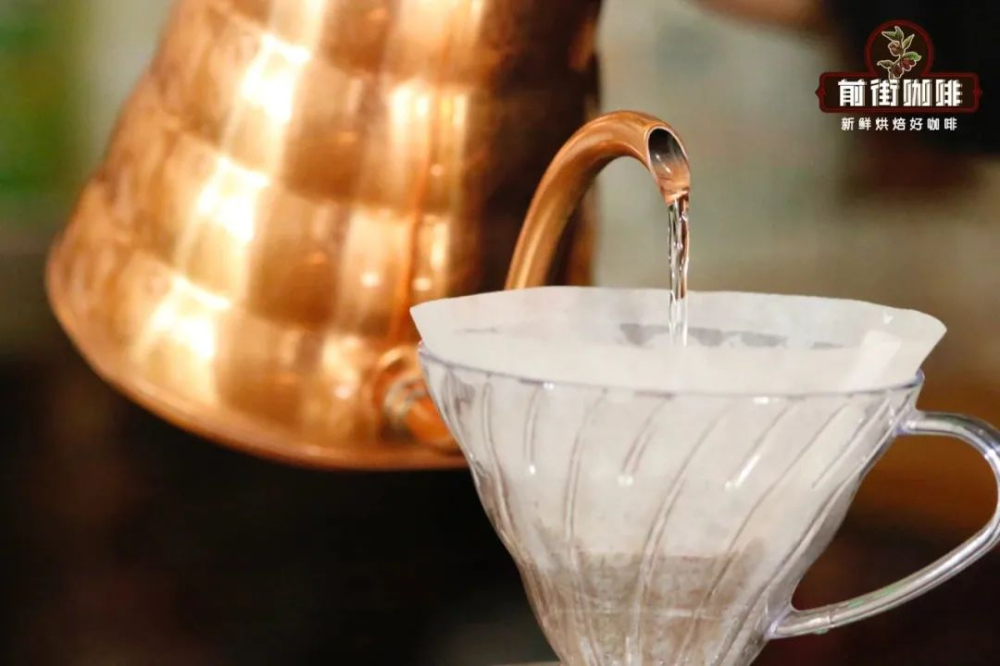
Choosing the right pour over kettle is the first step to mastering water control. There are many types of pour over kettles on the market, but most share a “gooseneck + spout” design, which aids in more precise control over water flow thickness and direction. It’s recommended to select a kettle weighing between 300 and 500 grams, with a capacity of around 600 milliliters. When the kettle is filled to about two-thirds, it won’t be too light, which can cause instability in the stream, nor too heavy, which might lead to hand fatigue. During initial practice, it’s advisable to hold the kettle in your right hand, with your arm naturally extended, at shoulder height and slightly tilted downward, to avoid placing your arm too low, which concentrates the main force on the wrist—often leading to soreness or shaking. If one-handed pouring feels unstable, try lightly supporting the kettle lid with your left hand to help stabilize the rhythm and pressure of the pour.
In the process of training your pour, the foremost priority is practicing how to maintain a vertical water stream. Although a gooseneck spout offers a degree of precision, if the water level in the kettle is too high or the tilt angle is too steep, the water stream can easily skew or even curve. Once the water stream shows a noticeable arc, it may impact the edge of the coffee bed in the filter, causing certain coffee grounds to be overly agitated, leading to uneven extraction, and resulting in a thin, watery taste. In more severe cases, an overly angled stream may even create turbulence within the coffee bed, disrupting the normal extraction process. Therefore, a stable and vertical water stream is the primary goal of water control training.
Selecting the right water flow rate is one of the most common challenges beginners face. The strength of the water flow directly affects how much the coffee bed is agitated and the overall extraction time, thus influencing the final flavor. However, there is no absolute standard for what constitutes a “strong” or “weak” flow—it must be adjusted based on the density of the coffee bed, personal technique, and the characteristics of the kettle spout. Since each user’s spout shape, pouring force, and angle vary, perceptions of “strong” and “weak” will also differ. Beginners are advised to experiment to find a moderate flow rate: prepare an electronic scale and a container to catch the water, pour for 10 seconds using your usual technique, record the total weight, then divide by 10 to get the milliliters per second. As a reference, many experienced brewers typically aim for a flow rate of 5 to 7 milliliters per second, a range that helps balance extraction efficiency and stability.
Besides water flow rate, pouring height also significantly affects extraction. The higher the water stream is above the coffee surface, the stronger its penetration, which can more effectively agitate the coffee bed and enhance extraction—but if too high, it may cause excessive agitation, affecting flavor balance. Conversely, pouring too close to the coffee bed results in gentler agitation, but may not sufficiently stir the grounds, leading to under-extraction. Taking both stability and extraction performance into account, it’s recommended to keep the pouring height between 3 to 5 centimeters, striking a good balance between control and extraction quality.
Circular pouring is another area where many make mistakes during practice. If you notice uneven thickness in the coffee bed’s edge wall after pouring, it’s likely due to inconsistent circling. Ideal circular pouring meets two criteria: first, the water path should be smooth, avoiding obvious straight lines or abrupt turns, which can cause uneven coffee distribution; second, you should always circle in the same direction—for instance, if you choose clockwise, maintain that direction throughout, avoiding mid-pour direction changes that can lead to localized over- or under-extraction. Beginners are advised to start pouring from the exact center of the filter, then slowly expand outward along a path similar to “smelling the aroma,” circle out to the widest point, then gradually move back toward the center, and finally return to the starting point—repeating this process until the full pour is complete, helping to achieve even extraction across the coffee bed.

The above content is compiled by CoffeeHunters, a coffee news website.


