







Introduction:The reason coffee can help with alertness lies primarily in caffeine, but did you know that different coffee beans, origins, and even brewing methods can greatly affect the amount of caffeine in each cup? This article delves into the caffeine differences between Arabica and Robusta, how altitude influences chemical composition, and the extraction patterns of methods such as pour over, espresso, and cold brew. It also debunks common myths to help you choose the coffee that's right for you more wisely.
Many people rely on coffee to stay awake every day, but do you know how much caffeine is actually in a single cup? Factors such as the coffee bean variety, altitude at which it was grown, as well as brewing time and grind size, all subtly influence the final caffeine content. This article will give you a comprehensive understanding of the caffeine differences between various coffee bean types, as well as how different extraction methods affect the amount of caffeine you consume—so you can drink with clarity and adjust your intake based on your needs.
First, caffeine content is directly related to the coffee bean variety. The two most mainstream varieties on the market are Arabica and Robusta. Generally speaking,Robusta contains about 2% to 4% caffeine, whileArabica contains only about 0.9% to 1.4%—roughly just half as much as Robusta. As a result, most freshly ground coffee on the market uses Arabica, with only a small number blending in some Robusta to enhance the crema in espresso.

In addition to variety, growing altitude also affects the caffeine ratio. Typically,coffee grown at higher altitudes tends to have slightly lower caffeine content than that grown at lower altitudes. This is because in high-altitude environments, temperatures are cooler and there are fewer pests, so coffee trees don’t need to produce as much caffeine for self-defense. This phenomenon is especially evident in Arabica, whereas Robusta is mostly grown at lower altitudes and therefore generally contains more caffeine, helping it withstand harsh conditions.
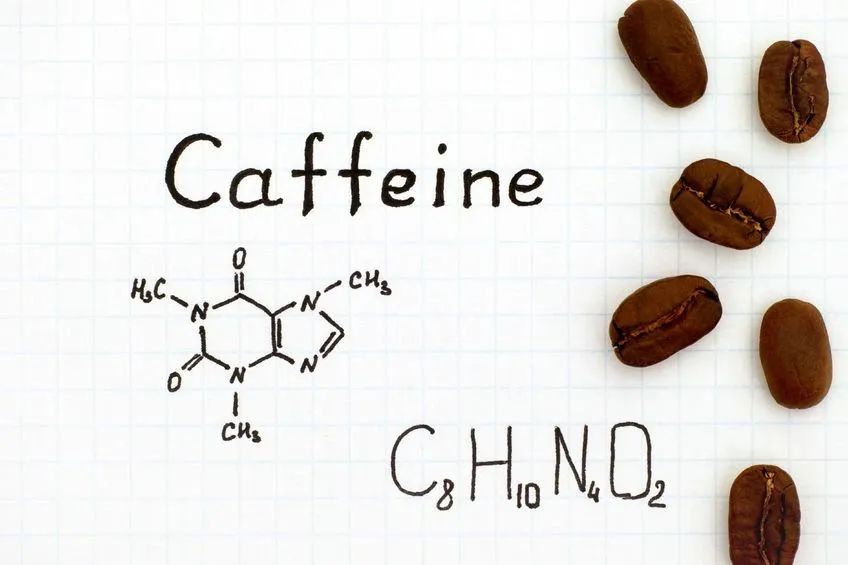
When it comes to brewing, many assume that the longer the extraction time, the better the flavor—but the same goes for caffeine. Caffeine’s chemical formula is “C8H10N4O2,” making it a relatively large molecule that dissolves slowly and usually requires longer contact time to fully dissolve into water. Therefore,the longer the extraction time, the more caffeine is released. That’s why immersion or drip brewing methods such as pour over and French press often contain more caffeine than espresso. Even though cold brew and ice drip are low-temperature extractions, their total brewing duration is very long, resulting in higher overall caffeine release compared to other methods.
Here is a general range of caffeine content for various types of coffee drinks, based on typical serving sizes for reference:
However, it’s important to note that these values are estimates based on standard brewing conditions,and the actual caffeine content of each cup can also be influenced by extraction efficiency. For example, using coffee grounds of the same weight but different grind sizes, a finer grind can release more flavor and caffeine, thus yielding a higher caffeine content. In short, the finer the grind and the more thorough the extraction, not only does the flavor become richer, but the stimulant effect is also more pronounced.
Many people have heard that daily caffeine intake should not exceed 400 milligrams to avoid affecting health—especially those who are more sensitive to caffeine—who want to precisely control their intake. However, many variables affect how much caffeine is in a cup of coffee, such as grind size, water temperature, pouring method, and coffee-to-water ratio during pour over, all of which directly interfere with caffeine release. Therefore, it’s difficult to generalize an exact figure for the actual caffeine content in each cup.
Additionally, there’s a common misconception that “the darker the roast, the higher the caffeine.” Some believe that after dark roasting, the beans become lighter, so more beans are needed to achieve the same weight, and that the structure of dark-roasted beans is looser, making extraction easier—thus speculating that dark roast coffee contains more caffeine. But in fact,research has confirmed that roast level has almost no effect on caffeine content. If you feel that dark roast coffee is more stimulating, it may simply be because the bitterness is stronger, giving you a more intense sensory stimulation and making you think there's more caffeine—this is also why many assume that espresso is the most energizing type of coffee.
For those who are sensitive to caffeine, whether it’s instant coffee, bottled ready-to-drink, espresso, pour over, or cold brew and ice drip, these beverages generally contain relatively high levels of caffeine, which can easily lead to insomnia or heart palpitations. If you still want to enjoy the flavor of coffee but wish to avoid the effects of caffeine, it’s recommended to choose decaffeinated coffee—these products contain almost no caffeine, allowing you to safely savor the aroma and complexity of coffee.
The above content is compiled by CoffeeHunters, a coffee news website.


