








Introduction:Jamaican Blue Mountain coffee has long been rumored to be "90% monopolized by Japan, with most on the market being fake," but that is no longer the case. This article delves into the history, grading system, and changes in international quotas of Blue Mountain coffee, helping you understand how to identify genuine Blue Mountain beans through oak barrel packaging, official certification, and flavor characteristics. It also provides professional pour over recommendations and flavor descriptions to assist you in selecting and brewing this classic coffee that closely resembles the flavors of the Blue Mountain range.
When it comes to Jamaican Blue Mountain coffee, many people’s first impression is that it is “expensive” or “hard to find authentic,” with even claims that “90% of production is bought out by Japan, with only a small amount flowing into other markets.” These claims did hold some truth prior to 2008, but after the expiration of the exclusive sales agreement that year and with the expansion of global market demand, the Jamaican government adjusted its quota strategy, exporting Blue Mountain coffee to more countries. Nowadays, consumers in Taiwan, Hong Kong, and mainland China can purchase authentic Blue Mountain coffee certified by the Jamaica Coffee Industry Board through official channels.
This article will guide you through the historical rise of Blue Mountain coffee, clarify the difference between “Blue Mountain flavor” and genuine Blue Mountain coffee, and explain the Jamaica Coffee Industry Board (CIB) grading system and the tradition of exclusive oak barrel transport. We’ll also teach you how to distinguish the real from the fake. Additionally, using Blue Mountain No. 1 from the Clifton Estate as an example, we’ll outline its flavor profile and recommended pour over brewing parameters, so you can grasp the essence of Blue Mountain coffee from selection to brewing.

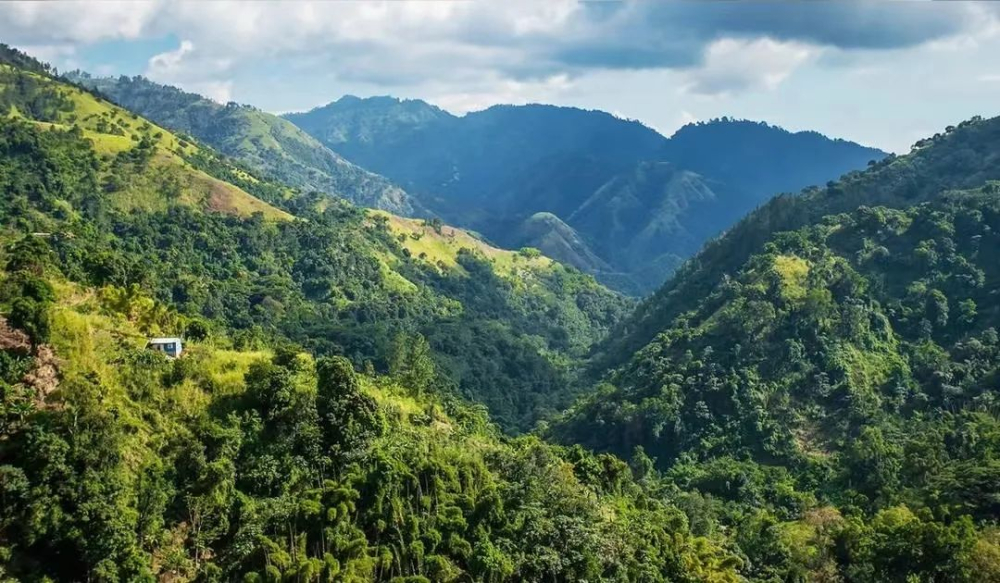
The fame of Blue Mountain coffee is inseparable from its origin. The Blue Mountains are located in the northeastern part of Jamaica, an island nation in the Caribbean, boasting a unique geographical environment with a cool, foggy climate and significant day-night temperature variation. Coupled with fertile volcanic soil, these conditions create an ideal environment for cultivating high-quality Arabica coffee. As early as the early 20th century, Jamaican coffee gained market attention for its delicate flavor, but a devastating hurricane in the late 1960s severely damaged local plantations, leading to a temporary decline in the industry.
Between the 1960s and 1970s, Japan experienced rapid economic growth and increased purchasing power, along with a rising demand for high-quality coffee. Japanese traders at the time, including the well-known UCC (formerly Ueshima Coffee), recognizing Blue Mountain’s potential, provided financial support to local plantations and even entered into joint ventures to secure priority purchasing rights. In 1972, the Jamaican government signed a 30-year agreement with Japan, allocating 90% of annual Blue Mountain coffee production to the Japanese market, leaving only about 10% (approximately 245 tons) for other markets. This arrangement created a long-standing supply-demand imbalance in Japan, indirectly elevating Blue Mountain’s almost mythical status.
However, after the 2008 global financial crisis, the international market demand was restructured, and the original exclusive sales agreement came to an end. The Jamaican government began distributing Blue Mountain quotas to more countries, including Asian markets such as Taiwan, Hong Kong, and mainland China, giving more consumers the opportunity to taste authentic Blue Mountain coffee. Today, as long as you choose the right purchasing channel, Blue Mountain coffee is no longer out of reach.
It is worth noting that the commonly seen “Blue Mountain-flavored coffee” on the market is not genuine Blue Mountain. These products are mostly dark roasted blends that are crafted to mimic the taste profile associated with Blue Mountain, but they have no relation to coffee beans actually grown in the Blue Mountains of Jamaica. True Blue Mountain coffee must meet the strict grading standards of the Jamaica Coffee Industry Board and be transported in exclusive oak barrels—these are key indicators for authenticity.
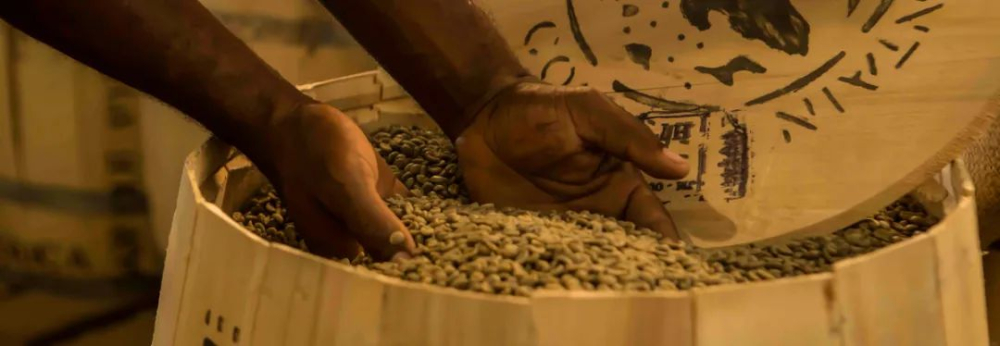
So, how can consumers ensure they are buying genuine Blue Mountain coffee? First, check whether the packaging uses Jamaica’s unique handmade oak barrels. Blue Mountain coffee is the only coffee region in the world that ships green beans in 70kg, 30kg, or 15kg oak barrels. This type of packaging helps maintain stable moisture content, prevents aroma loss, and offers better protection compared to common jute sacks. Furthermore, each batch of exported Blue Mountain coffee must pass quality inspection by the Jamaica Coffee Industry Board (CIB) and comes with certification labels and relevant documents. Consumers can request these documents from retailers to ensure the product is genuine.
Since its establishment in 1952, the Jamaica Coffee Industry Board has established a rigorous grading system for Blue Mountain coffee, evaluating everything from green bean size, defect rate, color, uniformity, to cupping performance after roasting. Cupping criteria include dry fragrance, wet aroma, acidity, flavor, body, cleanliness, and more, offering a comprehensive assessment of coffee quality. Based on overall conditions, Blue Mountain beans are divided into four grades, from highest to lowest: Blue Mountain No. 1, Blue Mountain No. 2, Blue Mountain No. 3, and Blue Mountain Peaberry. Among them, Blue Mountain No. 1 requires green beans to be 17 mesh or larger, with a defect rate below 3%, a moisture content of around 13%, and exhibiting exceptional flavor balance and delicate taste.

After passing quality evaluation, Blue Mountain coffee is exported in different packaging according to grade: Blue Mountain No. 1 to No. 3 are packaged exclusively in handmade oak barrels (70kg, 30kg, 15kg), while other grades are packed in 60kg jute sacks. This packaging difference is not merely a logistical choice but also one of the key indicators of authenticity. Currently, these precious wooden barrels can still be seen in person at specialty stores and professional outlets.
Taking Blue Mountain No. 1 from the Clifton Estate as an example, its flavor profile has long been regarded as classic Blue Mountain. After medium-dark roasting, it fully showcases aromas of chocolate, nuts, and cream, with soft acidity and pronounced sweetness, resulting in a rich and layered mouthfeel. Freshly roasted Blue Mountain No. 1 carries dry aromas of nuts, melon, and chocolate, and when brewed, releases a complex bouquet of oolong tea, caramel, honey, and dark chocolate. Sipping reveals intense dark chocolate, roasted hazelnuts, cream, and brown sugar flavors, with a long and clean finish.
To enjoy the optimal flavor, it is recommended to select Blue Mountain coffee beans roasted within five days and use appropriate pour over parameters. For example, using a KONO filter, whose flow design helps enhance concentration and body, is suitable for medium-dark roasts. Recommended parameters are as follows: water temperature 88°C, grind size approximately 75% passing through a 20-mesh sieve (similar to coarse sugar), coffee-to-water ratio 1:15, 15 grams of coffee grounds, with a three-stage pour: first, a 30-second bloom with 30 grams of water; second, pouring to 125 grams; third, adding water up to 225 grams, for a total brew time of about 2 minutes. This method fully highlights the richness and aromatic layers of Blue Mountain coffee.
In summary, the charm of Jamaican Blue Mountain coffee lies not only in its rarity and history, but also in its stringent quality control, unique terroir conditions, and classic flavor profile. Today, Blue Mountain is no longer exclusive to Japan. As long as you understand oak barrel packaging, official certification, the grading system, and the correct brewing method, anyone can enjoy this premium coffee experience from the Blue Mountain range at home.
The above content is compiled by CoffeeHunters, a coffee news website.


