








Introduction:Starbucks launched a temporary tattoo giveaway campaign with the purchase of its chilled espresso series to promote its new Coconut Coconut Double Shot Iced Shaken Espresso, sparking heated discussions on social media. Some expressed concern that the temporary tattoos might have a negative influence on students, while others argued they were just harmless novelty items not worth overanalyzing. This article provides a detailed overview of the incident and various perspectives, along with useful background information, to help readers fully understand this marketing controversy.
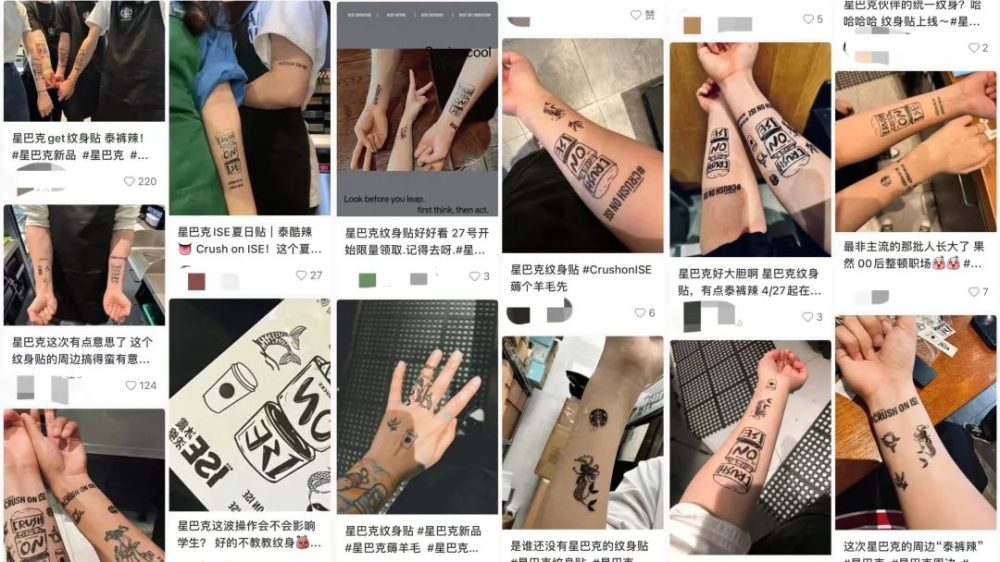
Recently, Starbucks employees have been sharing photos on social media showing their arms covered in temporary tattoos, resembling “sleeve tattoos,” attracting attention. It turns out this was part of the pre-launch promotion for the upcoming new product — Coconut Coconut Double Shot Iced Shaken Espresso. This new drink will officially go on sale on the 27th of this month.
According to internal sources at Starbucks, starting from the launch day of the new product, customers who purchase any beverage from the chilled espresso series will receive a free temporary tattoo sticker. Although the campaign has not officially begun, many employees couldn’t wait to try it out early, covering their arms with various temporary tattoos, creating a lively promotional atmosphere.
Seeing employees with their arms covered in colorful temporary tattoos unavoidably brings to mind a classic meme. In fact, since the first launch of the Iced Shaken Espresso, the product has emphasized not only its creamy foam texture but also the confidence of the baristas. Now, after nearly a year of shaking training, baristas who were once socially anxious have transformed into confident social butterflies, and with the addition of “sleeve tattoos,” the overall vibe has become even more energetic.

However, this campaign has also sparked considerable controversy. Some netizens are concerned that temporary tattoos might negatively influence student groups, especially since a certain proportion of Starbucks’ customer base consists of students. They suggest that if temporary tattoos are indeed to be given away, their distribution should be restricted for students under 18, as real tattoos could potentially affect future qualifications for civil service exams or government jobs.
Faced with these opposing voices, many netizens in the comments section expressed differing opinions. Most believe that Starbucks’ primary consumer group is not students, but rather financially independent adults with sound judgment. These adults are aware of the implications of tattoos and are unlikely to be easily misled by temporary tattoo stickers.
Some netizens also pointed out that temporary tattoos are essentially just fun novelties, much like the stickers that came with bubblegum in childhood. They can be easily removed with moisturizer or alcohol and won’t have any impact on daily life. They argue that the opposition to temporary tattoos is somewhat overblown, as it’s just a small creative idea meant to add joy to life.
Additionally, some netizens commented that if even temporary tattoos can have a negative impact on the next generation, then the root of the problem may not lie with the stickers themselves, but with parental guidance. They noted that similar stickers are also sold at convenience stores near schools, and if judged by the same logic, should those products also be banned? Real tattoos are a lifelong commitment, and when someone decides to get one, they should be responsible for their choice. If a small temporary tattoo can have such a significant impact, perhaps the issue isn’t with the brand, but with individual judgment.
The above content is compiled by CoffeeHunters, a coffee news website.


