








Introduction:Many people mistakenly believe that most Chinese are not suited to drinking dairy-containing beverages, but medically speaking, lactose intolerance and lactose malabsorption are actually two different concepts. This article explores, from physiological mechanisms, data sources to market trends, why milk coffee remains widely popular in China, while also discussing the positioning differences between black coffee and milk coffee in the specialty coffee wave—helping you make more scientific choices about the type of coffee that suits you.
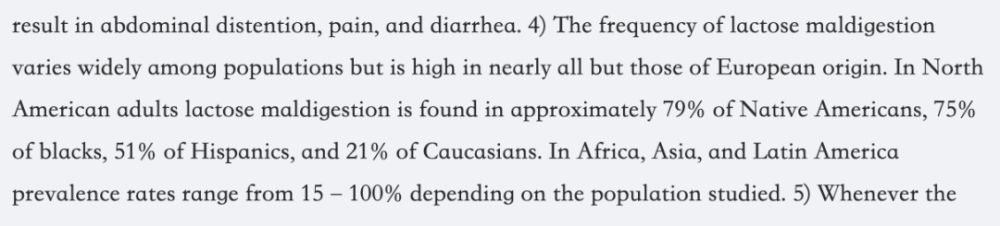
A data chart showing the proportion of lactose intolerance once stirred up heated discussions, leading many to believe that 90% of Chinese people cannot drink milk. However, medically, lactose intolerance and lactose malabsorption are two distinct physiological states. The former refers to experiencing symptoms such as abdominal pain, bloating, and diarrhea after ingesting lactose; the latter merely indicates a lower absorption efficiency of lactose in the small intestine, but does not necessarily cause significant discomfort. If so many people really felt unwell after drinking milk, how could milk tea and milk coffee be such bestsellers in the Chinese market? This article will delve into the reasons behind the Chinese fondness for milk coffee, analyzing it from the scientific basis behind the data, differences in human digestive mechanisms, and the evolution of the coffee industry, while also examining the roles of black coffee and milk coffee within the specialty coffee trend.
This often-cited chart comes from a foreign website dedicated to lactose intolerance research, but tracing it back reveals that its data actually originates from an academic paper (https://academic.oup.com/ajcn/article-abstract/48/4/1142/4716179), which statistically analyzed the incidence of lactose malabsorption around the world, with figures ranging from 15% to 100% in Asia, Africa, and Latin America. However, when these data were reposted, they were simplified or even distorted, leading to public misunderstanding. What exactly is the difference between lactose intolerance and lactose malabsorption? According to medical definitions, lactose intolerance is a clinical syndrome where individuals experience symptoms such as abdominal pain, bloating, flatulence, nausea, and even diarrhea after consuming lactose or lactose-containing foods—but these symptoms are not necessarily linked to lactose malabsorption. Lactose malabsorption, on the other hand, occurs due to insufficient lactase in the body, resulting in the inability to effectively absorb lactose in the small intestine, though this condition does not always come with any discomfort.

It can thus be seen that lactose intolerance and lactose malabsorption are not the same thing. The former inevitably brings varying degrees of gastrointestinal discomfort, while the latter simply indicates a lower absorption efficiency of lactose, without necessarily causing discomfort. By this reasoning, most Chinese people may have some degree of lactose malabsorption, but those who truly reach the level of lactose intolerance and exhibit significant discomfort are far fewer than the proportions claimed in online rumors.
So why are there still so many articles emphasizing that “Chinese people have the highest rate of lactose intolerance in the world”? Behind this, aside from promotional efforts by certain commercial brands aiming to push specific products, it may also be intended to raise public awareness about lactose-related issues. If, as some data suggest, most people experience gastrointestinal discomfort after drinking milk, then milk tea and milk coffee could never have become mainstream beverages in China. As the old saying goes: “Existence is reason enough.”
Of course, some also question: “But I always rush to the bathroom right after drinking milk coffee!” In fact, this may be related to the acidic substances in coffee. The acidity in coffee stimulates the secretion of gastrin, thereby accelerating gastrointestinal motility. That’s precisely why it’s generally not recommended to drink coffee on an empty stomach, especially for those with weaker stomachs—it can easily lead to discomfort such as stomach pain or diarrhea. Of course, lactose may also be a contributing factor, since individual tolerance to lactose varies; for some, it might only cause mild stimulation of gastrointestinal motility, leading to the urge to go. If you want to confirm whether milk is the culprit, try drinking a glass of milk on an empty stomach and observe your body’s reaction.
So why do Chinese people love milk coffee so much? Judging from the various new coffee products and brand R&D directions on the market, it’s clear that Chinese consumers indeed have a special fondness for coffee drinks containing milk. Although in recent years, milk tea has gradually reduced its milk content and shifted toward lighter tea-based formulations, in the coffee category, the proportion of milk added continues to rise. Whether it’s whole milk, fresh milk, skim milk, condensed milk, or cream, the options for dairy products are becoming increasingly diverse. The root cause of this phenomenon lies in the relatively simple flavor profile of coffee itself—for most consumers, relying solely on the acidity and bitterness of coffee is hard to create a rich taste experience.
Some might say, “But doesn’t coffee have a lot of flavors?” But in reality, many consumers have limited ability to discern coffee flavors—they usually can only perceive acidity and bitterness, and find it difficult to distinguish subtle notes like cranberry, cedar, or 97% dark chocolate. Therefore, for the majority of coffee drinkers, the flavor of coffee can indeed seem monotonous, and without the addition of milk, syrups, or other ingredients, it’s hard to pique their interest.
The Chinese fondness for milk coffee can actually be traced back to when coffee first entered the Chinese market. Early on, what people encountered were mostly canned or instant coffees, which were typically made from Robusta beans. To balance their relatively strong bitter and astringent taste, most of these products contained vegetable creamer or powdered milk—so for many, their “first cup of coffee” experience often came from milk-containing instant coffee. As café culture emerged, brands like Starbucks further reinforced the consumption habit of “coffee with milk.” Even though freshly ground coffee offers richer aroma and layers, the intense and strong flavor of espresso—even when diluted with water—remains rather bitter, so many still prefer coffee with milk. To cater to global consumer tastes, Starbucks has even introduced a variety of flavored syrups, pushing freshly ground coffee and milk coffee toward more diversified flavor experiences, leading consumers to generally believe: “If you want coffee that tastes good and has rich flavors, milk coffee is definitely the way to go.” This perception has also driven milk coffee to become the market mainstream, especially favored by younger consumer groups seeking fresh and novel tastes.
However, with the rise of specialty coffee culture, consumers’ emphasis on coffee bean quality has continued to grow. More and more people are beginning to pursue the authentic flavors of coffee, with methods such as light roasting and high proportions of pour over brewing—capable of highlighting the original delicate flavors of coffee—gradually gaining popularity. Nevertheless, whether it’s black coffee or milk coffee, both fall within the scope of specialty coffee. The essence of specialty coffee lies in controlling every stage—from planting and roasting to brewing—with professional standards. As long as the entire process and final experience satisfy the consumer, it’s considered a qualified cup of specialty coffee. For consumers, choosing between black coffee and milk coffee isn’t about right or wrong, but personal preference. The future development of specialty coffee still requires continuous innovation—whether in improving the intrinsic quality of coffee beans or exploring the diverse flavors of milk coffee—the ultimate goal is to help more people get to know and fall in love with coffee.
The above content is compiled by CoffeeHunters, a coffee news website.


