







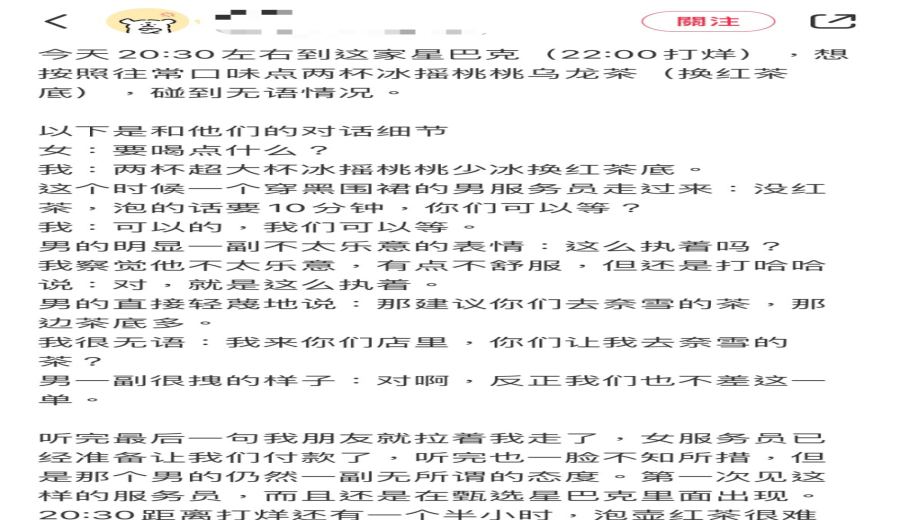
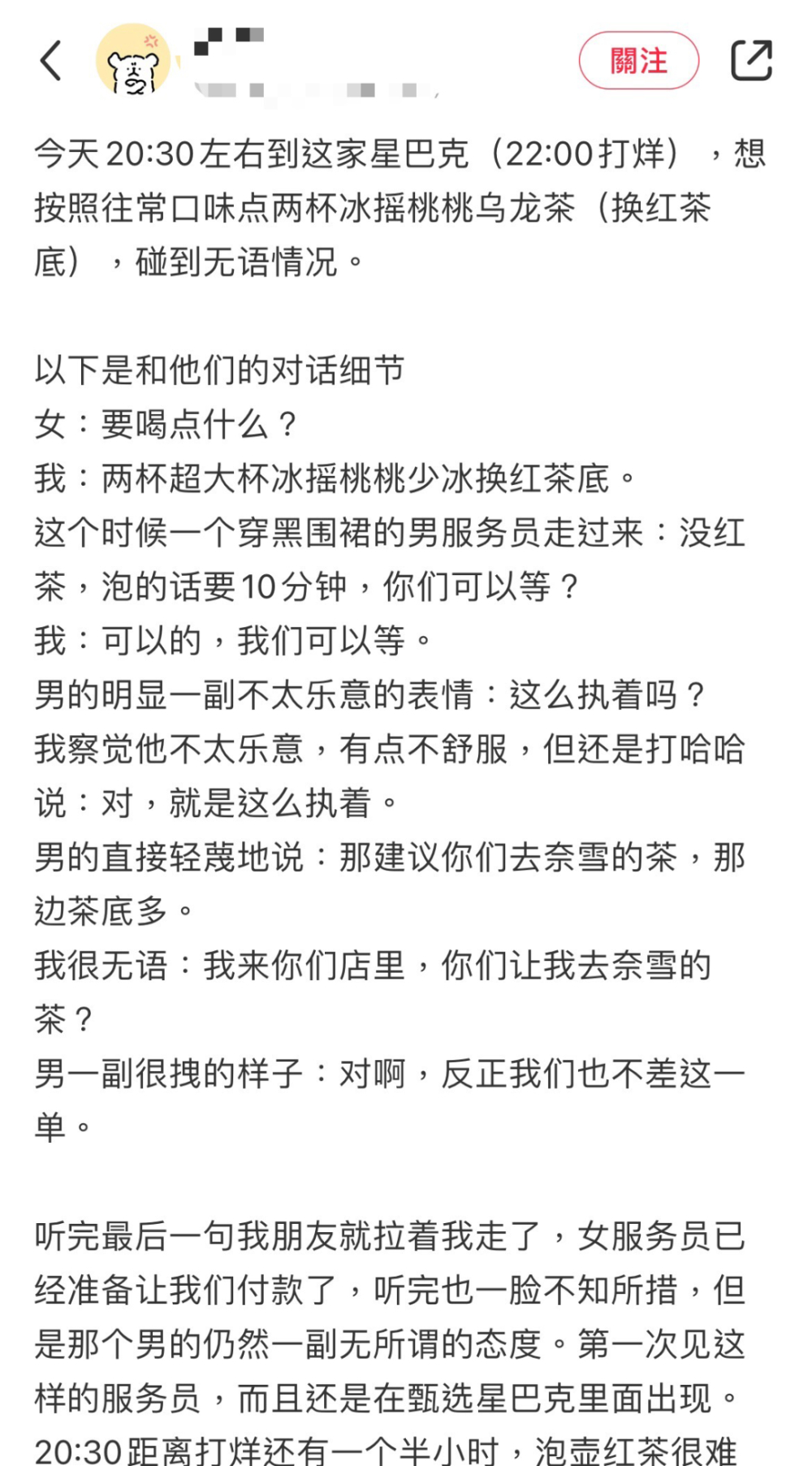
Introduction:A customer at Starbucks requested to change the tea base of their Iced Peach Oolong Tea from oolong to black tea. However, due to insufficient stock, waiting time, and service attitude, the customer became dissatisfied and was even advised to switch to a competing brand. This incident highlights the challenges chain coffee shops face in balancing standardized processes with customers’ personalized needs, and also raises questions about the boundaries between barista professionalism and complaint handling.
Recently, a netizen shared on social media that when ordering an Iced Peach Oolong Tea at a Starbucks outlet, they hoped to change the original oolong tea base to black tea. However, because the black tea leaves were out of stock at the time and would require about ten minutes to brew fresh, the customer expressed willingness to wait. Nevertheless, the barista showed impatience and retorted, “Are you that insistent?”
Faced with this response, the customer straightforwardly replied, “Yes, I am that insistent.” Unexpectedly, the barista then suggested, “Then go to Nayuki’s Tea — they have more options for tea bases there.” The customer, puzzled, pointed out that they had come to Starbucks in the first place, so why were they being recommended to a competitor? The barista calmly responded, “Yeah, we’re not losing anything by not serving you this order.”
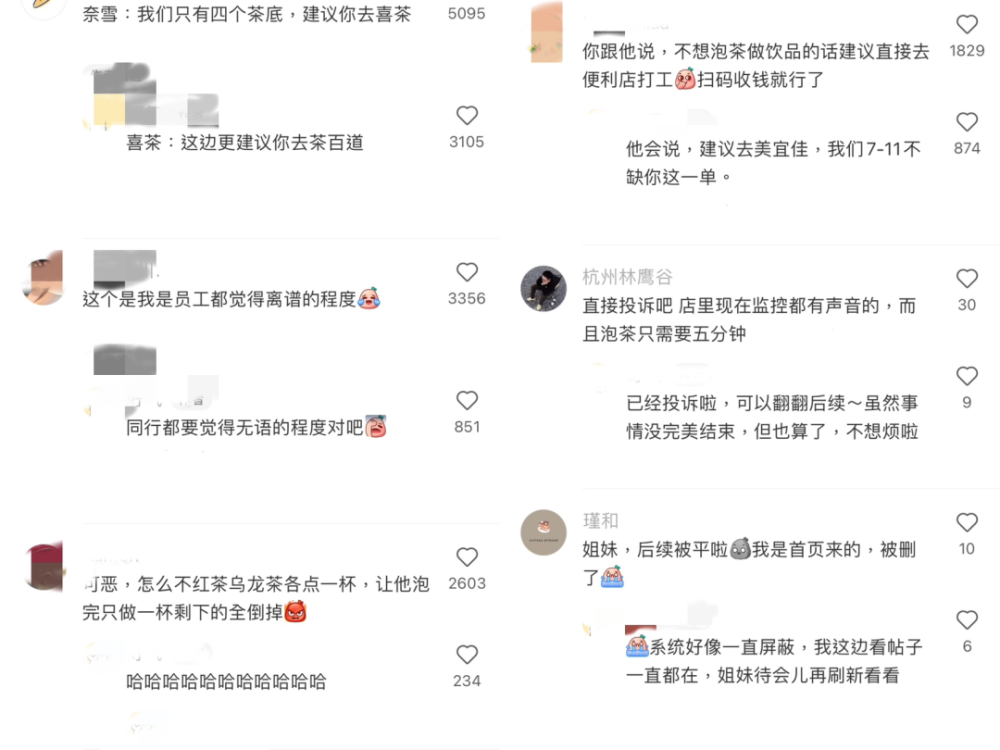
This experience left the customer not only disappointed but also prompted them to publicly share the incident on social platforms, quickly sparking widespread discussion and resonance among netizens. Both general consumers and Starbucks partners largely agreed that the behavior went beyond standard service, lacking basic respect and damaging the brand image.
The next day, the netizen received a phone call from the store manager of the involved outlet. The manager explained that the barista usually has a good service attitude and many regular customers, and that the response may have been made “in jest” due to fatigue that day. The manager also mentioned that after the customer left, the barista felt guilty and specially brewed some black tea, seemingly as a gesture of compensation.
Additionally, the manager stated that since Starbucks’ official apology vouchers take two months to apply for, they hoped to offer two “partner vouchers” exclusive to employees as an alternative, and invited the customer to return for another visit where the barista could personally apologize. However, this approach was not accepted by the customer, who felt the “compensation” lacked sincerity and failed to address the service failure itself.
As the incident continued to gain traction online, more netizens joined the discussion, questioning whether the manager’s response seemed to be covering up for the staff. “This is just making excuses — how can an apology require the customer to make another trip?” Some netizens bluntly said, “Trying to brush it off with two internal vouchers?” Faced with these consecutive criticisms, the manager did not respond further or take active measures.
Ultimately, due to mounting public pressure, the regional manager of the outlet’s area stepped in to intervene and confirmed that the incident did indeed occur as described. Initially, the regional manager expressed willingness to arrange for the barista to apologize either by phone or in person, but later retracted that, stating the employee could not apologize by phone, and eventually offered an apology on behalf of management.
Despite the involvement of senior management, the netizen ultimately chose not to pursue the matter further. However, the incident still did not receive any official public response or follow-up action from Starbucks. This event not only reveals the execution challenges faced by chain coffee brands when dealing with customized requests, but also provokes deeper reflection on service training, employee attitudes, and crisis communication mechanisms.
The above content is compiled by CoffeeHunters, a coffee news website.


