







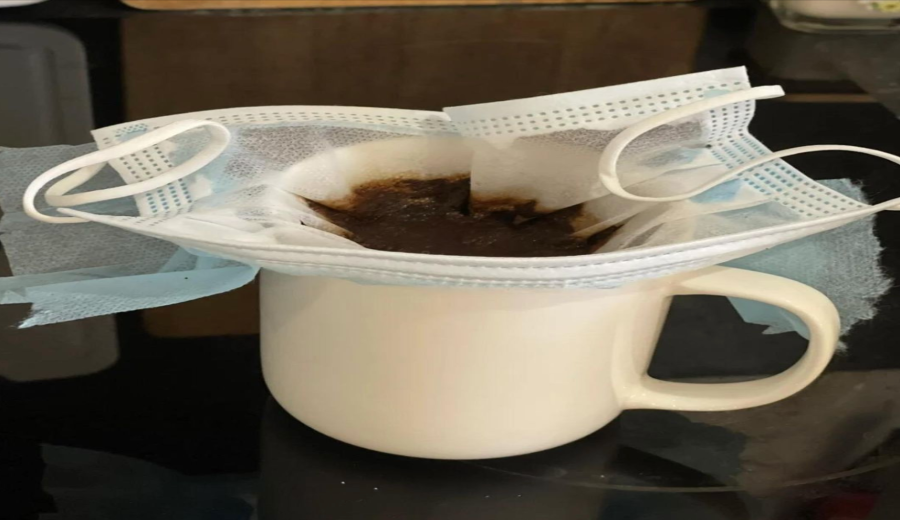
Introduction:A creative method of using expired face masks as a substitute for coffee filters to brew drip coffee once circulated on social media, sparking widespread discussion. Although some claimed it produced a "unique flavor," the hygiene and safety concerns behind this practice cannot be overlooked. This article delves into the potential risks of the polypropylene material used in the inner layer of masks when heated and exposed to hot water, and provides expert insights and practical advice to help you understand why professionals do not recommend this alternative, as well as how to choose safe and economical coffee filtration materials.
Recently, a post on social media caught the attention of many coffee enthusiasts and netizens — a user shared an experiment of brewing drip coffee using expired masks as filtration material, describing the result as having a "unique flavor." The method involved hanging the mask over the rim of a cup, removing the so-called waterproof layer, and then pouring hot water and coffee grounds directly for brewing. Although the final product in the photos appeared to be a "creative pour over," it ignited extensive online discussion and skepticism.
Many netizens immediately expressed disgust, believing the practice not only looked unhygienic but also felt "nauseating," with some even joking, "Are we next going to have COVID-19 coffee?" Others questioned whether the waterproof and adhesive layers in the mask, once heated, might release harmful chemicals that could compromise beverage safety.
In response to these concerns, a netizen who participated in the experiment explained that they used brand-new but expired masks, and had first removed the outer waterproof film, keeping only the middle melt-blown fabric and the innermost non-woven layer, claiming these materials were sufficient to filter out coffee grounds. However, such a "clever trick" is not entirely risk-free.
In fact, the non-woven fabric commonly used in the inner layer of masks is often made of polypropylene (PP), a type of plastic. Although polypropylene itself is not a plasticizer, it may still release trace amounts of chemicals under high temperature and humid conditions. A medical expert pointed out that polypropylene can indeed produce harmful substances when heated, though the risk is relatively lower if used in a ventilated environment. However, he also emphasized that even if the amount of harmful components released is minimal, long-term or frequent exposure could still pose potential health risks.
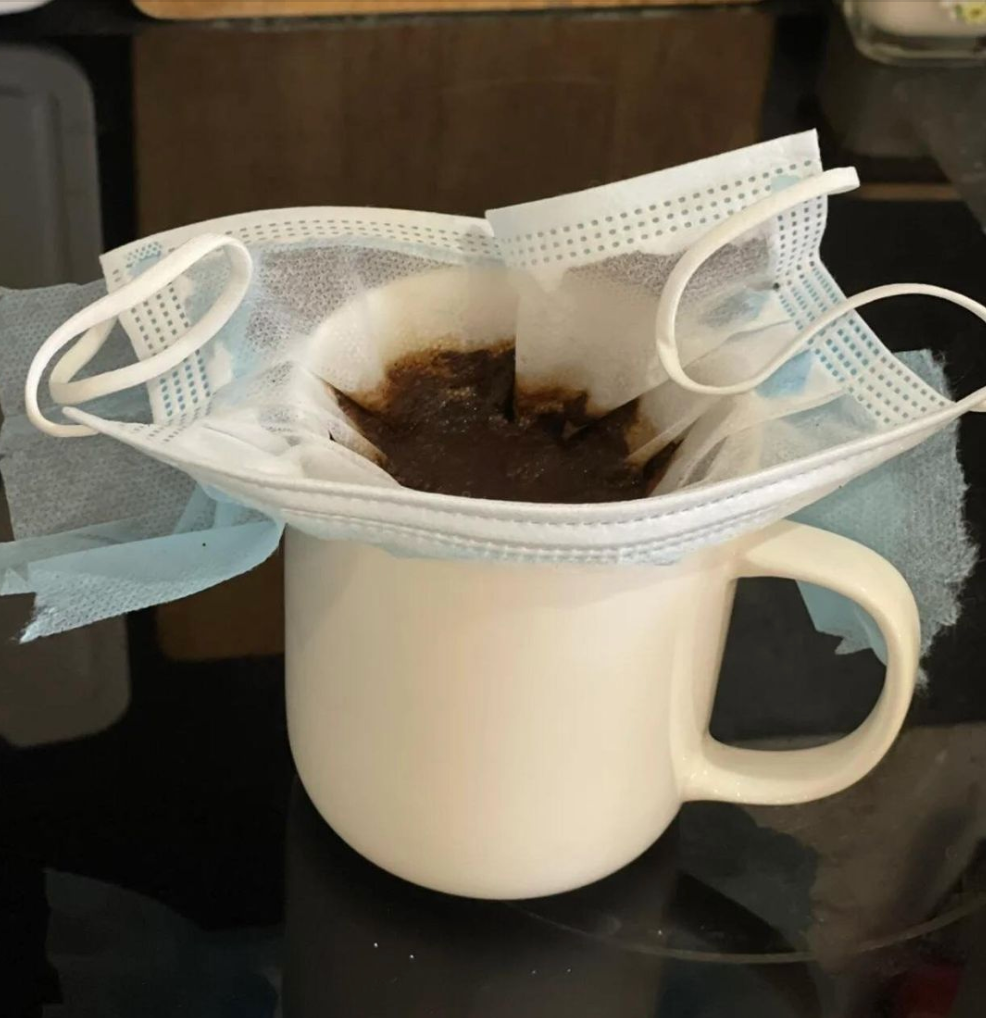
The expert further explained that although everyday items such as takeout utensils may also contain trace amounts of harmful substances, this does not mean we should actively increase our exposure to such risks. Especially during the coffee brewing process, where hot water continuously maintains a high temperature and the heating area is relatively concentrated — conditions quite different from simple heating or well-ventilated scenarios — the risks are naturally higher.
Additionally, some netizens actually tested this method and believed that as long as the waterproof layer was removed, the middle melt-blown fabric and non-woven layer still retained some filtering capability, able to block most coffee grounds. However, such self-modified "filtration materials" have not undergone food safety inspections, and their filtering effectiveness and stability cannot be guaranteed. This may lead to fine coffee particles passing through, affecting taste, and could even pose unknown hygiene risks.
More importantly, the price of coffee filters is comparable to that of masks. Commercially available, standard pour over coffee filters not only have food safety certifications, but also ensure the extraction of clean and smooth coffee liquid, avoiding interference from off-flavors or impurities that could affect taste. For coffee enthusiasts who pursue flavor complexity and beverage safety, choosing professional filters is the wise option.

In summary, although the creative idea of using masks as a substitute for coffee filters briefly stirred curiosity and discussion, from both a professional and hygiene-safety perspective, it is not recommended for the public to try. Especially when the source, quality, and handling of the masks are uncertain, the risks become even harder to control. If you don’t want to waste expired masks, it is advisable to follow proper disposal methods rather than risk using them as food-contact materials.
Brewing a great cup of coffee depends not only on bean selection and grinding, but also crucially on the choice of filtration material. Using safe and compliant coffee filters ensures every sip is worry-free and that you can fully enjoy the refined flavors of the coffee itself.
The above content is compiled by CoffeeHunters, a coffee news website.


