







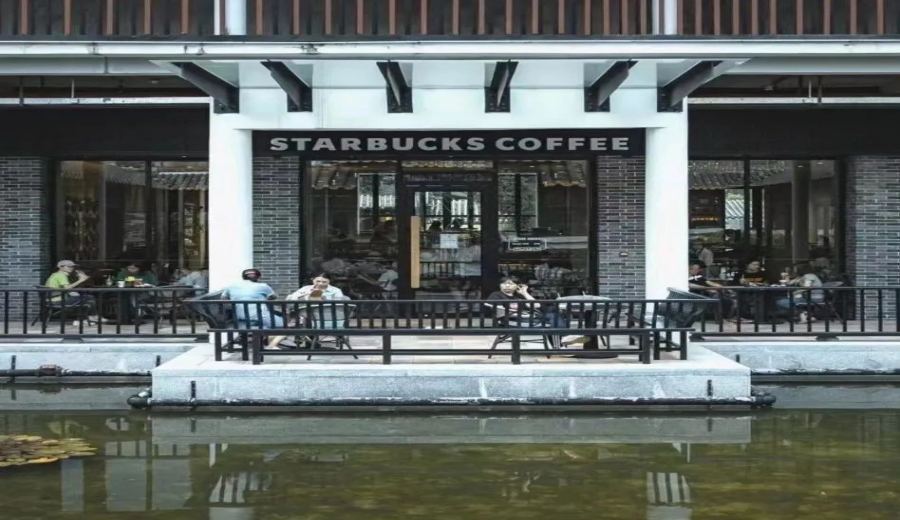
Introduction:Against the backdrop of the global catering industry being impacted by the pandemic, Starbucks has turned to China’s county-level markets in search of new growth. By accelerating store expansion and adjusting its operational strategy, Starbucks aims to create new consumption scenarios across more than 300 cities, including nearly 3,000 county-level markets. This article delves into how Starbucks meets the social and environmental needs of county consumers through its "third place" business model, as well as the growth logic and market layout strategy behind it.
The impact of the pandemic has posed severe challenges to the global catering industry, and even international coffee giant Starbucks has not been spared. In search of a breakthrough, Starbucks has set its sights on China’s vast lower-tier markets, particularly county-level cities. Since 2020, Starbucks has adjusted its global store expansion strategy, slowing down its pace in the U.S. market while increasing investment in the Chinese market.
According to Starbucks’ 2025 China Market Strategic Vision, the brand plans to open 3,000 new stores in the coming years at an average rate of one new store every nine hours, aiming to cover more than 300 cities in China, including nearly 3,000 county-level markets. This demonstrates Starbucks’ emphasis on the county-level market and signals that its "going-downstream strategy" has entered a phase of full implementation.
Liu Wenjuan, Starbucks China’s Chief Operating Officer, pointed out that these county-level markets not only have large populations but also huge consumption potential. Compared to the fierce competition and high saturation in first- and second-tier cities, the coffee market in county-level cities is still in a blue ocean stage, and consumers’ recognition of brands and environments often outweighs their price sensitivity.
Many returning consumers have found that Starbucks stores in their hometowns are often bustling with people, becoming not only a gathering place for young people but also attracting families and students. Observations show that the peak consumption periods in county-level cities are markedly different from those in first- and second-tier cities: breakfast and lunch times are not the main traffic periods, whereas the number of visitors significantly increases in the afternoon, after school, and after dinner.
This is closely related to the living habits of county residents. Most people are accustomed to having breakfast and lunch at home or in traditional eateries, so Starbucks does not see high order volumes during these times. However, in the afternoon, students choose to study at the stores, young people prefer to gather and chat here, and after dinner, many parents bring their children for leisure, forming distinct consumption peaks.
In addition, coffee consumption habits in county-level cities are gradually taking shape. Local employees have shared that some stores, which have been in operation for three years, have seen customers begin to develop the habit of coming to Starbucks in the morning for coffee and snacks. Although Starbucks’ pricing is relatively high, its brand recognition and comfortable environment still make it appealing. Many county residents say that given the high prices and inconsistent quality of local independent coffee shops, Starbucks has become their top choice.
One returning consumer admitted: "It used to be very hard to find a decent coffee shop back home. Now that Starbucks has arrived, I can finally enjoy consistently good coffee in a familiar environment." This reflects that for many county residents, Starbucks is not just synonymous with coffee, but also a symbol of modern lifestyle and social settings.
Liu Wenjuan further pointed out that consumers in county-level markets pay more attention to social and environmental needs, rather than simply seeking caffeine intake. Therefore, Starbucks’ emphasis on the concept of the "third place"—a comfortable social space between home and the office—is highly compatible with county-level cities.
Compared to the high density and high turnover of stores in first- and second-tier cities, the limited number of stores in county-level cities actually helps improve customer return rates and brand loyalty. Stores can spend more time interacting with customers, building deep emotional connections, and thus forming stable consumer communities.
Overall, Starbucks’ accelerated expansion into China’s county-level markets is not only a response to global challenges in the post-pandemic era, but also a strategic move to capitalize on the rising trends of consumption upgrading and social demand in county-level areas. By creating high-quality third places, Starbucks has successfully carved out a differentiated position in these emerging markets, injecting new momentum into the brand’s continued growth.
The above content is compiled by CoffeeHunters, a coffee news website.


