







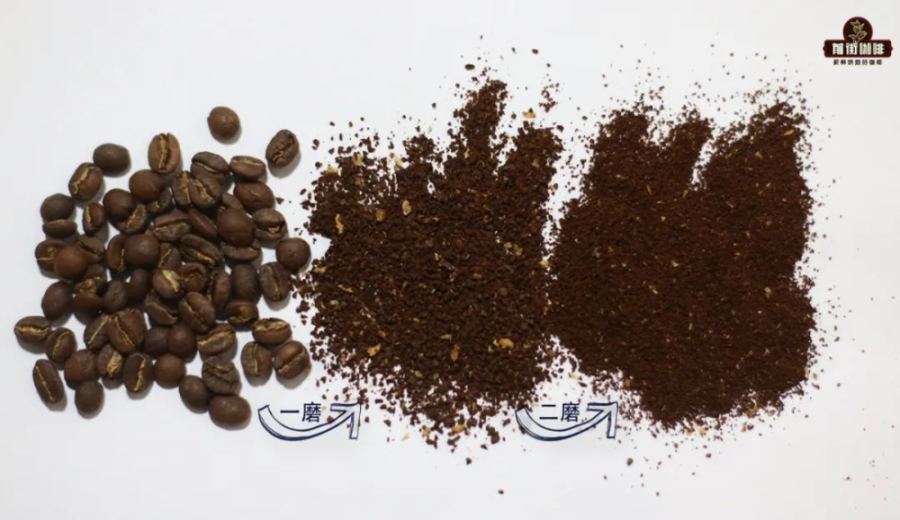
Introduction:Many coffee enthusiasts wonder: can pre-ground coarse coffee be ground again to achieve finer extraction? While the idea may seem intuitive, actually doing so can potentially damage your grinder. This article delves into the principles of regrinding, explores the potential risks, and shares how WBC and WBrC competitors use special techniques to improve particle uniformity—helping you evaluate whether it’s worth trying and how to do it safely at home.
Many coffee lovers have had this thought: if a grinder can easily turn whole beans into fine powder, wouldn’t putting already-ground coarse coffee back in produce an even finer result? This seemingly logical idea actually carries quite a few risks and could even cause your beloved grinder to give out prematurely. This article will thoroughly examine the feasibility of regrinding—from common issues and the risk of damaging your grinder to real-world strategies from world-class competitors like 2017 WBC Japanese competitor Suzuki Tatsuki and 2019 WBrC Chinese competitor Du Jianing—to help you fully understand the principles and practical applications of this advanced technique.
The Myth of Regrinding: Sounds Simple, But Hides Dangers
Many people think that the purpose of a grinder is to crush hard coffee beans into powder. Since it can handle beans, surely already-ground coarse coffee can be ground even finer when passed through the burrs again. However, the reality often doesn’t go as planned. When coffee powder goes back into the grinder, it lacks the structural support of whole beans and is more prone to clumping and buildup due to static electricity or residual oils—especially under high-speed burr rotation, which amplifies these issues.
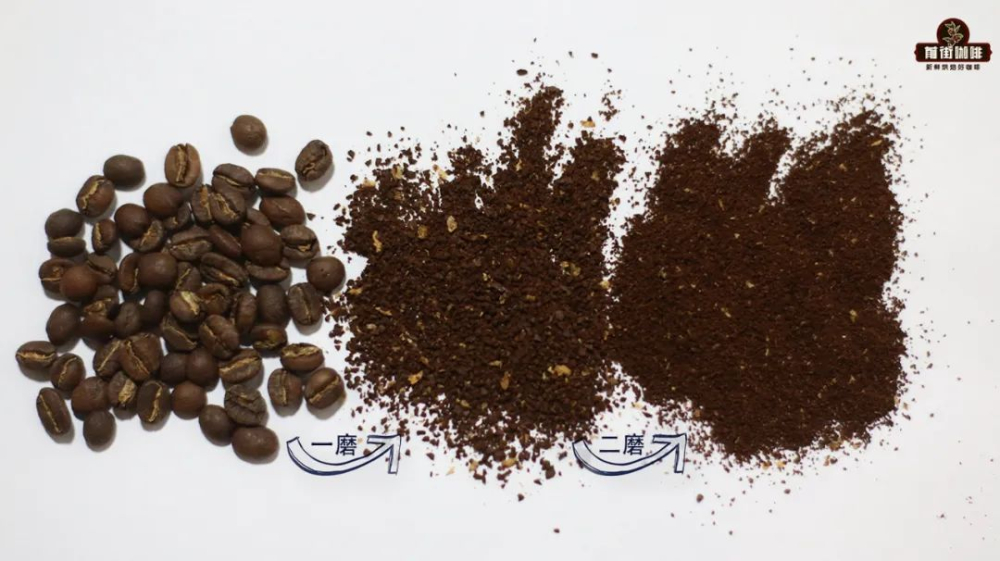
"Grinder eating coffee" is a common phenomenon in the industry, where the weight of coffee beans input doesn’t match the actual amount of grounds produced. The difference usually comes from powder sticking to the burrs or internal components. Static electricity and coffee oils are the culprits, causing the powder to adhere to the burr surfaces instead of being discharged smoothly. Putting already-ground coffee back in only worsens the issue—large amounts of powder can instantly clog the burr area, and in severe cases, render the machine completely inoperable. In fact, some physical stores have experienced burr seizing due to repeatedly regrinding fine powder, eventually ruining their grinders—a lesson all coffee lovers should take to heart.
Why Do Pro Competitors Dare to Use Regrinding? The Secret Lies in Temperature Control and Process
If regrinding is so risky, why do top international competitors still dare to try it? The key lies in their special methods and professional equipment. At the 2017 World Barista Championship (WBC), Japanese competitor Suzuki Tatsuki used a strategy of first cooling the beans and then grinding in stages when preparing espresso coffee. She first used liquid nitrogen to rapidly lower the coffee bean temperature, then performed an initial grind at a coarser setting, followed by another round of cooling with liquid nitrogen, and finally ground to the appropriate fineness for espresso.
Suzuki explained that using liquid nitrogen effectively suppresses the volatilization of aromatic compounds in the beans, preserving more flavor. More importantly, through the two-stage grinding process, under the same burr settings, the particle size distribution of the coffee grounds becomes more concentrated, reducing the proportion of coarse particles and improving overall uniformity—helping achieve more stable and balanced extraction performance.
Alternative Strategy: Coarse Grind to Remove Silver Skin, Then Fine Grind for Purity
Du Jianing, China’s representative at the 2019 World Brewers Cup (WBrC), took a different approach to regrinding. She first ground the beans at a coarser setting—the primary goal being to remove the silver skin, the thin membrane covering the coffee bean. This reduces impurities and interference during extraction, resulting in a cleaner cup. She then ground those coarse particles further to the desired fineness.
Through this two-step process, Du Jianing achieved coffee grounds with more consistent particle size distribution, improving overall extraction uniformity compared to traditional single-stage grinding. This strategy is particularly suitable for competition environments that demand extremely clean and detailed cup profiles.
Is Regrinding Suitable for Home Use? Evaluate Your Equipment and Risks First
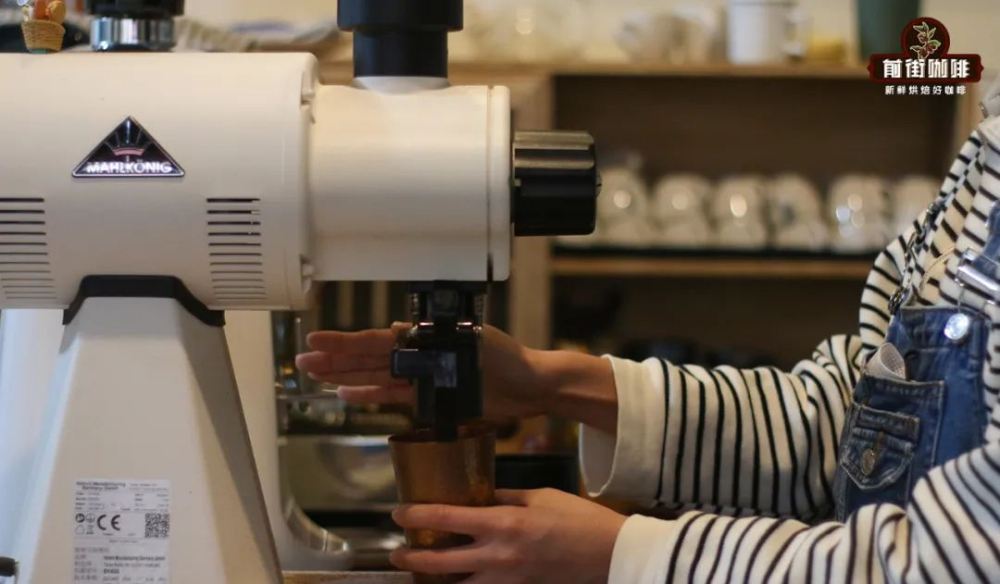
From the above professional examples, we can see that the core value of regrinding lies in achieving more precise and uniform coffee particle sizes to enhance extraction quality. However, these competitors succeeded largely thanks to professional-grade grinders—for example, Suzuki Tatsuki used an EK grinder with a large burr design that resists clogging from powder buildup, and which was provided by the competition organizers. Meanwhile, Du Jianing used a C40 hand grinder, which is more labor-intensive but offers high adjustability and easier cleaning and maintenance.
In contrast, most home users operate grinders that may not withstand the risks associated with regrinding, especially issues like static buildup and burr clogging. Without proper cooling measures, precise grind adjustment, and good cleaning procedures, attempting regrinding casually could easily do more harm than good.
In summary, while regrinding can indeed improve coffee particle uniformity and extraction efficiency under specific conditions, it places considerable demands on equipment, skill, and environment. If you’re a beginner, it’s best to master basic grind and extraction parameters first to ensure consistent results. If you’re an advanced user with professional-grade equipment, you might cautiously consider trying regrinding after fully understanding the risks and steps—but only if you’re aiming for the ultimate flavor experience.
The above content is compiled by CoffeeHunters, a coffee news website.


