







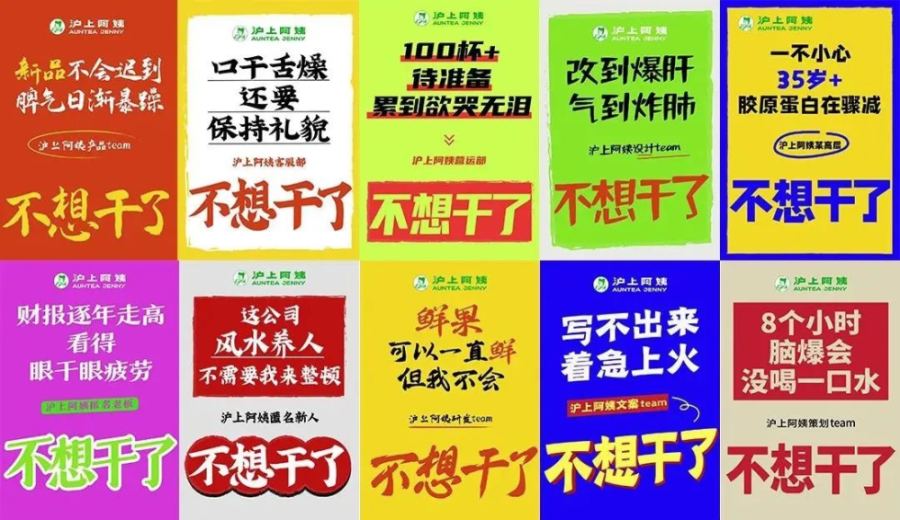
Introduction:The fresh fruit tea brand Uncle No Name successfully sparked social media buzz by releasing ten consecutive “I don’t want to work anymore” themed posters. What appeared to be a collective employee meltdown turned out to be a suspenseful marketing campaign paving the way for their new fresh stewed pear series. This article takes an in-depth look at the campaign’s execution, explores how the tea beverage industry is using internet memes familiar to young people to bridge the gap with consumers, and offers practical marketing insights.
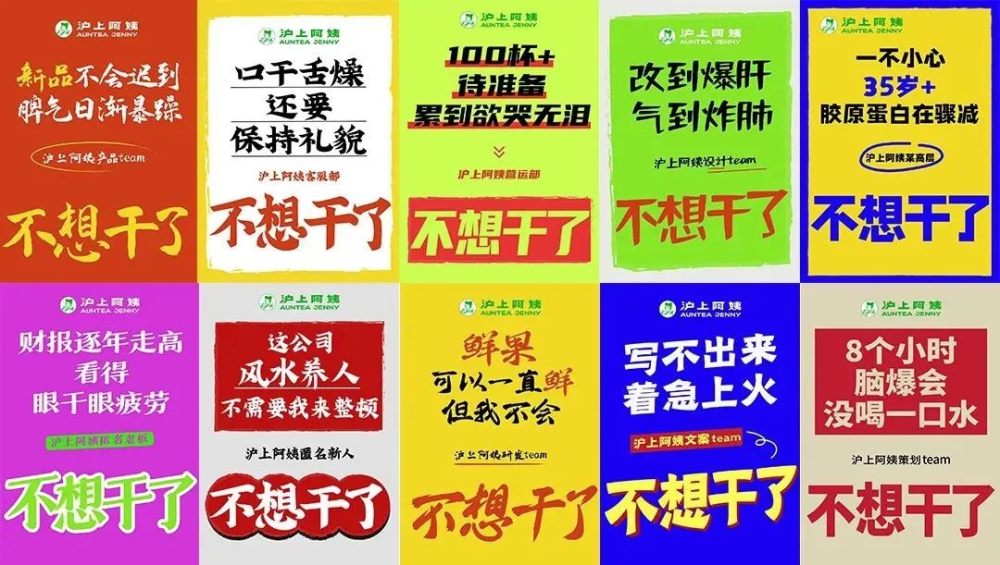
Uncle No Name, which boasts over 5,000 stores, recently staged a puzzling spectacle on its official Weibo account. Starting on November 6th, the brand released ten posters under the theme “I don’t want to work anymore,” featuring staff from entry-level employees to management across various departments such as operations, design, and customer service, all expressing exaggerated resignation sentiments. This highly dramatic presentation quickly resonated with young netizens.
Notably, these posters deliberately used a multi-color block layout and colloquial expressions—such as “I really can’t do this anymore today” and “The designer’s inspiration has been completely drained”—precisely capturing the psychological state of modern workplace individuals. Many netizens commented: “This is exactly how everyday workers feel” and “This form of venting is so relatable.”
However, behind this campaign lay a clever business strategy. It wasn’t until November 11th that the brand finally revealed the mystery—it was all a buildup for the launch of their new fresh stewed pear series. The official post played on a homophonic pun: “‘Don’t want to work [gàn] anymore’ means ‘don’t want to dry [gān] up anymore,’ because the ‘pear’ is nourishing me,” while skillfully tying into the social topic of “fixing the workplace,” successfully transforming the product launch into a viral sensation.
The key to the success of this marketing approach lies in accurately grasping the language system of the younger demographic. Observations show that in recent years, tea beverage brands have been competing to use popular internet memes—for example, the “cardboard dog” trend on Douyin, which garnered over 200 million views, inspired follow-ups from brands including Luckin Coffee (which launched a cardboard deer) and Mixue Ice Cream & Tea. Uncle No Name’s choice of the universal topic of “workplace burnout” further expanded the range of emotional connections.
Marketing experts point out that this case demonstrates three important strategies: first, building suspense through a serialized poster series; second, using homophonic wordplay to create memorable moments; and third, establishing emotional resonance through the “office worker” persona. This “create a topic first, then reveal the product” model can effectively boost consumer engagement and ongoing interest.
For tea beverage businesses, this case offers an important takeaway: in a highly competitive market, quickly responding to online cultural trends and translating them into brand narratives has become key to reaching young consumers. Especially when using universal themes like the workplace or life pressures, it’s essential to maintain a sense of humor and consistency with the brand’s tone.
The above content is compiled by CoffeeHunters, a coffee news website.


