







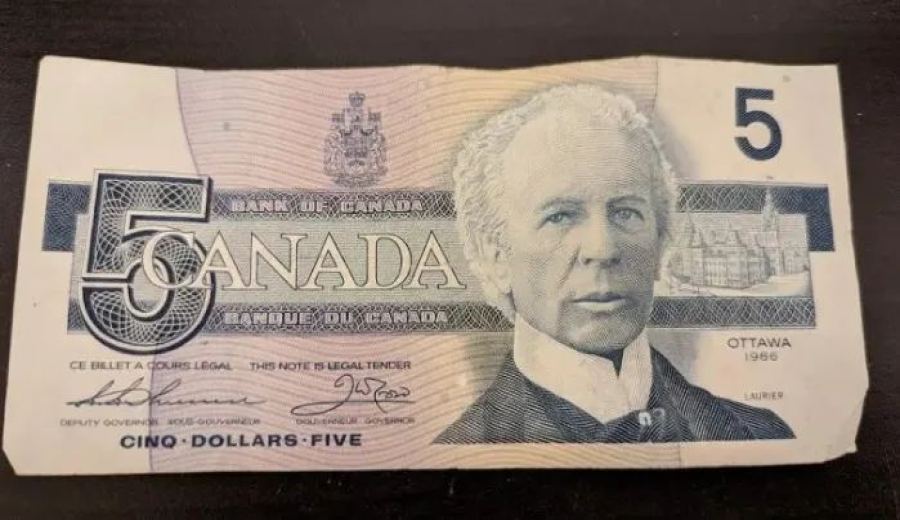
Introduction:In Ontario, Canada, a customer was refused when attempting to pay at a café with a 1986 edition 5 Canadian dollar bill, sparking public debate over merchants' right to choose payment methods and the trend toward cashless transactions. The Bank of Canada has made it clear that businesses have the right to decide whether to accept specific denominations of banknotes. This article delves into the details of the incident, the central bank’s stance, and explores the impact of cashless payments on different consumer groups.
In Ontario, Canada, a woman tried to pay for her coffee shop purchase with an old version of the 5 Canadian dollar bill issued in 1986, but the staff refused to accept it, citing unfamiliarity with that edition. Compared to the current plastic material version in circulation, the old bill had a noticeably different appearance, leading the young employee to doubt its authenticity—even after repeated assurances from the customer, it was ultimately declined.
Later, the same customer returned to the same café and showed the old bill to the manager in hopes of completing the transaction, but was still unsuccessful. She expressed understanding for the staff’s cautious attitude, as most transactions these days have shifted to plastic bills or digital payments, and the circulation rate of old bills is extremely low—so their unfamiliarity is understandable.
Regarding this incident, Bank of Canada spokesperson Amélie Ferron-Craig stated in a media inquiry that under Canadian regulations, merchants have the right to decide which payment methods to accept, including whether to accept cash, and can even choose not to take certain denominations. This position has reignited discussions on the balance between merchants’ autonomy and consumer convenience.
Ferron-Craig further explained that many small shops often refuse high-denomination bills due to anti-counterfeiting and loss prevention concerns, and old bills may also be harder to verify due to differences in appearance and material compared to current versions. She emphasized that while merchants have the right to refuse, all old Canadian dollars can be exchanged for new bills at major banks, retaining their full legal value.
As for the 1986 edition 5 Canadian dollar bill, the central bank noted that its design includes multiple anti-counterfeiting features, such as raised ink and special green dots—technologies implemented at the time to prevent forgery. Even so, over time, these features may become obstacles to identification for those unfamiliar with the older editions.
This incident also brings to mind the UK Starbucks’ move starting October 2022 to completely stop accepting cash payments. The brand stated that it would only accept card payments, contactless payments, or its own Starbucks Rewards cards. While this improved transaction efficiency, it also drew dissatisfaction from many consumers, especially seniors and those with lower digital literacy.
In fact, as early as during the global COVID-19 pandemic in 2020, Starbucks accelerated its push toward cashless payments. At the time, CEO Kevin Johnson publicly stated that mobile payments would become the mainstream of the future, and the move was also aimed at reducing cash handling and the risk of virus transmission. With technological advancements, mobile payments, QR code payments, and even facial recognition payments have gradually become widespread, significantly simplifying the transaction process.
However, while cashless payments are convenient, they also pose challenges for certain groups. The elderly, people with disabilities, and residents in rural areas with limited internet access may face consumption barriers due to unfamiliarity with digital tools or lack of relevant devices. How to promote payment innovation while taking into account the needs of different consumers has become an ongoing concern for all sectors of society.
In summary, while merchants have the right to choose which payment methods to accept, consumers are also advised to check the edition of their bills and the policies of the establishment before heading out to avoid unnecessary misunderstandings. For those holding old bills, they can rest assured to visit banks for exchange to ensure smooth fund circulation.
The above content is compiled by CoffeeHunters, a coffee news website.


