







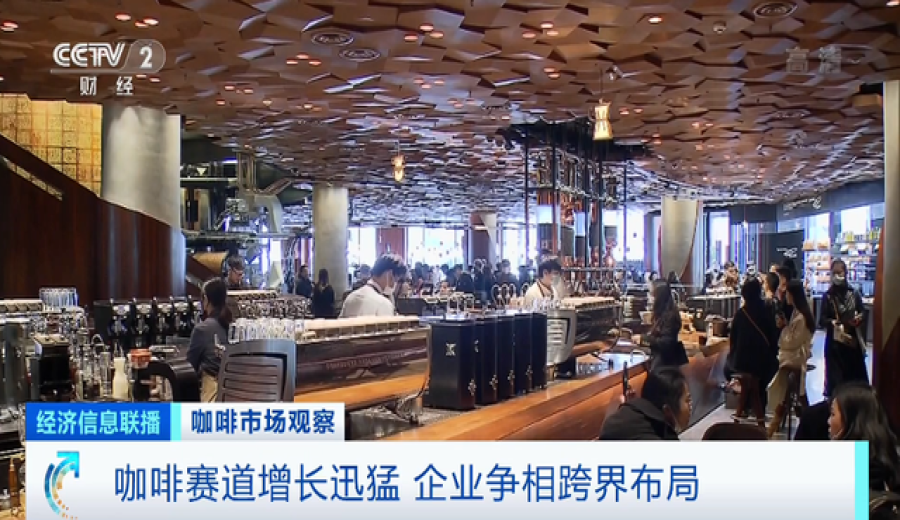
Introduction:China’s coffee-consuming population has reached the 300-million mark, with the market continuing to expand and attracting cross-industry brands to invest and expand their presence. This article provides an in-depth analysis of the market performance of the three major coffee categories—freshly ground, instant, and ready-to-drink—and explores the evolving taste preferences of Chinese consumers, as well as how the younger generation is driving the evolution of coffee culture, helping you grasp the growth trajectory of this wave in the coffee industry.
The number of coffee consumers in China has surpassed 300 million, with market enthusiasm continuing to rise, making it a hotspot for capital investment. According to statistics, the total number of coffee-related enterprises nationwide has reached 166,000, with over 22,000 new coffee businesses registered in the first nine months of 2022 alone, reflecting a year-on-year growth rate of 36.4%, indicating strong momentum in industry expansion.
Surveys indicate that as many as 91.4% of consumers show higher acceptance and preference for coffee products that incorporate Chinese elements or flavors, demonstrating that localization innovation is becoming a key strategy for brands to capture market share. From instant, freshly ground to ready-to-drink, the three major coffee types each have their own market positioning and consumer demographics, with freshly ground coffee seen as the category with the greatest future growth potential.
In the past, the industry often cited the saying “six losses, three break-evens, one profit” to describe the challenges of running a coffee shop. However, driven by urban development and rising living standards, China has gradually become one of the fastest-growing coffee markets globally, with the overall industry also moving toward stable profitability.
Cross-industry operations have become a notable feature of this coffee boom. Since 2020, well-known brands from various fields—including Li-Ning, China Post, Huawei, Sinopec, NIO, and even Tongrentang—have entered the coffee market, showcasing the sector’s high appeal and business potential.
If categorized by consumption format, coffee products can generally be divided into three main types: instant, freshly ground, and ready-to-drink. Among these, instant coffee has long held the largest market share due to its affordability and convenience in preparation. Taking well-known instant coffee brands as an example, they have successfully attracted younger consumers through refined packaging and influencer marketing, becoming popular topics on social platforms.
In contrast, although freshly ground coffee currently holds a smaller market share than instant coffee, it is regarded as the category with the most growth momentum. The industry estimates that by 2024, the size of China’s freshly ground coffee market could reach 190 billion RMB. As consumers’ demands for coffee quality and flavor continue to rise, an increasing number of freshly ground coffee shops that emphasize ingredient quality and brewing techniques have emerged, meeting the needs of customers seeking layered flavors and a premium coffee experience.
Ready-to-drink coffee, on the other hand, has secured its place in fast-paced lifestyles thanks to its portability and convenience of being ready to drink straight from the can. Although it may not match the flavor subtlety of freshly ground coffee, its high cost-performance ratio and instant satisfaction make it the preferred choice for many commuters and busy office workers.
Observing market trends, the younger demographic is gradually becoming the main force in coffee consumption. They not only focus on the product itself but also pay attention to brand style, store design, and the overall consumption experience. Many coffee shops have adopted light luxury, retro, internet-famous, or trendy styles in their interior decor and packaging design to attract the attention of young consumers, creating a “mutual selection” dynamic between the brand and its customers.
Overall, China’s coffee market is in a phase of rapid evolution. Whether it’s category innovation, cross-industry collaborations, or the youthification of the consumer base, all are bringing new opportunities to the industry. Keeping up with these trends will help brands and consumers alike embrace a new era of coffee culture.
The above content is compiled by CoffeeHunters, a coffee news website.


