







Introduction:When an elderly person struggled with operating their phone at a Luckin Coffee store, it sparked public debate over the cashier-less ordering model. This article delves into the business strategy behind Luckin’s steadfast commitment to mobile ordering, exploring how this approach impacts operational efficiency and customer experience, while also providing practical advice to help different demographics adapt to the digital ordering process.
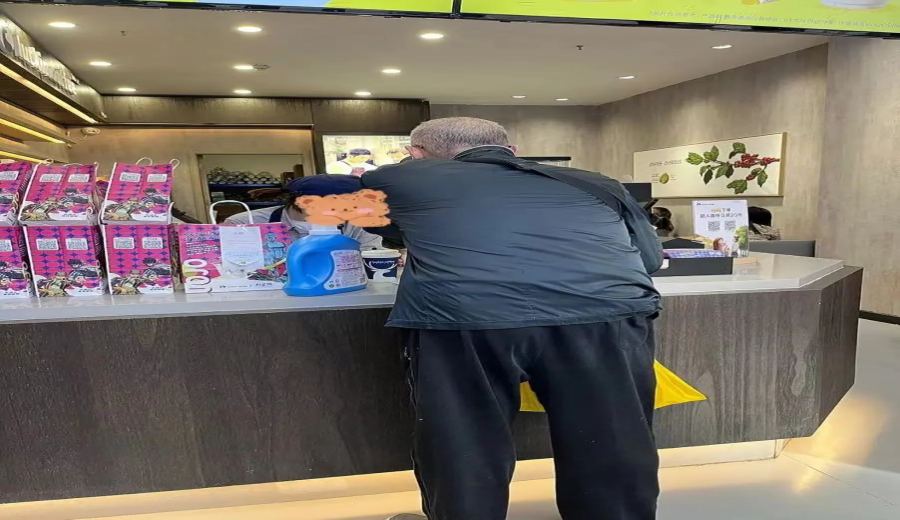
A recent online post went viral: an elderly customer walked into a Luckin Coffee store, saw completed drinks waiting in the pickup area, and wanted to buy one directly — only to be told they had to scan a QR code and place the order via their phone. When the customer asked about the price of the coffee in order to pay with cash, the staff member assisted with the order but used their own personal phone to do so. This incident highlights the uniqueness of Luckin’s fully cashier-less ordering approach and has led many consumers to question the rationale behind it.
In fact, since its inception, Luckin has consistently maintained a purely mobile ordering strategy, even in stores located in third- and fourth-tier cities. While this approach causes some inconvenience for elderly customers, it is the result of careful calculation by the brand. Through a combination of “small-store formats + streamlined staffing + efficient processes,” Luckin has successfully reduced the cost per cup of coffee to below industry standards, and eliminating the need for counter staff is a key factor.
From an operational perspective, adding dedicated order-taking staff not only increases monthly payroll expenses but also reduces the efficiency of existing employees in preparing beverages. Under the current model, staff do not need to spend time repeatedly confirming order details with customers and can focus on drink preparation, which increases the average service speed by about 40%.Image source: XiaohongshuAs shown in the scene depicted, it is common for customers to scan the QR code themselves and then wait in the pickup area — the overall flow is smoother.

This strategy also has a two-sided impact on consumers. Users who are familiar with digital tools enjoy faster service and lower prices — many Luckin drinks are priced significantly lower than those of competitors who use traditional counter ordering. However, for those less adept at using smartphones, such as the elderly or digital immigrants, the current system does present a barrier. Notably, most store employees can actually assist with placing orders, although such orders will not qualify for membership discounts — a flexible practice that is often overlooked due to poor communication.
Industry insiders point out that the success of this model relies on three foundations: a dense store network that shortens pickup distances, simplified beverage options that reduce decision-making time, and stable internet infrastructure. Actual testing shows that in urban stores with good signal strength, the average process from mobile order placement to drink completion takes about three minutes — approximately one minute faster than traditional counter ordering. For areas with unstable internet, it is recommended that customers enable store location services in advance and preload the ordering app to effectively avoid page loading delays.
This controversy also reflects the service gap in digital transformation. Although Luckin faces criticism for its insistence on a cashier-less model, the root issue often lies in individual employees’ attitudes and the completeness of their training. Observations show that experienced staff proactively observe customers’ difficulties and offer assistance, while newer employees may delay responses due to being busy making drinks. For elderly customers, it is recommended that family members help download the ordering app and preload funds, or choose off-peak hours when there are fewer people — during these times, staff usually have more capacity to provide hands-on guidance.
The above content is compiled by CoffeeHunters, a coffee news website.


