







Introduction:China Post’s Postal Café plans to expand to 100 stores by the end of the year, sourcing all its coffee beans from Yunnan and leveraging the extensive network of postal outlets to deepen its presence in both tier-one and tier-two cities as well as lower-tier markets. This article analyzes its strategy from the first store to rapid expansion, exploring how the “coffee + post office” model builds differentiated competitiveness through pricing tiers, cultural design, and supply chain layout in a fiercely competitive market.
Postal Café, developed by China Post Group, is actively expanding its footprint. According to Dong Kexin, co-founder and Chief Marketing Officer, the brand aims to reach the milestone of 100 stores by the end of 2024. Dong noted that in addition to increasing store density in core cities, the brand will also make use of China Post’s vast network of outlets to expand into third-tier and smaller cities, further penetrating the market.
Since the opening of its first store in Xiamen in February 2022, Postal Café has quickly sparked discussion with its unique fusion concept of “coffee + post office,” establishing six outlets in four cities within six months. Now, facing intense competition from both domestic and international coffee brands, Dong emphasized that beyond location and brand resources, the quality of the product itself, operational efficiency, and supply chain stability are the key factors for long-term success.
Notably, all coffee beans used in Postal Café’s current product lines come from the Yunnan growing region, achieving 100% domestic bean sourcing. Dong stated that no matter how a brand is positioned, it must ultimately return to the essence of the product, emphasizing the integration of supply chain, production craftsmanship, and store service capabilities to stand firm in the market.
Currently, Postal Café’s product lineup includes a variety of coffee drinks, teas, and desserts. Among them, cakes are uniformly priced at 18.8 yuan each, beverage prices range from 12 to 30 yuan, and individual coffee items are priced between 22 and 38 yuan. The stores also offer both in-store pickup and delivery services to meet the needs of different consumers.
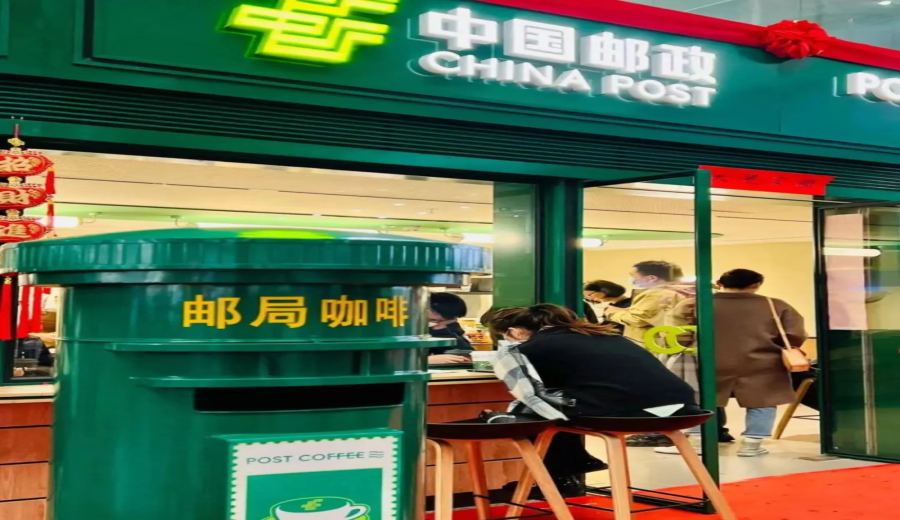
Store design is also a highlight, with a green post office theme paired with classic postal elements such as mailboxes, stamp-style labels, and vintage postcards, creating a strong postal culture atmosphere. Customers can even have their personal photos printed on postcards and enjoy the store’s mail collection and sending services. The outdoor seating area is also designed to provide customers with a distinctive space for relaxation and coffee enjoyment.
The first store opened on February 14, 2022, at No. 388, Hubin South Road, Siming District, Xiamen, kicking off romantically on Valentine’s Day. This timing resonated with the nostalgic sentiment of “in the days of slow carriages and letters, one could only love one person in a lifetime,” while also alluding to the reliability of postal services that transcend distance. Since then, the brand has continued to expand, opening its second store at Xiamen Cat Street Themed Post Office on May 15 of the same year, and rapidly expanding to six stores across four cities nationwide within six months.
Next, Postal Café plans to gradually enter cities such as Changsha, Nanjing, Hangzhou, and Fuzhou. Leveraging China Post’s nationwide outlet network, the brand blends fashionable coffee culture with the historical depth of the postal service, successfully transforming ordinary post office spaces into popular internet-famous打卡 spots beloved by younger audiences. It is reported that the seventh store — Xiamen Jimei University Chengyi College Store — is expected to officially open soon.
As domestic coffee consumption trends continue to evolve, market competition has reached a white-hot stage. In addition to well-known chain brands like Starbucks and Luckin firmly occupying the market, new startups and cross-industry ventures by established brands are also emerging in endless numbers. In this environment, although Postal Café benefits from China Post’s site selection advantages and store network resources, how to stand out among numerous competitors remains an important challenge for its future development.
The above content is compiled by CoffeeHunters, a coffee news website.


