







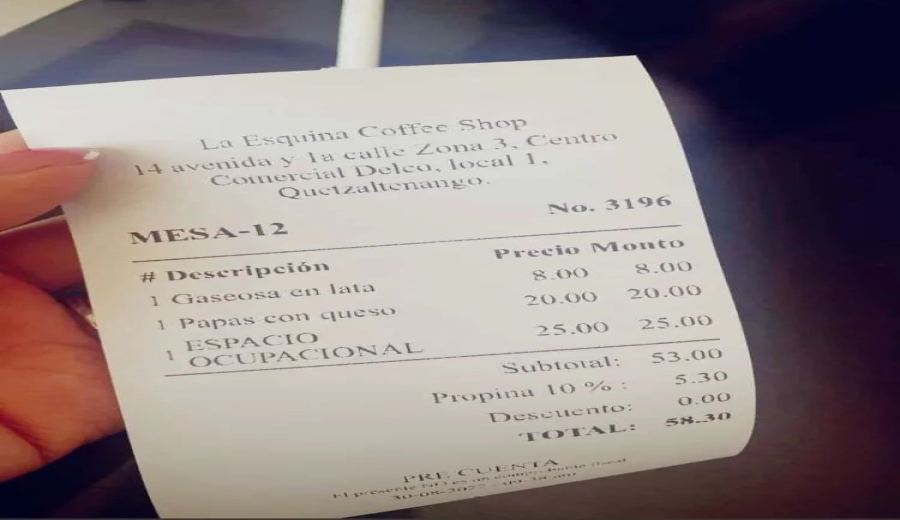
Introduction:While it’s common to pay a table or tea seating fee when dining out, a coffee shop in Guatemala recently made headlines by charging customers a “space occupancy fee” for using the restroom — a fee even higher than the cost of a regular meal, sparking widespread discussion. This article delves into the incident, public reactions, and explores the operational challenges small coffee shops face amid global inflation, revealing the truth behind the event and the current state of the industry.
In the food and beverage industry, charging table or tea seating fees has long been standard practice. However, a coffee shop in Guatemala recently went viral after imposing a “space occupancy fee” for using the restroom, and what shocked many was that this fee turned out to be more expensive than a regular meal, drawing strong dissatisfaction from consumers.
According to a receipt shared by a customer, alongside the meal charges, there was an additional line item labeled “space occupancy,” amounting to **25 Guatemalan quetzals** (as of September 5, 2022, approximately 22.3 Chinese yuan). For comparison, a can of soda cost only 8 quetzals, and a serving of cheese potatoes was just 20 quetzals. The restroom fee was significantly higher than typical meal items, leading customers to deem it unreasonable.
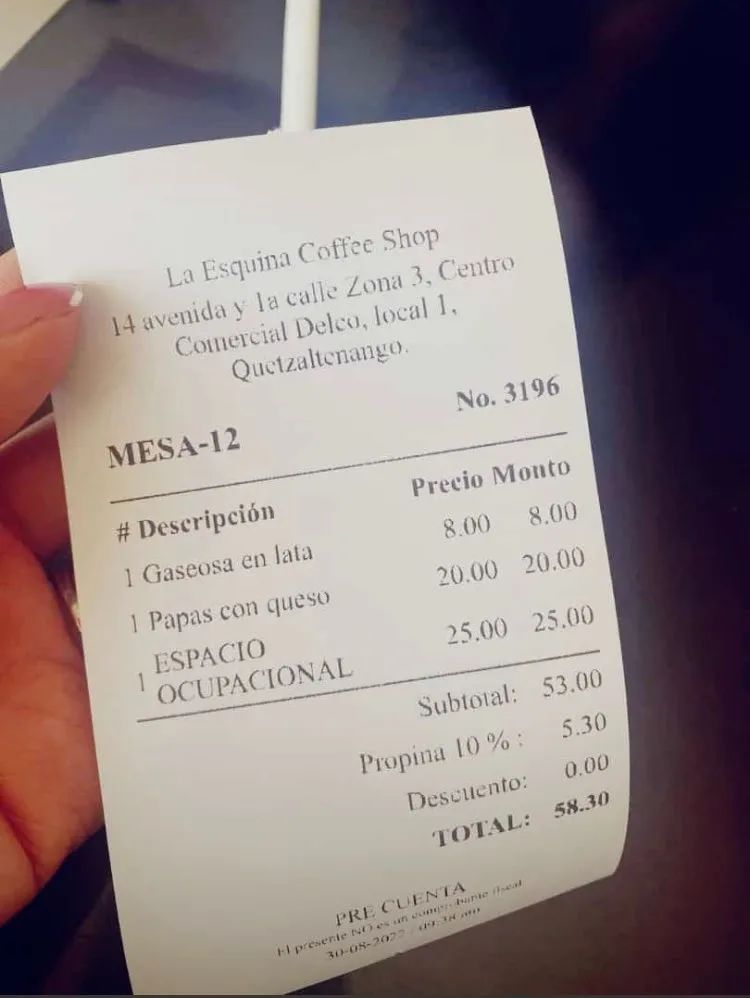
After the customer posted the receipt on social media, it quickly went viral. Since the receipt clearly displayed the name and address of the coffee shop — “La Esquina Coffee Shop” — its Facebook page was soon flooded with angry comments. One user sarcastically remarked, “I’m surprised they haven’t started charging for breathing yet.” Another noted, “I’ve been here before, no wonder it’s always so empty.”
Under public pressure, the shop later issued a statement admitting that the charge was due to a system error and expressed “deep regret” over the incident. They confirmed that the system settings had been corrected and that they had proactively contacted affected customers to process refunds and compensation.
However, many netizens were unconvinced by the apology, arguing that even if it was a system mistake, setting such a high fee for using the restroom was inherently unreasonable. That said, a small number of users tried to see things from the shop owner’s perspective, suggesting that due to high rents and the impact of the pandemic, some customers only used the Wi-Fi without making purchases, putting pressure on the business and prompting such an extreme measure.

In fact, amid intensifying global inflation, small coffee shops struggling to stay afloat is a common phenomenon. Not only are there limits to how much coffee prices can rise, but many shops also face soaring costs for utilities and rent. According to The Irish Times, one small coffee shop received an electricity bill as high as 9,000 euros (approximately 280,000 New Taiwan dollars) in just 73 days, highlighting the harshness of the operating environment.
It’s worth noting that while “pay toilets” are not uncommon abroad, especially in certain parts of Europe — mainly to cover maintenance and cleaning costs — most coffee shops still offer free restrooms for customers. This particular coffee shop in Guatemala not only charged for restroom use but set the fee higher than the cost of a regular meal, naturally provoking widespread controversy and backlash.
The above content is compiled by CoffeeHunters, a coffee news website.


