







Introduction:The global specialty coffee standards are about to change dramatically!The SCA (Specialty Coffee Association) recently announced major revisions to the cupping form and coffee flavor wheel that have been in use for over 20 years. These include the addition of a sweetness scoring category, the differentiation between types of sensory judgment, and adjustments to the scoring benchmarks for specialty vs. commercial coffee. How will this reform impact coffee evaluation and consumer choices? This article details the background, specifics, and practical implications of the reform.
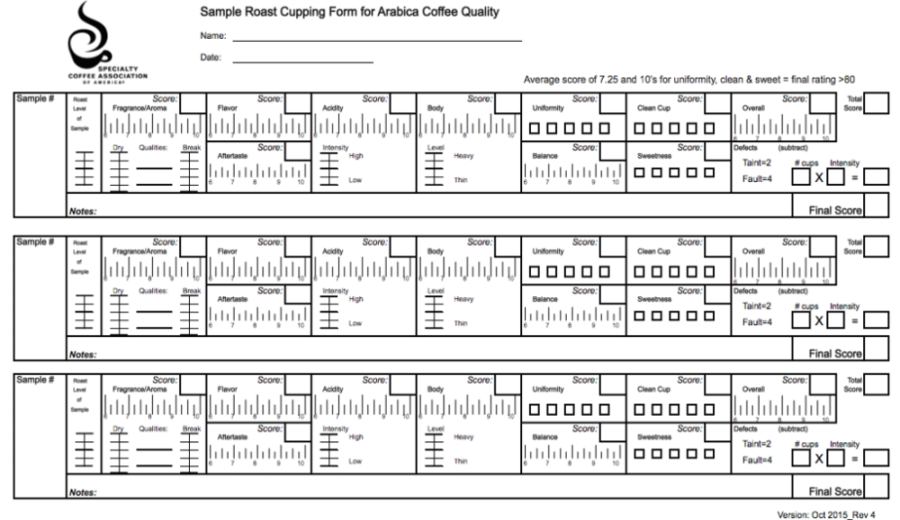
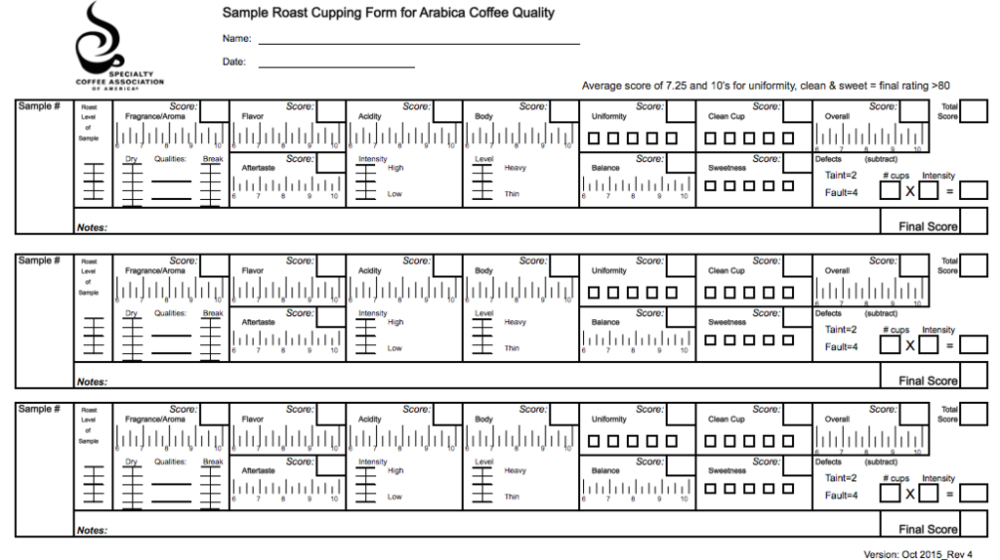
Mario Fernandez, Technical Officer at the SCA Specialty Coffee Association, revealed during a post-BOP (Best of Panama) competition estate reception that the SCA cupping form, which has been used for over two decades, is set to undergo an overhaul. He pointed out that the current cupping form mixes three types of sensory judgment — discriminatory, descriptive, and affective — which can easily lead to scoring biases. The new version of the cupping form plans to separate these three categories of evaluation and will add “sweetness” as an independent scoring item, making coffee sensory evaluation more accurate and diverse.
The current SCA cupping form has long been widely adopted in the industry as a key tool for assessing coffee quality. However, over the past twenty years, both the coffee industry and sensory science have made significant progress. As consumers' understanding of coffee flavors has deepened, “sweetness” — as one of the important sensory characteristics of coffee — has received increasing attention and has thus been proposed for inclusion as a formal scoring criterion. Mario Fernandez stated that this reform is a response to the demands of both the industry and consumers, aiming to make cupping results closer to the actual drinking experience.
In the existing cupping form, different types of sensory judgment — such as “Body (body)” and “Balance (balance)” which are affective judgments, “Uniformity (uniformity)” which is a discriminatory judgment, and “Intensity (overall intensity)” which is a descriptive judgment — are all mixed on the same table. This is not recommended in sensory science because it is difficult for humans to fairly process these three different types of assessments simultaneously. Mario pointed out that such mixing may lead to scoring biases and affect the fair evaluation of coffee.
To address this issue, the SCA has collaborated with the World Sensory Institute to draft a new version of the cupping form. The new version will build upon the original foundation by incorporating more descriptive vocabulary and designing additional key questions. It constructs a new coffee value assessment system from five comprehensive perspectives: green bean grade, descriptive judgment (focused on coffee flavor performance), affective judgment (focused on individual overall quality perception of the coffee), external attributes, and perceived value. Through these adjustments, different types of sensory judgments can be effectively distinguished, reducing scoring bias and allowing evaluators to better understand the basis for each of their judgments, thereby giving fairer scores.
Currently, this reform plan is still under discussion and refinement and has not yet been officially implemented. However, it is expected to have a profound impact on global coffee evaluation standards in the future. In addition to the cupping form changes, the SCA also plans to adjust the coffee flavor wheel to address the issue of the current flavor wheel being overly centered on North America. Mario Fernandez said that many flavor descriptor terms currently originate from North America and may not be accurately understood by consumers or evaluators in other regions, and can even pose translation challenges, leading to inconsistent scoring standards across different areas.
To create a more globally accepted flavor reference system, the SCA is working with the World Sensory Institute and the Coffee Science Foundation to compile a set of flavor descriptors that can be accepted worldwide and to provide more translations that incorporate local cultural contexts. Such adjustments will help coffee enthusiasts and professionals from different cultural backgrounds have more consistent reference standards during coffee evaluations, reducing misunderstandings and biases caused by regional differences.
Additionally, Mario mentioned during the event that the SCA plans to further widen the scoring gap between specialty coffee and commercial coffee. In the past, 80 points was often considered the entry threshold for specialty coffee, but in the future, this score benchmark may be lowered to 75 points or even lower. This adjustment does not imply a decline in coffee quality, but rather a shift in evaluation criteria and mindset. By raising the scoring threshold for specialty coffee, higher quality can be more clearly distinguished from general commercial coffee, giving consumers clearer guidance when making choices.
In summary, the upcoming reforms to the SCA cupping form and flavor wheel will comprehensively adjust and optimize everything from scoring criteria and the categorization of sensory judgments to global flavor references. These changes will not only enhance the accuracy and fairness of coffee evaluation but will also influence how consumers perceive and choose coffee quality in the future. For coffee professionals and enthusiasts, understanding these changes will help them grasp the essence of coffee evaluation more deeply and make wiser decisions when tasting and selecting coffee beans.
The above content is compiled by CoffeeHunters, a coffee news website.


