







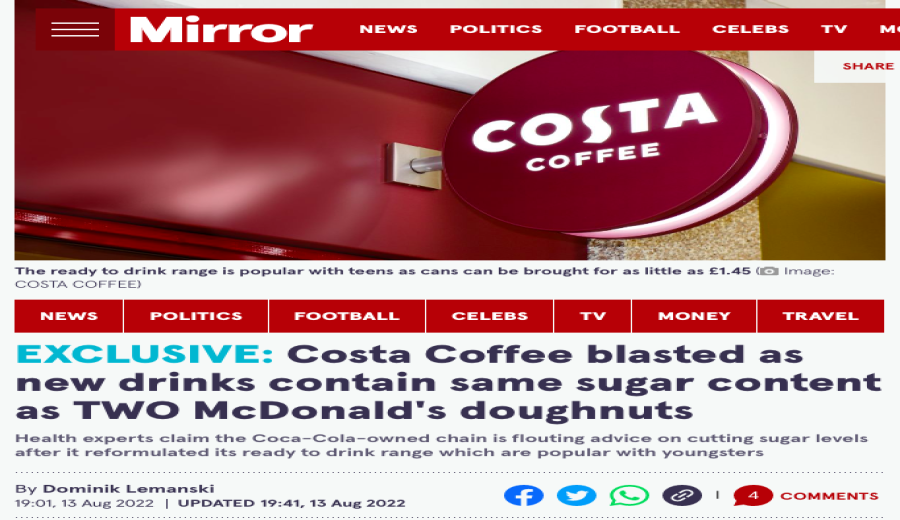
Introduction:Ready-to-drink coffee is often seen as a convenient pick-me-up, but its sugar content can be much higher than expected. Investigations have found that some of Costa’s pre-packaged coffee products have quietly increased their sugar levels in recent years, with certain popular flavors containing nearly one-third more sugar than in 2019, raising concerns among nutritionists about the health of children and adolescents. This article delves into the truth about the sugar content in ready-to-drink coffee and compares international differences in sugar control policies to help readers make healthier beverage choices.
While coffee is generally regarded as a beverage with health benefits, the sugar issue in ready-to-drink coffee is often overlooked. Market research shows that Costa, a coffee brand under the Coca-Cola Group, has seen a gradual increase in the sugar content of several of its pre-packaged coffee products, with some flavors containing about one-third more sugar than in 2019, prompting questions about whether it aligns with modern healthy eating trends.
Take the common vanilla latte as an example—it contains 14 grams of sugar per 250 milliliters, while the classic latte has 13 grams. Such sugar levels are equivalent to multiple teaspoons of granulated sugar.Notably, these products are affordably priced, with some selling for as little as £1.25, making them especially popular among younger consumers.
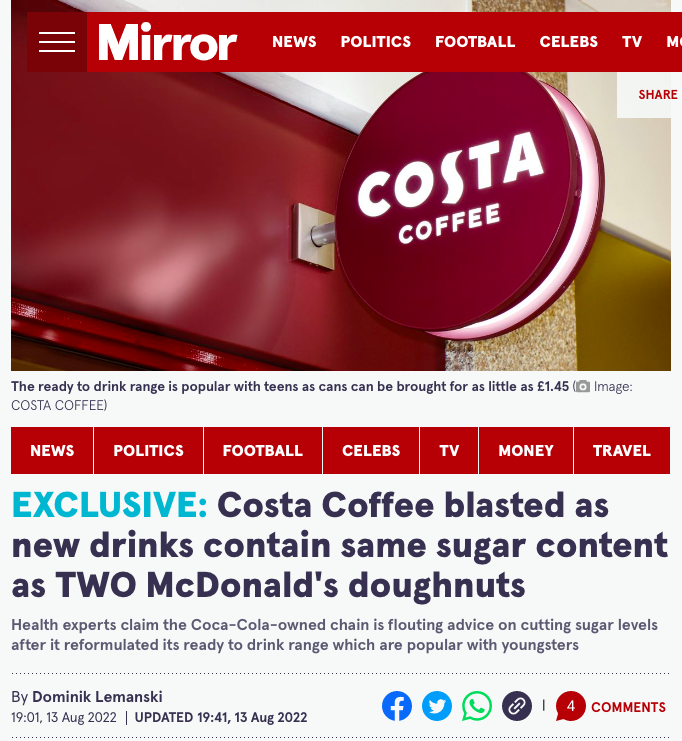
The UK’s National Health Service (NHS) recommends that children aged 4 to 6 should consume no more than 19 grams of sugar per day, and those aged 7 to 10 should limit intake to under 24 grams. By this standard, a single cup of Costa’s ready-to-drink coffee could account for a significant portion of a child’s daily recommended sugar allowance. Public health experts have pointed out that it is disappointing that a major chain like Costa has not responded to government sugar-reduction policies.
A representative from Action on Sugar, a UK health advocacy group, stated that although the government has encouraged food producers to voluntarily reduce sugar content for many years, the reality is that many companies have not actively cooperated with this public health goal. They believe that well-known brands like Costa should take on greater social responsibility rather than increasing sugar content against the trend.
In response to criticism, Costa explained that adjustments to their product formulations were based on customer flavor preferences. Although the total sugar content of the new formula has increased, it mainly comes from the natural sugars in the milk itself, rather than added sucrose or other sweeteners. However, this explanation has not fully allayed public concerns, as lactose in milk is also a type of sugar, and consumers who need to monitor their sugar intake should remain cautious.
Human preference for sweetness has physiological roots. When sweet substances are consumed, the brain releases dopamine, creating a pleasurable response—this is one of the reasons why many people find it hard to resist sugary drinks. However, consistently consuming excessive amounts of sugar may increase the risk of health issues such as obesity, diabetes, and tooth decay.
To tackle the growing problem of diabetes, some countries have begun taking proactive measures. For instance, Singapore has implemented a strict food labeling system that requires beverages and restaurant menus to display nutritional ratings based on sugar content, helping consumers make more informed choices.

In China, with the rise of trends like “the first cup of milk tea in autumn,” consumers’ attention to the sugar content and sweeteners in beverages has gradually increased. More and more people are starting to pay attention to drink ingredient lists, and many shops now offer alternatives like artificial sweeteners to cater to different consumer needs. The shift from the simple “full sugar, half sugar, less sugar” options of the past to today’s diverse adjustments in sweetness levels and types reflects the market’s response to health trends.
However, the impact of excessive sugar consumption on health cannot be underestimated. Recently in Nanning, Guangxi, China, a 37-year-old pregnant woman at 31 weeks gestation was found to have severely elevated triglycerides in a blood test after regularly drinking milk tea every day for a long time, with even signs of preterm labor. Doctors noted that her blood, overloaded with fat and sugar, had taken on a milk tea-like cloudy appearance, and she was also diagnosed with diabetes, gestational diabetes, and hyperglycemia, serving as a warning to all beverage enthusiasts.
Although ready-to-drink coffee is convenient, while enjoying its sweet flavor, consumers should also be mindful of its potential sugar burden. Moderate consumption and understanding ingredients are key to balancing taste and health.
The above content is compiled by CoffeeHunters, a coffee news website.


