







Introduction:The virtual stock membership campaign previously launched by Nayuki Tea, which allowed users to simulate trading of stocks linked to real share prices using consumption points called “Nayuki Coins” — even supporting leveraged operations — quickly sparked widespread discussion and attention. However, its operational model also raised questions about its legality and consumer risks. This article will comprehensively break down the entire course of the campaign, details of its model design, and the legal gray areas behind it, helping readers understand how new-style tea beverage brands navigate the boundaries between marketing innovation and regulatory limits.
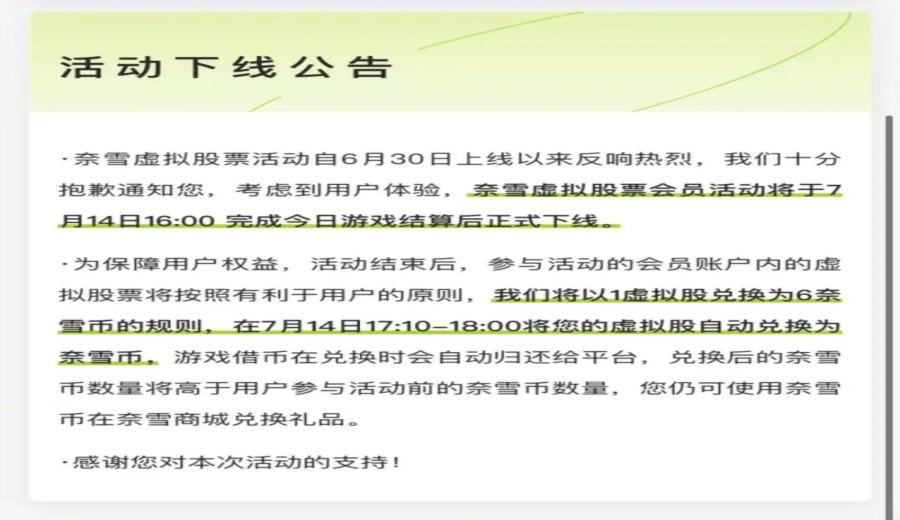
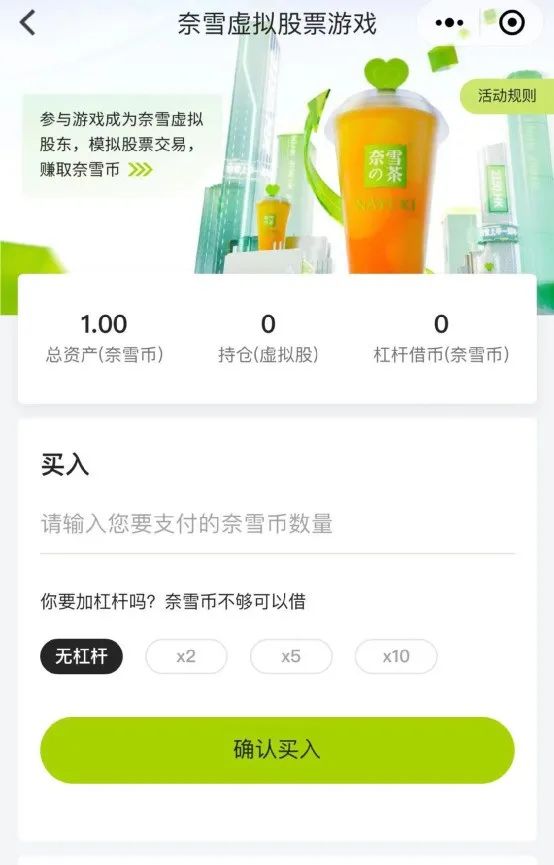
On July 14, 2023, Nayuki Tea suddenly announced that it would officially shut down its controversial virtual stock membership campaign, drawing broad market and consumer attention. Since its launch, the campaign had quickly become the center of discussion due to its innovative “consume to earn points, use points to buy virtual stocks” model. Users could earn 1 “Nayuki Coin” for every 1 RMB spent, and then use these Nayuki Coins to purchase virtual stocks linked to Nayuki’s real stock (02150.HK), even opting for leveraged operations at 2x, 5x, or even 10x to simulate real stock market investment scenarios.
However, this innovative marketing approach did not receive unanimous praise. Within just a few hours of going live, the campaign drew skepticism from numerous netizens regarding whether it crossed legal red lines, especially concerning leveraged trading and the use of virtual currency. While industry insiders generally believe that “Nayuki Coins” are essentially consumption points without legal tender status or two-way convertibility with the RMB, and thus do not constitute illegality, the boldness of the model design and its proximity to the edge of financial operations still make it highly controversial.
According to Nayuki’s official explanation, the virtual stock campaign went live on its ordering mini-program at 11:00 AM on June 30. Users could accumulate Nayuki Coins through daily consumption and then use them to buy and sell virtual stocks within the platform. The pricing mechanism of the virtual stocks was directly tied to the performance of Nayuki’s Hong Kong-listed shares, calculated as “the closing price of Nayuki’s Hong Kong shares on the trading day × the Hong Kong dollar-to-RMB exchange rate on that day.” For example, if the closing price of Nayuki’s Hong Kong shares on a certain trading day was 6 RMB, then buying one virtual stock would cost 6 Nayuki Coins, and selling it would also be exchanged back for Nayuki Coins at that price.
In addition, users could choose to increase their investment by using leverage of 2x to 10x to amplify gains or risks. They could even borrow coins from the platform when their own Nayuki Coins were insufficient. This made the overall campaign more akin to a small-scale simulated investment game, but also raised concerns about whether it might evolve into a form of disguised gambling or illegal financial activity. To protect user rights upon the campaign’s termination, Nayuki stated that all virtual stocks held by users would be automatically converted into Nayuki Coins at a favorable ratio of 1 virtual share for 6 Nayuki Coins, during the conversion window from 17:10 to 18:00 on July 14.
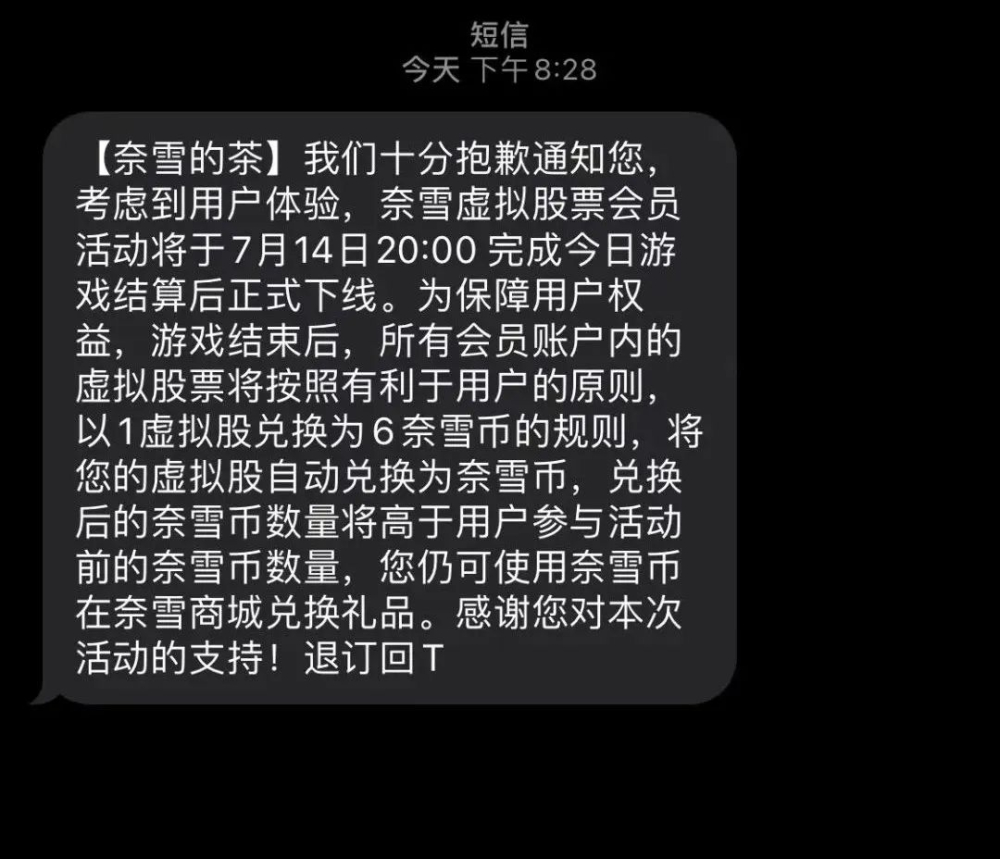
However, some members reported that the game’s end time shown on the official mini-program was 16:00, but they only received notification text messages around 8:00 PM, indicating the campaign had ended at 20:00 by then, with most virtual shares already converted. Such discrepancies in timing and information asymmetry further deepened user skepticism about the brand’s operations.
In fact, as early as the initial launch of the campaign, it had already drawn considerable negative feedback. Many netizens were puzzled by Nayuki’s combination of everyday consumption points with stock trading, and further questioned whether it involved illegal fundraising, online gambling, or non-compliant financial activities. Especially in a policy environment where Q coins had long drawn scrutiny from Chinese regulators and the secondary trading of digital collectibles was strictly controlled, Nayuki’s move was undoubtedly a test in a sensitive area.
In response to external skepticism, several experts in the new-style tea beverage industry pointed out that although “Nayuki Coins” sound like virtual currency, their essence is still reward points accumulated through consumption, and can only be redeemed for related discounts or products within the brand’s own platform, without enabling two-way circulation with legal tender. Therefore, they have not directly violated current regulations for the time being. Yu Jianing, Co-Chairman of the Blockchain Committee of the China Communications Industry Association, once told the media that such point-based activities do not constitute illegality in principle, as long as they do not involve storing value to earn points for profit or permitting external trading. However, he also emphasized that if the platform fails to properly control the scope of point usage or allows third-party over-the-counter transactions, it could very likely be deemed as operating a disguised gambling house, with non-negligible legal risks.
Legal professionals also cautioned that while such marketing approaches may attract significant attention and media exposure in the short term, they actually carry multiple legal risks, including but not limited to: disputes over the classification of consumption token nature, compliance risks in prepaid card services, suspicions of online gambling, violations of prize sales regulations, and potential for illegal fundraising. Therefore, brands wishing to emulate such innovative models must exercise particular caution to avoid inadvertently breaching laws and regulations.
From the market reaction perspective, although Nayuki’s move triggered considerable controversy, it successfully garnered extremely high online attention in a short period. Within just 12 hours after the announcement, the related Weibo topic reached over 200 million reads. Many netizens, out of curiosity, registered as new Nayuki members and participated in the virtual stock game. However, whether such a “gimmick” can truly translate into customer loyalty and repeat purchase rates remains to be seen.
It is worth noting that as a representative of high-end new-style tea beverages, Nayuki has a relatively high average order value within the industry, but in recent years has repeatedly faced public criticism for food safety and product quality control issues. These include issues found at a Beijing store in August 2021, such as cockroaches, rotten fruit, and unclean labeling; in October of the same year, a Shanghai store was fined 50,000 RMB for selling expired food; and in May 2022, a Tianjin store was penalized 5,000 RMB for using milk beyond its expiration date. These incidents have significantly eroded consumer trust in the brand. Even the most innovative marketing tactics cannot compensate if product quality and service standards are not simultaneously improved — ultimately making it difficult to retain customers.
In summary, although Nayuki Tea’s virtual stock campaign succeeded in generating buzz and traffic in the short term, the complex legal and consumer risks involved remain non-negligible. For the brand, achieving a balance between innovative marketing and compliant operations will be key to maintaining market recognition in the future.
The above content is compiled by CoffeeHunters, a coffee news website.


