








Introduction:In recent years, a wave of coffee entrepreneurship has emerged in university dormitories, with many post-2000s students using it to earn pocket money or even make nearly ten thousand yuan a month. However, beneath the viral popularity on platforms like Xiaohongshu, there are hidden issues such as the high-price resale of instant coffee, lack of food operation permits, and food safety concerns. This article delves into the controversies surrounding this phenomenon and provides practical insights to help readers discern business models from the true value of coffee.
In recent years, an increasing number of post-2000s university students have quietly started “dormitory coffee shops” within their dorm rooms. Capitalizing on the high demand for coffee among young people, they use low-cost instant coffee as a base and promote their offerings through social media platforms. A single cup often sells for around ten-plus yuan—comparable to freshly ground coffee—drawing market attention. Some students even earn nearly ten thousand yuan a month, turning this into a small-scale entrepreneurial trend on campus.
This “dormitory coffee” craze has sparked heated discussions on social media platforms like Xiaohongshu, where many netizens share their business experiences. Some have even started offering courses, charging fees to teach so-called “business secrets” to interested individuals. However, these activities, packaged as entrepreneurial opportunities, actually conceal numerous controversies and potential risks.

According to shared experiences on social platforms, some students claim to have achieved nearly a thousand yuan in sales within just three days by selling simply brewed coffee drinks in their dorms. There are also cases where booming businesses led them to rent additional workspaces, with debut-day sales exceeding one hundred yuan. These enticing figures have tempted many to try it out, but they’ve also raised external doubts: is this a genuine entrepreneurial dream or just another form of traffic manipulation?
Notably, these dormitory coffee shops commonly use readily available instant coffee products from brands such as Hougu, Yudachuan, and Lian Coffee, rather than freshly roasted coffee beans for pour over brewing. Despite being priced similarly to regular pour over coffee, their costs are vastly different, raising consumer questions about the value and pricing justification.
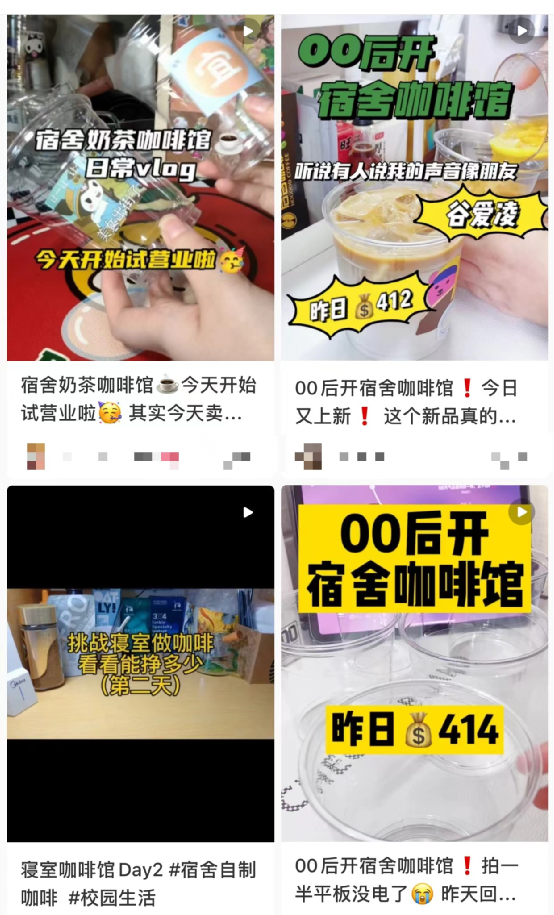
Even more concerning is that most of these coffee sales conducted within student dormitories operate without the necessary food operation permits, effectively making them unlicensed businesses. According to relevant regulations, any establishment involved in food preparation and sales must possess a legitimate business license and food operation permit to ensure food safety and hygiene. Yet, dorm environments typically lack professional sanitary facilities, and the operators often do not hold health certificates, posing significant food safety risks.
Industry insiders point out that in the event of a food safety incident, since most operators are students with limited and unstable income, their financial capacity is minimal. If consumers face health issues, it becomes difficult to enforce subsequent claims or accountability. Moreover, even legitimate coffee shops may be penalized by authorities if staff fail to adhere to basic hygiene standards—for example, having long nails or wearing nail polish.

For many coffee-loving consumers, coffee is not just a beverage but also an attitude toward life and a pursuit of taste. However, when this passion is reduced to the high-price sale of instant ingredients—even with business models centered around charging tuition fees or selling so-called “success formulas”—it inevitably raises the question: can such “coffee shops” truly represent the essence of coffee culture?
Many industry professionals suggest that those truly interested in delving into the world of coffee should start by understanding fundamental knowledge such as coffee bean origin, roast level, grind size, and extraction parameters, rather than solely chasing short-term financial gains. For beginner coffee enthusiasts, learning how to distinguish between Arabica and Robusta, and mastering basic pour over or brewing techniques, is the first step into the coffee world.

In conclusion, while dormitory coffee entrepreneurship showcases the creativity and commercial acumen of the younger generation, the pursuit of profit should go hand-in-hand with addressing core issues such as food safety, business legality, and consumer rights. For those who genuinely love coffee, choosing a quality-assured and reliable coffee experience is far more important than chasing fleeting trends.
The above content is compiled by CoffeeHunters, a coffee news website.


