







Introduction:As a beloved Canadian national coffee brand, Tim Hortons has become deeply rooted in the public consciousness with its signature "Double Double" and donuts, and has even been recognized by Morning Consult as the most trusted brand. However, the brand has recently sparked controversy due to its mobile app’s illegal collection of user location data and mandatory COVID-19 vaccination policies at camp events. This article delves into this paradoxical situation, exploring how the brand maintains its consumer trust amidst a credibility crisis, and examines how it sustains its market advantage through products and marketing.
Tim Hortons is a renowned Canadian coffee chain brand that has won the hearts of many consumers with its classic "Double Double" (double sugar, double milk) coffee and iconic donuts, making it arguably the most representative national coffee brand in the country.
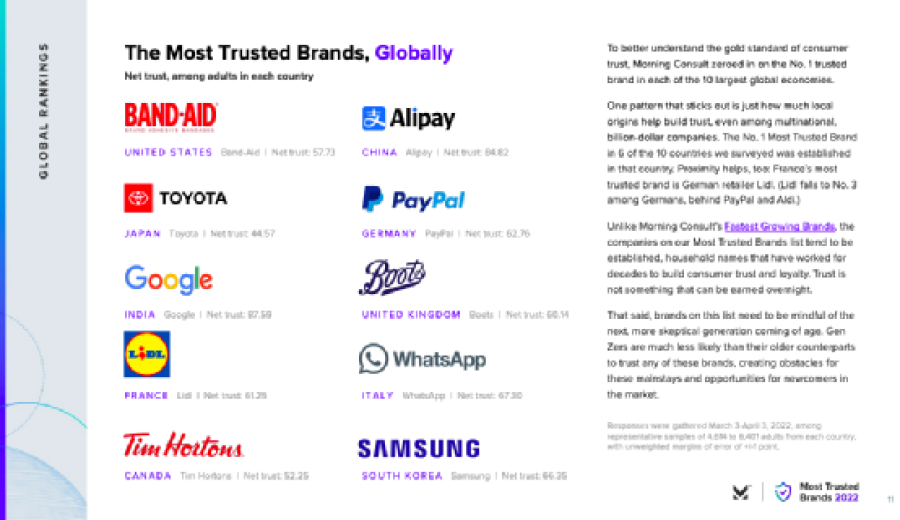
According to a survey by market research firm Morning Consult, between March 3 and April 3, Tim Hortons was named the most trusted brand among 4,768 Canadian adults surveyed. Its trust rating even surpassed that of McDonald's and Starbucks. The survey pointed out that the brand’s extensive store network is one of the key reasons for its popularity — as of May 2022, it had over 3,900 locations across Canada.
Beyond its geographical reach, Tim Hortons has also formed a unique national brand symbol through its emotional connection with the Canadian public. Even as the brand has expanded internationally, consumers still view it as a cultural emblem of Canada. This sense of national pride further solidifies its market position.
In recent years, Tim Hortons has successfully attracted diverse consumer demographics through a series of innovative marketing strategies. Notably, its collaboration with pop singer Justin Bieber, which debuted in November last year and included the limited-edition drink “Biebs Brew” launched in June 2023, not only boosted the brand’s visibility among younger audiences but also drove sales performance.
However, beneath this high level of trust, Tim Hortons is also facing serious privacy controversies. Investigations by Canadian federal and provincial privacy regulatory authorities revealed that the brand’s mobile app continuously tracked and collected users’ “large and granular” location data even when the device was idle and the app was not actively in use. Concerningly, this data was not used to provide more accurate ad targeting or product marketing, but instead constituted an infringement on users’ privacy rights.
Regulatory bodies explicitly stated that Tim Hortons’ mobile application’s prolonged tracking of user activity clearly violated relevant Canadian privacy laws, sparking widespread discussion.
Additionally, the brand faced backlash from some netizens in May after requiring participants at camp events to be fully vaccinated against COVID-19, briefly becoming a focal point of public debate.

Despite the dual controversies surrounding privacy and vaccine policies, Emily Moquin, Managing Director of the Food & Drink practice at Morning Consult, noted in an interview that, as of now, there has been no significant negative shift in consumer sentiment toward Tim Hortons. She further stated that the Tims brand possesses sufficient market resilience and a strong consumer base to effectively manage this controversy, and that no notable decline in overall consumer trust has been observed so far.
The above content is compiled by CoffeeHunters, a coffee news website.


