







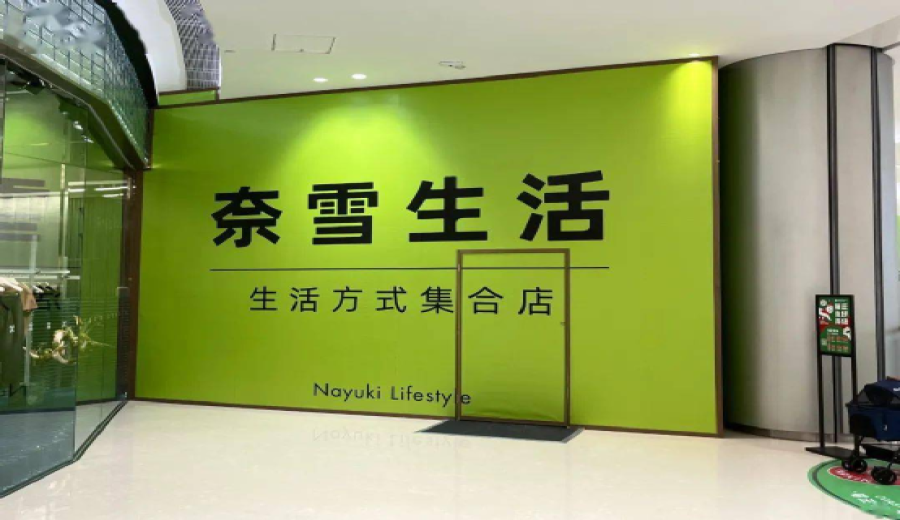
Introduction:The new-style tea brand Nayuki’s Tea once gained prominence with its innovative combination of tea beverages and soft European-style bread. Its flagship “Nayuki Dream Factory” store in Shenzhen’s Coastal City, covering over a thousand square meters, was once seen as an experimental base for the brand’s exploration of diversified business formats. However, this store, which once achieved nearly one million yuan in revenue within three days of opening, is now undergoing renovation and has been upgraded to “Nayuki Life,” a lifestyle concept store. This article delves into the rise and fall of Nayuki Dream Factory, explores how new-style tea brands seek breakthroughs through multi-format layouts amid fierce competition, and analyzes the potential challenges and opportunities of this transformation strategy.
In its early years, Nayuki’s Tea quickly carved out a niche in the new-style tea market with its product strategy that innovatively combined tea beverages and soft European-style bread, becoming a representative brand in this sector. However, the brand’s largest store in China, the “Nayuki Dream Factory” located in Shenzhen’s Coastal City, recently chose to close for renovation after operating for several years. The original site will be upgraded to “Nayuki Life”—a multi-format lifestyle concept store focusing on lifestyle offerings. This thousand-square-meter flagship store in a prime location once housed fifteen functional zones, including baking, tea beverages, coffee, craft beer, Western cuisine, retail, and limited-edition products. It served not only as an experimental ground for cross-border operations but also achieved the impressive feat of nearly one million yuan in sales within the first three days of opening.
According to official information, the renovated “Nayuki Life” will continue its original positioning as a “super testing ground,” further integrating diverse services such as baking and tea beverages, reading spaces, floral arrangements, and light meals, while strengthening the brand’s presence in the lifestyle domain. Observations on-site indicate that the store is currently under construction, with the entire project expected to take about two months. During this period, the mall has informed customers of the relevant adjustments via barricade notices. Notably, this transformation is not just an adjustment to a single store but also reflects a strategic shift within the new-style tea beverage industry in the face of highly homogenized competition.
In fact, Nayki’s Tea has made several attempts in business expansion in recent years: in June 2019, it launched “Nayuki Wine Bar” to enter the alcoholic beverage market; in September 2020, it ventured into the coffee sector with the “Nayuki’s Tea PRO” store format; in October 2021, it opened “Nayuki Bookstore” at the south gate of Tsinghua University in Beijing; and by April 2022, the brand invested between 500 million and 1 billion yuan to develop an RTD (Ready To Drink) production line to meet the growing market demand for convenience and on-the-go beverages.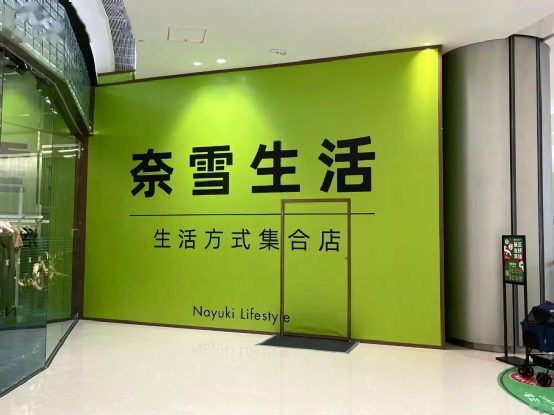
However, the competition in the new-style tea beverage market has long reached a white-hot stage. Not only have product lines among brands become increasingly similar, but operational models and consumption scenarios have also gradually blurred, forcing many brands to seek differentiated development paths. Against this backdrop, Nayki’s Tea is attempting to carve out a blue ocean in a red ocean market through a multi-format parallel strategy—for example, combining elements such as bookstores, floral arrangements, and light meals to enhance the consumer experience and brand loyalty. Although this transformation approach is forward-looking, it also comes with high operational costs and complex management challenges. Especially in the post-pandemic environment where consumer habits are rapidly changing, how to balance innovation and effectiveness has become a critical issue for brand operators to consider.
Looking at the case of Nayuki Dream Factory, it is not difficult to see that the brand initially succeeded in attracting its target customer base through the combination of “tea beverages + soft European-style bread,” particularly catering to the needs of urban office workers for convenient, high-quality afternoon tea. However, as the market becomes saturated and consumer preferences diversify, a single product combination is no longer sufficient to sustain the brand’s long-term growth. The transformation into the “Nayuki Life” concept store can be seen as the brand’s attempt to create more consumption touchpoints and emotional connections through scene extension and service expansion, thereby further solidifying its market position.
Overall, the future development of new-style tea brands depends not only on product innovation and quality control but also on continuous exploration in operational models, consumption scenarios, and brand values. Nayki’s Tea’s large-scale store renovation is undoubtedly a bold attempt and provides the industry with a real-world case study on how a brand seeks differentiated breakthroughs in fierce competition. Whether it can successfully pioneer new opportunities through multi-format integration remains to be tested by the market and time.
The above content is compiled by CoffeeHunters, a coffee news website.


