








Introduction:Struggling to brew a pour over coffee with distinct flavor layers? This article delves into the difference between "layers" and "layered perception," helping you understand the essence of coffee layering through visual metaphors. By comparing examples of single-note and complex flavor profiles, it provides four practical techniques—including coffee bean selection, fine particle control, pulse pouring, and adjusting brew ratio—to enhance coffee layering, along with additional details on grind uniformity and pouring methods to help you master the key elements of elevating coffee complexity.
Many coffee enthusiasts often mention the concept of "layered perception" when tasting, but what exactly constitutes true layered perception? How does it differ from mere flavor layers? This article takes a visual approach, using comparative graphics to help you intuitively grasp the meaning of layered perception, then further explores how to distinguish between two typical manifestations—rich versus lacking in layered perception—during coffee tasting. It also shares four practical techniques: coffee bean selection, fine particle management, pulse pouring, and brew ratio adjustment, enabling you to easily present more nuanced coffee layers during pour over brewing.
Perhaps the term "layered perception" sounds a bit abstract. Let’s start by looking at a set of visual comparisons. From the images, it’s evident that the right side presents a more three-dimensional effect, with the green forest in the foreground clearly layered and the sky’s gradient distinctly visible. In contrast, the left side appears flat, with blurred forest layers and a sky that blends into a monotonous background. This illustrates that the core of layered perception lies in the ability to clearly discern multiple independent visual layers.
Applying this concept to coffee tasting, layered perception refers to the ability to distinctly recognize multiple independent and vivid flavors through taste and aroma. For example, when tasting a Geisha coffee, you might first perceive bright citrus acidity, followed by delicate jasmine floral notes, alongside honey-like sweetness and a refreshing green tea aroma—these flavors not only coexist but can be individually identified. This is what rich layered perception looks like.
Conversely, coffee lacking layered perception typically falls into two common scenarios: The first is a single-note profile, where although dominant flavors (like nuts or chocolate) are discernible, the overall experience is flat and unchanging. Such coffees often excel in balance or body—for instance, Blue Mountain coffee, whose strength lies not in complex layering. The second scenario involves multiple flavors that blend together indistinctly, resulting in a muddled mouthfeel, usually caused by brewing issues such as uneven extraction or improper water temperature control.
Coffee Bean Selectionis fundamental to layered perception. Generally, higher-altitude coffee beans have greater density and richer flavor compounds, making them more likely to exhibit multi-layered flavors. Additionally,differences in fermentation levelsplay a key role—naturally processed coffee beans, due to their more complex fermentation process, typically display richer flavor layers than washed beans. However, it’s important to note that this highlights an "advantage" rather than an absolute rule. Naturally processed beans aren’t universally superior to washed beans, but beans with higher fermentation levels inherently possess greater potential to showcase complex flavors.
Another often overlooked detail isthe retention of fine particles. Coffee particles smaller than 0.3mm are called fine particles, which are a double-edged sword: excessive amounts can lead to bitterness, but an appropriate amount (around 5% of total grounds) can enhance flavor richness and layered perception. This is because coffee particles of different sizes extract at varying rates—fine particles release flavors more quickly, while coarse particles release more slowly, creating a dynamic variation in flavor layers. While we ideally aim for uniform grinding, even high-end grinders struggle to completely eliminate fine particles. Retaining an appropriate amount of fine particles can actually help balance flavors.
Pulse Pouring Techniquealso significantly impacts layered perception. Comparing the "single-pour" (one continuous pour) method with the "three-pour" (divided into three pours) method reveals that pulse pouring allows the coffee bed to continuously agitate at different stages, extending the release time of flavor compounds. For example, the three-pour method, by distributing water in three phases with stirring, encourages repeated movement of the coffee bed, extracting a more diverse range of flavor components and thus enriching the overall layered perception.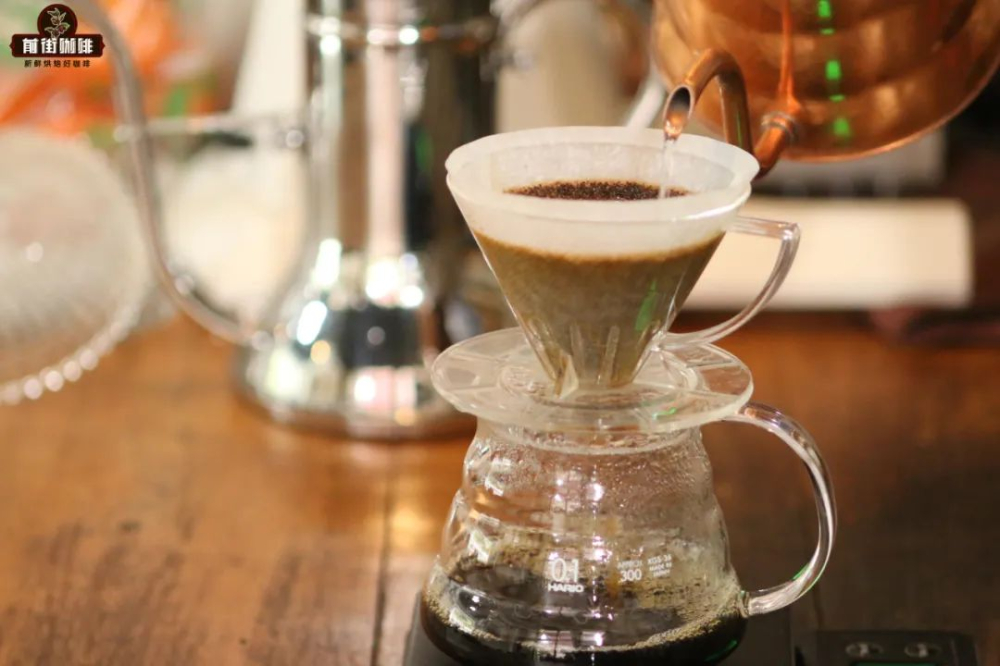
Finally,adjusting the brew ratiois another crucial factor. While a higher concentration (e.g., 1:15) may make coffee flavors taste intense, it can also lead to muddled or indistinct tastes. Slightly increasing the brew ratio (try 1:16 or 1:17) can present flavors more clearly, avoiding murkiness and helping you better capture the delicate layers in your coffee.
The above content is compiled by CoffeeHunters, a coffee news website.


