







Introduction:On Children's Day, four new stores of Chayanyuese in Chongqing opened simultaneously, sparking long queues and drawing significant market attention. However, a series of incidents followed — including scalpers reselling drinks at nearly 500 yuan, online orders requiring waits of over 24 hours, and influencers blocking fans in livestreams — making the brand’s expansion journey fraught with challenges. This article details the sequence of events, analyzes Chayanyuese’s strategic shift from Changsha to a national presence, and explores the operational hurdles it faces.
Lu Liang, founder of Chayanyuese, has previously stated multiple times that the brand is not unwilling to expand beyond its local market but is concerned about encountering an “existential crisis” when operating elsewhere. Even so, the brand has successively entered Changde and further stepped out of Hunan Province, officially venturing into the western China market by opening its first store in Chongqing. Yet, on Children's Day, the simultaneous launch of four stores in Chongqing thrilled local consumers but quickly triggered a series of controversies.
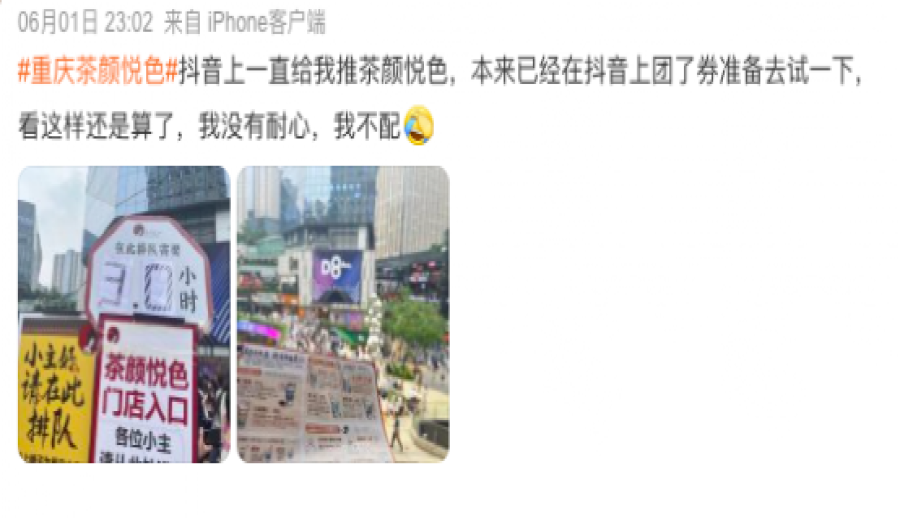
On the first day of opening, many customers personally experienced wait times of up to three hours just to get a cup of Chayanyuese. The internet was flooded with photos of long lines, showcasing the brand’s enduring appeal, but also revealing the pressures on supply chains and operational scheduling.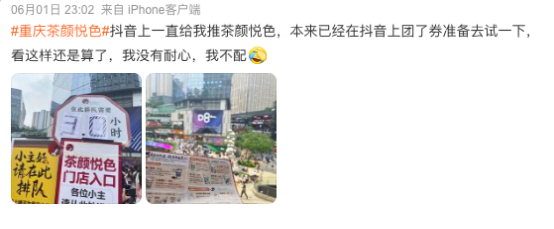
Some customers tried going to seemingly less crowded stores, such as the Chongqing North City Tianjie branch, only to unexpectedly find over 1,400 drinks still being prepared there, with estimated wait times exceeding 24 hours, deterring many from staying.
In addition to long queues and wait times offline, issues also arose with online orders. Some customers attempted to place orders via delivery platforms, only to find that two popular items — the “Orchid Latte” — totaled over 480 yuan, and with delivery fees added, the cost approached 500 yuan, which many found unacceptable.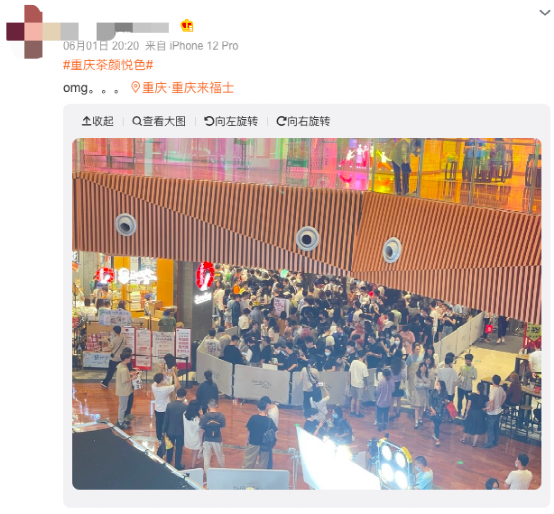
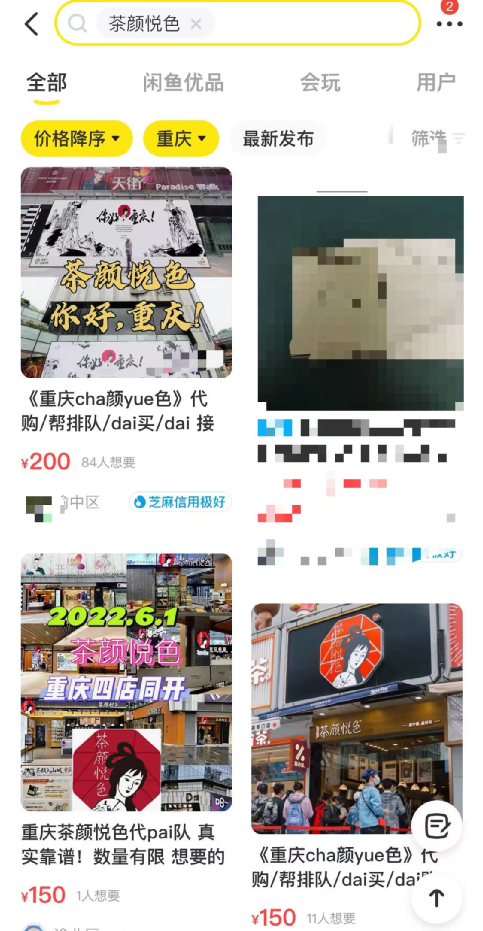
On the second-hand trading platform Xianyu, numerous vendors began offering proxy purchasing and queue-jumping services, with single cups going for as much as 200 yuan. Some users even reported that buying 15 cups would cost 2,250 yuan, prompting many fans to exclaim “absolutely not worth it.”
Due to the unusually high demand, not only were physical stores facing operational bottlenecks, but online livestream events also sparked controversy. According to local media reports, Chayanyuese failed to roll out some promotional activities as promised during a livestream on Douyin, leaving viewers disappointed. Some even claimed they were blocked by the livestream hosts.
Based on posts shared by users on Xiaohongshu who participated in the event, dissatisfaction was expressed over the livestream hosts’ attitude, including instances of viewers being blocked. Some comments pointed out that promised restocking was not fulfilled, and that hosts continuously urged viewers to top up their accounts, leading to a wave of negative reviews.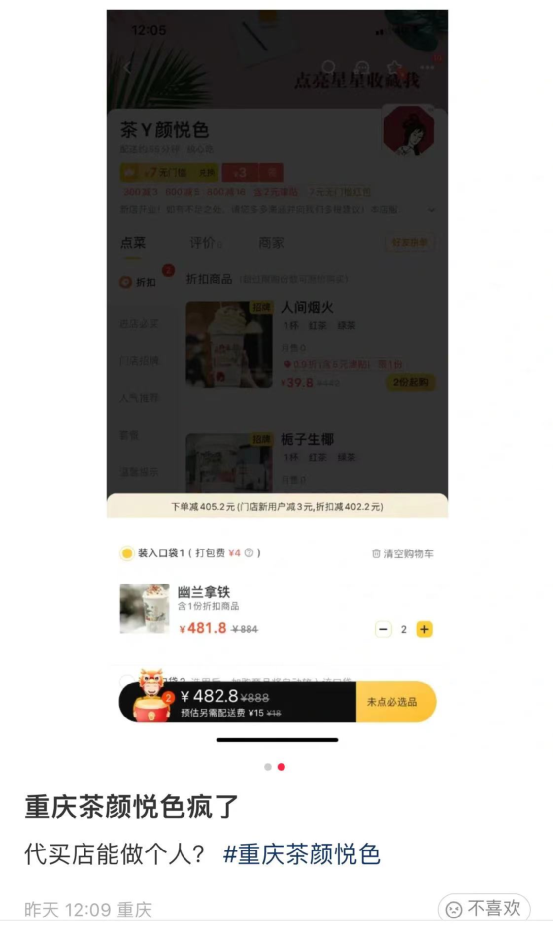
In response to public scrutiny, Chayanyuese stated that the inflated prices appearing on delivery platforms were not official actions. Citing food safety concerns, the brand firmly opposes such practices and is actively coordinating with the platforms to address the issue.
As for the controversy over blocking users in the livestream, the brand explained that since it was their first attempt at livestreaming on the Douyin platform, and although preparatory work had been done with a third-party team, there was insufficient familiarity with the platform’s rules, leading to initial hiccups. The brand emphasized that the relevant accounts have now been removed from the blacklist and normal sales operations have resumed.
This Chongqing flagship store controversy has once again drawn attention to Chayanyuese’s expansion strategy. Previously affected by the pandemic, the brand experienced a wave of store closures in Changsha. Now, stepping out of its comfort zone to challenge the national market, it must not only confront the challenges of supply chain and operational management but also strike a balance between brand image and consumer expectations.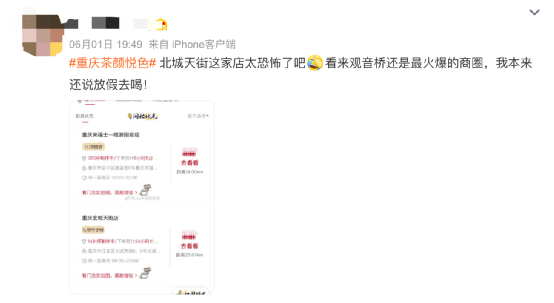
The above content is compiled by CoffeeHunters, a coffee news website.


