







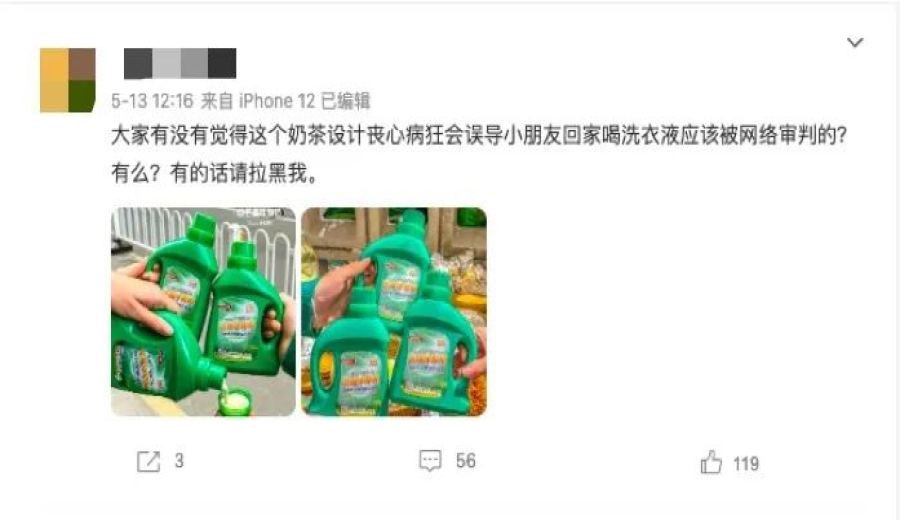
Introduction:A Thai milk tea with packaging that strikingly resembles laundry detergent has sparked heated discussion on social media. Priced at 18 yuan per single serving, its novelty packaging has attracted many young consumers eager to try it, but it has also raised concerns about the risk of children mistakenly consuming it due to its resemblance to everyday household products. This article delves into the market phenomenon of such creative packaging, explores its potential legal and safety issues, offers advice to consumers on identification and selection, and reflects on the balance between innovation and responsibility in coffee and tea beverages.
In recent years, the tea beverage market has become highly competitive. To stand out, many brands have not only strived for flavor innovation but have also frequently experimented with bold packaging designs. Among them, a Thai milk tea with packaging that looks strikingly like a common household laundry detergent bottle suddenly went viral on social media, drawing widespread attention. Each serving of this drink has a volume of 500 milliliters and is priced at around 18 yuan. It was initially launched by a Nanjing-based eatery specializing in Thai cuisine and quickly became an internet-famous check-in item due to its unique packaging.
Dubbed by netizens as "laundry detergent milk tea," this product completely mimics the appearance of a typical household laundry detergent bottle, including its bottle shape, label design, and cap. However, what’s inside is actually Thai-style milk tea. Thanks to its novel and slightly quirky look, it successfully attracted many young people and influencers to try it and share photos of their experience. Soon after, similar-looking milk tea products also appeared in regions such as Guangdong, Jiangxi, and Sichuan, with some vendors even offering desserts designed to resemble bars of soap, further fueling the trend of "household product-shaped beverages."
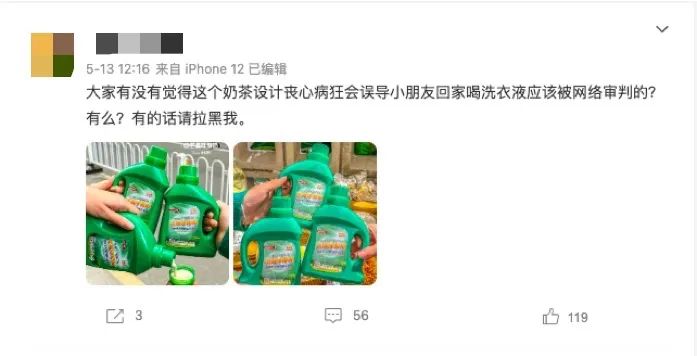
However, this packaging approach, which pursues visual impact and viral attention, has quickly drawn scrutiny over safety concerns. Many netizens worry that children might mistake the product for actual laundry detergent due to its appearance, thereby increasing the risk of accidental ingestion. This risk is especially high when such products appear in homes, gatherings, or public spaces, where young children may struggle to discern their true purpose or differentiate them from actual cleaning products.
In response to the criticism, the shop that introduced the "laundry detergent milk tea" stated that the product has been selling well since its launch, with no consumer complaints received so far, nor any reports of children mistakenly consuming it. Although the business emphasized the product’s safety, experts and legal professionals have raised questions about whether such a design complies with regulations.
Industry experts pointed out that while creative packaging that mimics household items can attract attention in the short term, it carries obvious risks of misleading consumers. For most people, a laundry detergent bottle is inherently associated with cleaning products. Once this established perception is disrupted, misunderstandings can easily occur—especially among younger individuals or those with weaker judgment, where the risks are even higher.
Legal experts further explained that according to relevant regulations, food packaging must clearly indicate the nature of its contents and must not be designed to closely resemble non-food items in a way that could cause confusion. Particularly when the packaging looks nearly identical to commonly used chemical cleaners like laundry detergent, clear warning labels or Chinese-language consumption advisories should be included. Otherwise, if consumers misjudge the product due to its design and subsequently suffer personal injury or property damage, producers and sellers could face legal liability.
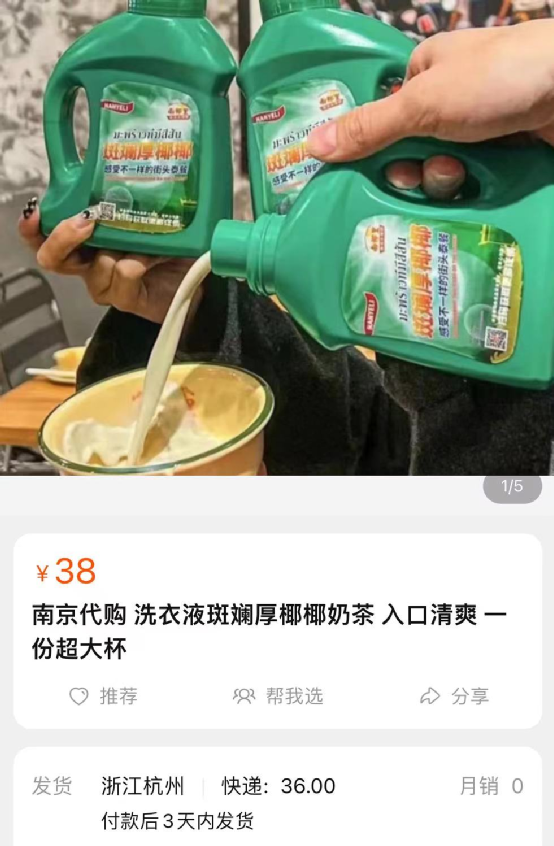
Additionally, consumer protection laws explicitly stipulate that businesses are responsible for providing clear and truthful information regarding the nature, use, and method of using the products they sell. This means that even if a product itself poses no food safety issues, businesses could still be found in violation of legal obligations if their packaging leads to consumer misunderstanding. Therefore, innovative packaging designs should not focus solely on marketing gimmicks but must also fully assess their potential impact on different consumer groups.
For coffee enthusiasts and everyday beverage consumers, this incident also carries valuable lessons. When selecting various creative drinks, in addition to paying attention to flavor and brand story, one should also be mindful of whether the packaging clearly indicates the contents and avoids misleading design—especially families with young children, who should be extra vigilant in keeping beverage products that resemble household items out of children’s reach.
In summary, the viral success of "laundry detergent milk tea" reflects the strong demand in today’s beverage market for innovative packaging, but it also exposes the delicate boundary between creativity and safety. Whether it’s coffee or milk tea, how to balance novelty and virality with consumer safety and clear labeling remains an ongoing challenge the industry must continually address.
The above content is compiled by CoffeeHunters, a coffee news website.


