







Introduction:Members of the U.S.-based animal rights organization PETA protested against Starbucks for charging extra fees for plant-based milk by gluing their hands to the counter — a move that sparked widespread discussion. Why does Starbucks charge more for oat milk, soy milk, and other plant milks? Are PETA’s protest rationale and methods justified? This article delves into the full story behind the incident and explores the real differences in environmental impact and cost between plant milk and dairy milk.
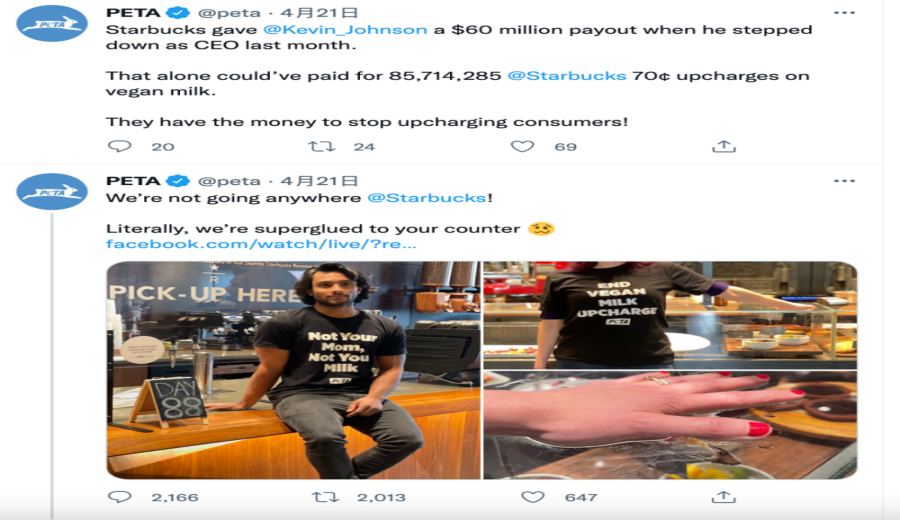
Recently, two members of PETA staged a highly controversial protest at a Starbucks outlet. Dissatisfied with the chain’s practice of charging an additional fee of about 70 to 80 cents per drink for plant-based milk options — including oat, soy, almond, and coconut milk — they glued their hands to the store’s counter and food display cases, triggering extensive online debate.
The incident occurred on April 21, and PETA posted a series of tweets detailing the protest. They accused Starbucks of unfair pricing practices regarding plant milk and directly tagged Starbucks founder Howard Schultz, demanding that the brand eliminate the extra charge if it is truly committed to sustainability. PETA also pointed out that former Starbucks CEO Kevin Johnson received a retirement package worth up to $60 million — an amount sufficient to cover the added costs of plant milk for over 85 million drinks — arguing that the company has more than enough financial resources to absorb such costs.
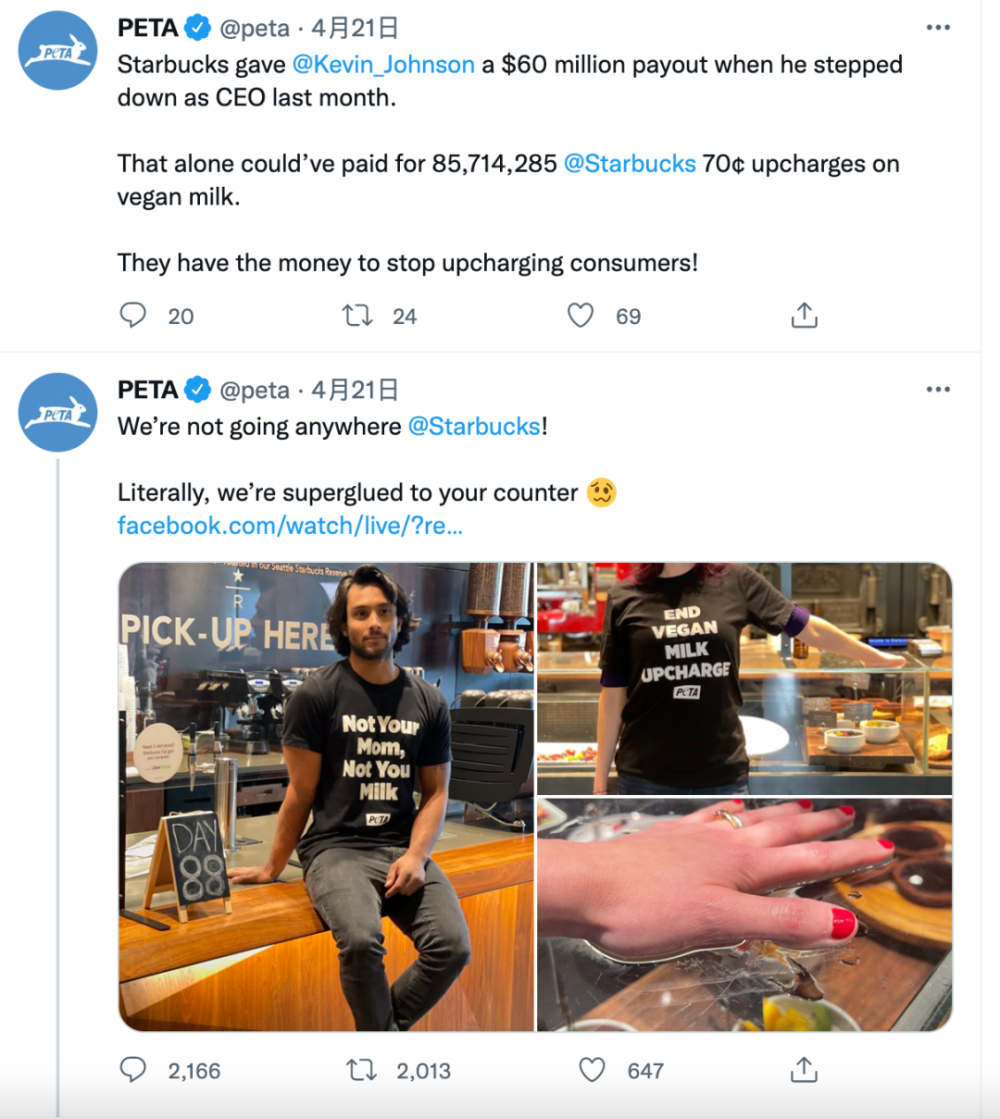
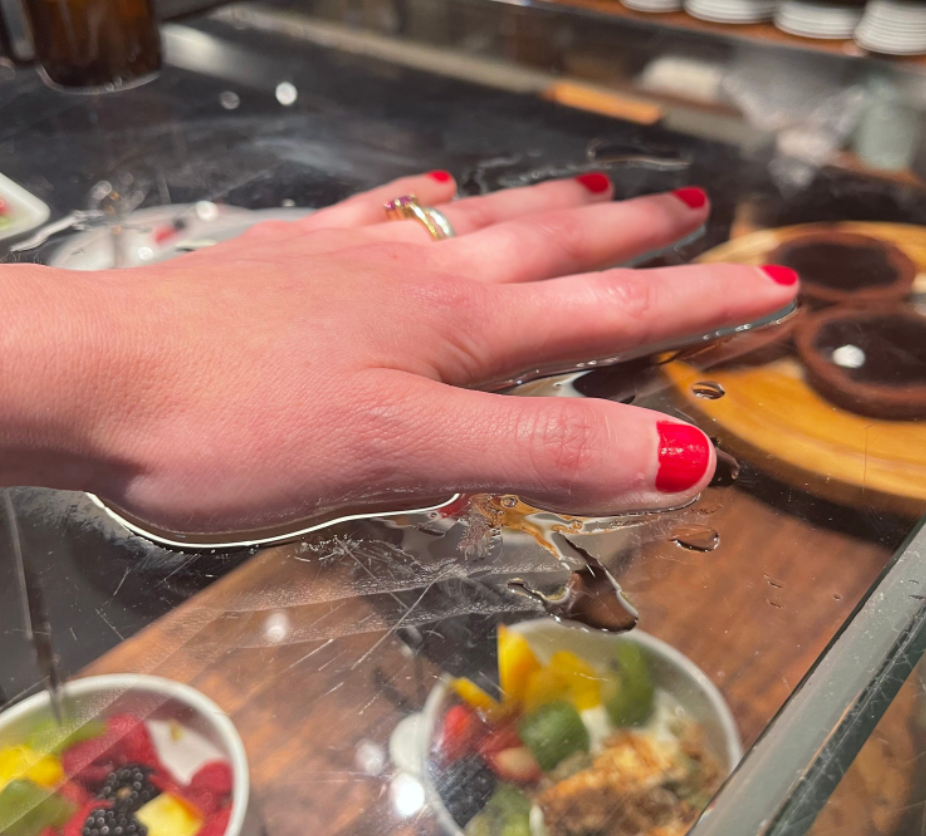
Photos from the scene show the protesters wearing black shirts with slogans such as “NOT YOUR MUM NOT YOUR MILK” and “END THE PLANT MILK SURCHARGE.” One protester glued both hands to a glass food display case, while another sat in the pickup area with their hands fixed to the counter, demonstrating a strong stance of dissent.
PETA’s protest is primarily grounded in environmental concerns. They argue that the production of dairy milk has a significant negative impact on the environment, including greenhouse gas emissions, high water consumption, and excessive land use — issues that make dairy, not plant milk, the product that should be subject to a surcharge. In contrast, plant milks made from beans, grains, or nuts generally have more sustainable farming and production processes, substantially reducing carbon footprints and water usage.
In fact, Starbucks was one of the first major coffee chains to offer plant-based milk options, but this move was not initially driven by environmental motives. The brand introduced plant milks mainly to accommodate customers who are lactose intolerant, allowing them to enjoy milk-based coffee drinks. Over time, additional options like almond and coconut milk were added in response to consumer demand for diverse flavors. The rise in popularity of oat milk, meanwhile, has been largely influenced by global health and dietary trends. Therefore, Starbucks emphasizes that offering plant milk is about expanding consumer choice rather than being solely based on environmental considerations.
PETA chose to launch their protest in the United States after noticing that Starbucks locations in the UK had eliminated the plant milk surcharge starting in January of this year. As a result, they argued that the U.S. market should follow suit. However, Starbucks explained that the UK policy was a regional adjustment and not applicable globally. Furthermore, a Starbucks spokesperson noted that due to the volatile market prices of plant milk ingredients, the company is currently unable to revise its pricing policy.
While the protest garnered significant attention, public reactions were sharply divided. Many criticized PETA’s protest tactics, arguing that even if one opposes the surcharge on plant milk, gluing oneself to a counter is not an appropriate form of expression. Some supported Starbucks’ position, stating that plant milk is inherently more expensive to produce than dairy milk, and that the brand’s effort to provide diverse options is commendable — consumers should understand the price difference. Others took a more lighthearted approach, joking, “Let them glue themselves there.”
The protest ultimately ended with the two participants being taken into police custody and facing charges of theft and property damage. Starbucks reiterated that due to the market-driven costs of supplying plant milk, there are currently no plans to eliminate the additional fee.
It’s worth noting that this is not the first time PETA has protested against Starbucks. Earlier in mid-March, PETA members were spotted lying in front of a Starbucks store wearing cow pajamas and tagging the brand on social media with the message “A cow died in front of your store” — a shocking image that stirred further discussion. This series of actions has led many to speculate whether PETA hopes to exert ongoing pressure to push Starbucks and other coffee chains to completely eliminate the plant milk surcharge, thereby reducing costs for consumers.
The above content is compiled by CoffeeHunters, a coffee news website.


