







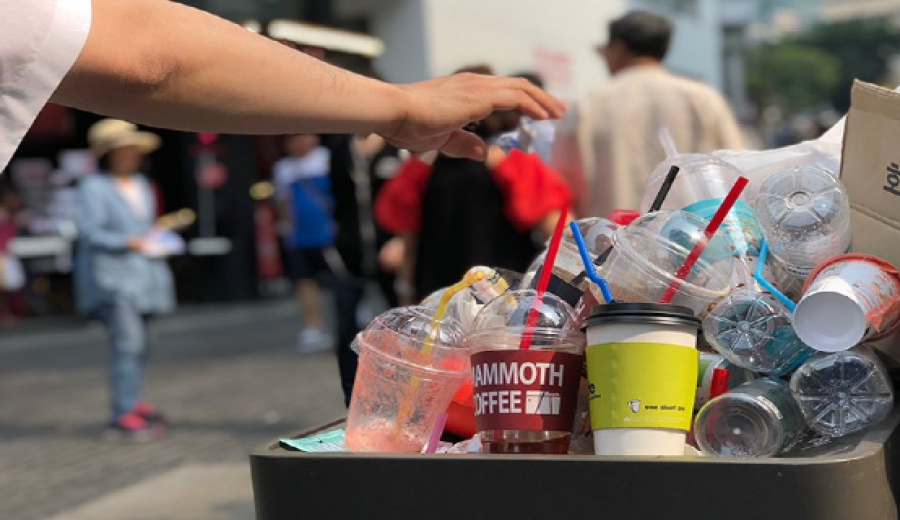
Introduction:South Korea has implemented a ban on single-use plastic cups in fast food outlets and coffee shops starting from April 1, 2024, and is expected to introduce a “single-use cup deposit system” in June. Under the new policy, customers can receive a KRW 300 refund (about NTD 7) by returning their used cups. However, shop owners not only have to pay a deposit guarantee but also bear hidden costs such as cleaning, storage, and logistics. This article takes an in-depth look at the latest policy details, the practical challenges faced by businesses, and consumer reactions, offering insight into how Korea’s coffee industry is navigating the balance between environmental policies and operational realities.
To promote plastic reduction, the South Korean government officially imposed restrictions on the use of single-use plastic cups in fast food outlets and cafés starting from April 1, 2024, and plans to launch the “single-use cup deposit system” on June 10 of the same year. According to the new regulations, customers who return their used cups to the store can get a KRW 300 (approximately NTD 7) deposit refund. However, this seemingly environmentally friendly policy has actually placed considerable pressure on café operators.
Under the deposit system, in addition to prepaying a deposit for each cup to the Resource Circulation Deposit Management Center (COSMO), shop owners are also responsible for processing refunds when customers return the cups. On top of that, the labor, equipment, and transportation costs associated with cleaning, storing, and recycling the cups afterward are all borne by the shops themselves. In other words, cafés have effectively become the front-line enforcers of the government’s recycling policy without receiving adequate support.
Many business owners report that many customers still prefer to use single-use plastic cups due to concerns about the hygiene of reusable cups or because they only need their beverages for a short takeaway time. Some consumers have even lodged complaints when shops are unable to provide plastic cups, leaving owners caught between complying with policy and maintaining customer service. One operator admitted that over the past two years, people have grown accustomed to using plastic cups, and the sudden change is not only difficult for customers to adjust to, but also leaves shops underprepared to handle these changes.
In fact, this is not South Korea’s first attempt at plastic restriction. As early as 2018, the country had banned the use of single-use utensils, but due to the impact of the COVID-19 pandemic, the government temporarily relaxed these restrictions in 2020. Now, with rising environmental awareness, the government has decided to tighten the rules again and plans to encourage people to bring their own cups through the deposit system, thereby reducing the use of single-use cups.
However, based on the current situation, the level of consumer compliance remains to be seen. Many believe that even with the KRW 300 deposit incentive, it remains an additional burden for frequent coffee buyers in the long run. Moreover, some members of the public question whether unilateral plastic reduction efforts by South Korea alone will have a limited real impact on the global environment. They also point out that many reusable cups on the market are still made of plastic, leaving the overall environmental benefit still up for debate.
For café operators, besides dealing with the additional costs brought by the policy, they also face pressure on cash flow. Since deposits have to be prepaid by the businesses and the handling of unreturned cup deposits is not yet clearly defined, many shop owners worry about bad debts affecting their operating cash flow. One operator frankly stated that while the government is asking businesses to take on the environmental responsibility of single-use cups, it has not provided specific subsidies or operational guidance, leaving operators feeling helpless in implementation.
Although the South Korean Ministry of Environment has stated that it is discussing follow-up measures for unreturned deposits, there is still no clear conclusion at present. For consumers, in addition to paying a KRW 300 deposit, coffee prices have also been adjusted upwards due to various cost increases, having gone up twice within just one quarter, further reducing the willingness of the public to bring their own cups.
Overall, while South Korea’s plastic restriction policy is well-intentioned, it still faces numerous challenges in implementation. Café operators have become key players in the policy transition but are also the group most directly bearing the pressure. How to strike a balance between environmental goals and actual operational needs is a challenge that the government, businesses, and consumers all need to think about together.
The above content is compiled by CoffeeHunters, a coffee news website.


